

Planning a family getaway and looking for things to do in Borneo with the kids? Offering everything from river safaris to ocean dives, Borneo is a dream holiday destination.
Whether you’re buzzing to spot a pygmy elephant or looking forward to riverside relaxation, this Island truly has it all. My Borneo island travel guide includes top tips and itinerary highlights to help you plan an unforgettable visit.
Tip: Looking for more exciting destinations in Southeast Asia? Explore the best things to do in Singapore.
Disclosure: This is a sponsored post in collaboration with Intrepid Travel; however, all views and opinions are my own. This post also contains affiliate links, whereby I may make a small commission at no extra cost to you. This helps with the costs of running my website so I can keep my content free for you. See my disclosure policy here. Thanks as always for your support!
At a Glance: Borneo, Malaysia

Before we jump into the top things to see in Borneo, here’s some key information to better understand this island.
Where is Borneo?
Situated in Southeast Asia, Borneo is the third-largest Island in the world. It is shared by three countries: Malaysia, Indonesia and Brunei Darussalam. Our family adventure took place in the Malaysian state of Sabah, located in the Northern part of the Island.
Sabah is often called the “Land Below the Wind”, as it sits just below the typhoon belt. It has a hot, humid climate, with unexpected downpours being the norm throughout the year. Kota Kinabalu is the capital of Sabah State.
Borneo’s Rich Biodiversity
Borneo is home to one of the world’s oldest rainforests, estimated to be over 130 million years old. That’s older than the Amazon! Despite covering less than 1% of the earth, Borneo is home to roughly 6% of the planet’s biodiversity.
Researchers regularly discover new species on the island. However, this biodiversity is under threat due to plantation development and logging, which disrupt and endanger natural habitats.
How to Get to Borneo

Our trip from London to Kota Kinabalu took about 17 hours and two flights. Kota Kinabalu International Airport (BKI) in Sabah is one of the main airports in Borneo. UK flights usually head into BKI via Kuala Lumpur, Singapore or Doha. There are no direct flights from London, but there are frequent one-stop routes.
Once in Sabah, you can take domestic flights to Sandakan (for Sepilok) and Lahad Datu (for Kinabatangan Wildlife Sanctuary).
Tip: To minimise your carbon footprint, consider longer stays and overland transfers where possible rather than multiple short internal flights.
Visiting Borneo: Responsible Travel Tips
Our family trip to Borneo was in collaboration with Intrepid Travel. This small group tour company emphasises responsible, sustainable travel practices and aims to uplift the communities in which they operate.


Here are a few tips to be a more responsible traveller while visiting Borneo or any other destination.
- Support local communities: Support local homestays, guides and restaurants to directly benefit the people who call Sabah home. This also offers you an opportunity to get to know the locals and their cultural practices.
- Respect wildlife boundaries: Observe at a distance, lower your voice, and avoid touching, feeding or using flash photography near wildlife.
- Tread lightly in nature: Stick to designated paths in rainforests and parks and don’t remove any rocks, plants or other natural elements from their place.
- Leave no trace behind: Try to carry a reusable water bottle and ensure you don’t leave any trash or other manmade items behind in nature.
- Support ethical tours & sanctuaries: Do your research to ensure you’re supporting ethical, accredited rehabilitation centres and sanctuaries that prioritise education and animal welfare.
What to Do in Borneo with Kids
The island of Borneo was nothing short of breathtaking. Here are my top activities in Sabah for an unforgettable family trip.
Visit the Famous Seafood Night Market in Kota Kinabalu

We spent our first night in Sabah’s capital city and couldn’t resist a visit to the famous seafood night market. This lively waterfront market is a must for fish lovers, with fresh lobster, prawns and crabs prepared your way. While the girls chomped down on some seafood, I savoured a delicious veggie nasi goreng. Bring cash and try to arrive early, as this market can get quite busy.
Tip: Have time to spare? Familiarise yourself with Borneo’s culture and heritage with a guided tour of Kota Kinabalu.
Experience Eco Glamping on a Private Island Resort
Yes, we left an island to visit an even smaller island. Ara Dinawan is an island resort situated a short 45-minute boat ride from Kota Kinabalu. Here, we stayed in luxury eco glamping tents, complete with a comfy double bed, bunk beds and a shower.
Between lazing on the beach, snacking on roti canai and sheltering from sudden showers, we got to enjoy some snorkelling. We first attended a marine biologist talk to learn more about the coral reef system and its significance to marine life. We also got some tips on what sealife to look out for underwater. These talks are so important as they foster a deeper appreciation for the marine ecosystem.
Tip: Not enough time for island hopping? Consider a full-day guided snorkelling tour from Kota Kinabalu instead.
Visit the Rainforest Discovery Centre in Sandakan


After soaking up the joys of island life, we took a 45-minute flight to Sandakan. Here, we checked into the Borneo Sepilok Nature Lodge. A lush rainforest lodge with spacious wooden cabins.
This resort was the perfect base to explore the surrounding forests. Our first stop was the Rainforest Discovery Centre, about a 15-minute walk away. This centre offers guided educational walks and various trails to explore the rainforest. One of the biggest highlights is the 620-metre-long rainforest skywalk, which offers breathtaking views into the trees and the canopy below.
Go on a Rainforest Night Walk
You could easily spend all day exploring the paths and looking out for wildlife. However, the Discovery Centre also offers night walks, allowing you to spot some elusive nocturnal critters too.
We were lucky enough to spot Borneo’s gliding giant, the red giant flying squirrel. These squirrels can reach a head-to-body length of around 50cm, with their tails growing up to 60cm! Using a membrane called a patagium, they’re able to glide up to 100 metres.
We also spotted a dark-eared tree frog and the western tarsier (pronounced tar-sier, not tay-sear). Or, as my youngest puts it, the one with the big googly eyes!
These tiny nocturnal critters are among the world’s oldest surviving primates, dating back to at least 45 million years. Their heads can rotate 180 degrees, and they have particularly long ankle bones (tarsals, which is where the name tarsier originates).
Other animals you might spot include the slow loris, black scorpion, gibbon, orangutan and rhinoceros hornbill.
Join a River Safari on the Kinabatangan River


The Kinabatangan River is about a two-hour drive from Sandakan. Spanning 560 km, the Kinabatangan is Malaysia’s second-longest river, and it’s absolutely teeming with wildlife.
We stayed at a lodge located right on the river. From here, we were able to join daytime and nighttime river cruises. The night cruise under the starry sky was just something else.

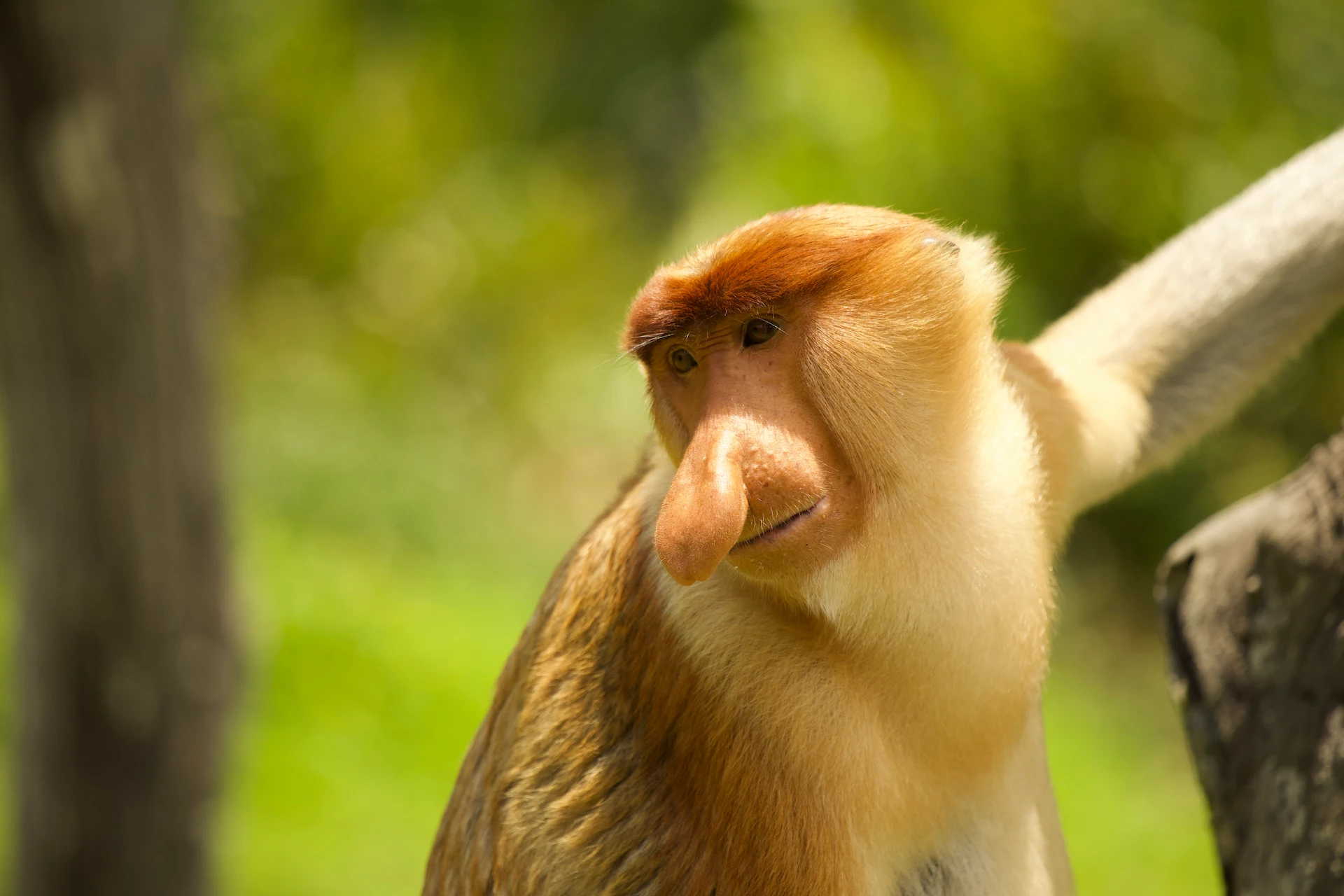
We spotted so many colourful birds, crocodiles, macaques, proboscis monkeys and Bornean pygmy elephants. Mainly found in Sabah, pygmy elephants are the smallest of the Asian elephant subspecies. They tend to be smaller, rounder and gentler, with only an estimated 1,500 left in Borneo.
Visit the Sabah Wildlife Sanctuaries
Borneo is home to various wildlife sanctuaries that work to preserve the island’s rich biodiversity. Here are a few wonderful sanctuaries and rehabilitation centres we visited.
Sepilok Orangutan Rehabilitation Centre
The Sepilok Orangutan Rehabilitation Centre opened in 1964 as one of the world’s first orangutan rehabilitation projects. Just a five-minute drive from the Rainforest Discovery Centre, the centre aims to rehabilitate orphaned and displaced Bornean orangutans. They’re gradually trained to survive independently and released into the protected Kabili-Sepilok Forest Reserve when ready.
The orangutan is the only great ape found outside of Africa. Their existence is threatened by industrial agriculture, mass deforestation and illegal wildlife trade.


You can watch the adorable young orangutans learn to forage and climb in the nursery viewing centre. You can also observe the orangutans from a platform during feeding sessions. It’s incredible to see the adult orangutans come and go freely from the jungle.
Fun fact: Ever wondered what the name orangutan means? “Orang” means person, while “hutan” means forest. That translates to “man of the forest”.
Bornean Sun Bear Conservation Centre
The Bornean Sun Bear Conservation Centre is located right next to the orangutan rehabilitation centre. This sanctuary focuses on the rehabilitation, care and release of rescued sun bears and offers educational information about this threatened species.


The sun bear is the smallest bear in the world. They spend a lot of their time in trees, often building nests to sleep in. These quirky bears can grow around 120–150 cm in length and live up to 30 years.
Their name is derived from the horseshoe-shaped patch on their chests, which some say resembles a rising or setting sun. Each sun bear has a unique chest marking, much like a human fingerprint.
Kinabatangan Wildlife Sanctuary
Situated along the Kinabatangan River, the Kinabatangan Wildlife Sanctuary spans over 26,800 hectares. It is one of the most wildlife-rich floodplains in all of Southeast Asia.
There are various locally owned lodges and tour companies offering river safaris. While we loved the river adventures, we also got to give back to nature by planting elephant grass (Napier grass).
Pygmy elephants are facing food shortages due to habitat destruction and often wander into nearby villages looking for something to eat. Some villages set traps to protect their crops from being eaten or damaged, which can harm the elephants. As part of our Intrepid Travel tour, we helped plant elephant grass along the river, providing a safe, sustainable food source.
Intrepid Travel always aims to contribute meaningfully to the areas in which they offer tours. The RESPonsible Elephant Conservation Trust (RESPECT) and Intrepid Foundation work with local communities to plant a food corridor for pygmy elephants.
Frequently Asked Questions

Still have a few questions while planning your trip? Have a look at my answers to frequently asked questions about visiting Borneo.
What’s the best time of year to visit Borneo?
The best time to visit Borneo, particularly Sabah State, is during the dry season, which runs from March to October.
During this period, the weather is warm, humid and mostly dry, with the occasional short shower passing over. Seas are calmer and you’ll enjoy more sunshine, making diving, island hopping and wildlife spotting more enjoyable. To avoid higher prices, avoid travelling to Borneo during July and August.
Do I need any vaccinations or malaria tablets?

Ensure you’re up to date with your routine vaccinations before travelling. Most visitors to Sabah opt to get Hepatitis A and Typhoid vaccines for extra precaution. These help protect against illnesses that can occasionally spread through food or water, especially when sampling local street food.
Malaria risk in Sabah is very low, especially in popular areas like Sepilok, Kota Kinabalu and the Kinabatangan River. You’ll rarely need malaria tablets unless you plan on exploring deep into rural rainforest regions.
To be safe, visit your GP or travel health clinic at least 6–8 weeks prior to your trip. They can advise on any additional vaccines or precautions based on your Borneo travel itinerary.
Tip: Stock up on insect repellent and wear long sleeves in the evenings to protect against mosquitoes, which can also carry dengue.
How many days do you need to explore Sabah?
You’ll need at least a week to experience the best of Sabah comfortably.
- If you have less than 5 days, stick to the highlights near Kota Kinabalu. You can enjoy island hopping, visit local markets and explore Mount Kinabalu National Park.
- With 7–10 days, you can include Kota Kinabalu, Sepilok and the Kinabatangan River – with a few beach days to spare.
- If you have more time, a 2-week holiday allows you to add a rainforest stay in Tabin Wildlife Reserve or Danum Valley.
Travelling to Borneo: Final Thoughts

If you and the little ones love animals, this Intrepid Travel family group trip is one to put on your radar. With so much to see, learn and explore, Sabah is the perfect base for making unforgettable memories together as a family.
Sabah has such a high concentration of wildlife that you’re practically in for an animal encounter at every turn. Many of the encounters were quite close and honestly had me on the verge of tears.
Looking for other family-friendly destinations? How about spotting the “Big 5” on a safari in South Africa? Or perhaps you’d enjoy spending summer in the Dolomites.
Please visit:
Our Sponsor