

Namibia is a land of striking landscapes and equally striking cultural diversity. Its people represent a rich collection of languages, histories, and traditions, each shaped by both the country’s environment and by centuries of movement across its land.

Indigenous groups in the country, including the Herero, Himba, San, Damara and many others, maintain unique traditions that have endured through generations. Traveling through different areas of the country, you may see Himba women applying ochre to their skin, San artisans crafting intricate beadwork, or Herero women wearing their iconic Victorian-style dresses. These living cultures offer a glimpse into Namibia’s past while remaining a vibrant part of its present.

Much of this cultural diversity stems from the land itself. Many rivers in Namibia are ephemeral, meaning they flow only after seasonal rains and may only run for just a few weeks a year. (The photo above shows a dry riverbed we explored. It was driven on almost like a road.) To survive in such dry conditions, communities learned to dig wells near riverbeds or store water during brief flows. As groups settled in different regions, often far from one another, they developed distinct ways of farming, herding and building homes. Some had little contact with other communities until the 19th and 20th centuries, which helped preserve their distinct identities.
On my recent trip to Namibia, I was fortunate enough to interact with two of Namibia’s most well-known communities: the Herero and the Himba. Their histories are intertwined, yet each has developed its own distinct customs, clothing, and ways of life. Understanding their stories can give you a deeper appreciation for Namibia’s cultural richness.
The Herero

Where They Live
Most Herero communities are in central Namibia, just north of the capital city of Windhoek. This is the area where you will find the seat of Herero chiefs and remains an important cultural and historical center for the Herero way of life.
History and Identity
The Herero are traditionally pastoral people, with cattle at the heart of their social and spiritual life. Cattle represent wealth and community status. The Herero also played a major role in Namibia’s political history, fighting to retain their independence through years of colonization. Their leaders, including Chief Hosea Kutako, after whom Windhoek’s international airport is named, were instrumental in the country’s path to independence. Herero culture remains strong and deeply rooted in its people.
Iconic Herero Dress

Perhaps the most visually recognizable tradition in Namibia is the Ohorokova, the colorful Victorian-style dress worn by Herero women. Originally introduced by missionaries and colonial authorities who were wearing similar styles when they first met the Herero people long ago. The traditional style is still prevalent, but over time the Herero women have transformed the style into a symbol of deep pride and identity. The floor-length Victorian-style dresses are made from bright, bold fabrics with fitted bodices and long, puffed sleeves. One of the most important features of the attire are the distinctive, horn-shaped headdresses that symbolize cattle, which are central to the Herero life.
Herero men often wear military-style uniforms during ceremonies, honoring their ancestors who resisted colonial rule. Today, these outfits are worn at festivals, weddings, and commemorations, reflecting both history and cultural pride.
The Himba

Where They Live
The Himba live in northwestern Namibia near the Kunene River. This region is remote and harsh, which has helped preserve traditional Himba customs for centuries.
History and Identity
The Himba are semi-nomadic herders, moving with their cattle and goats in search of grazing land. Though difficult, most families still structure their daily lives around herding, milking, and caring for livestock. When traveling through remote areas of the country, it is not unusual to see abandoned homes or villages that are simply waiting for their inhabitants to return as they follow the rhythms of the environment.
Distinctive Appearance
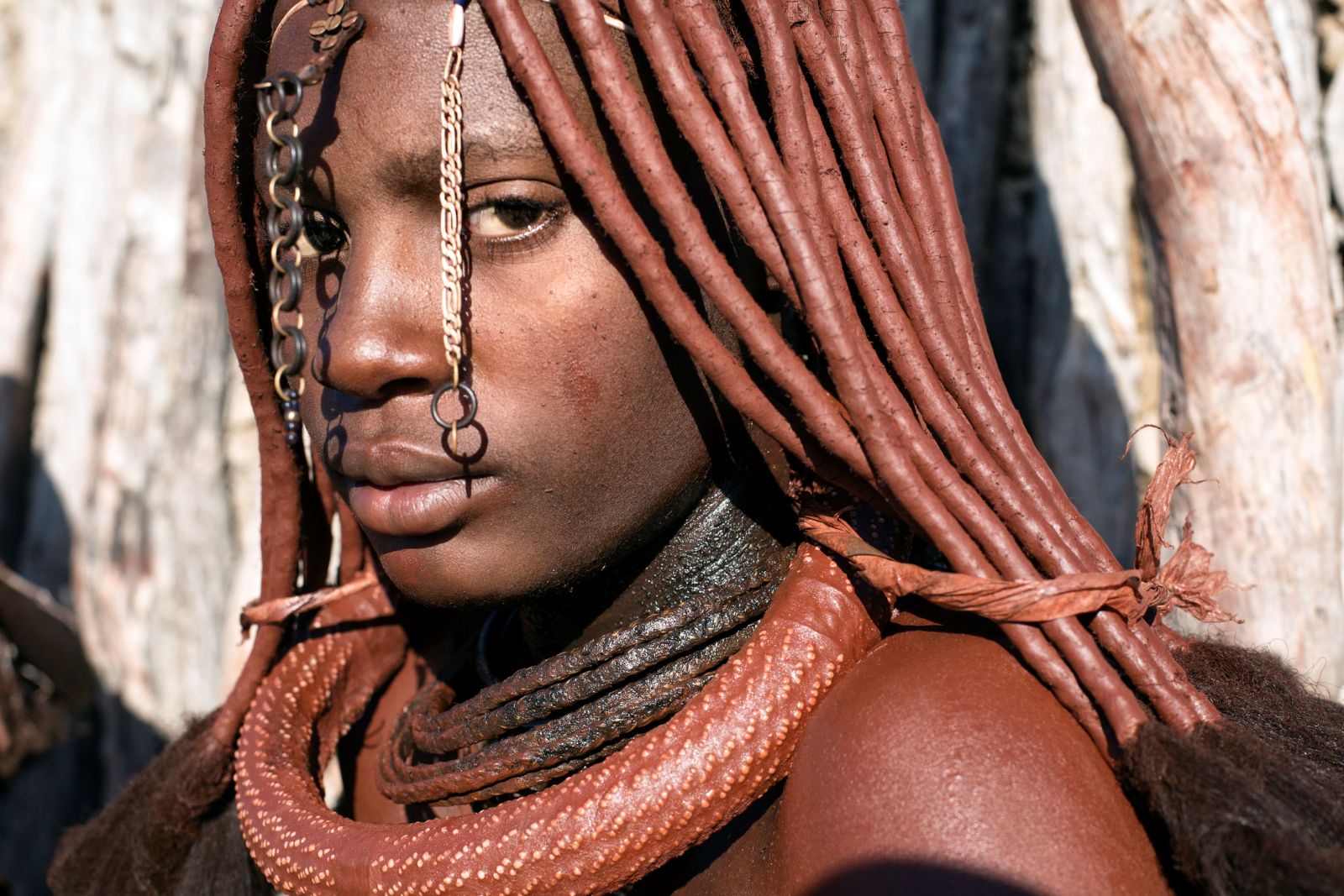
Himba women are well known for their stunning appearance, shaped by both beauty practices and the desert climate. A paste of red ochre is applied to their skin and hair and gives the Himba a deep red color. This protects them from the sun and helps keep them clean in an area where water may be scarce. They have elaborate hairstyles that reflect their age, family status and life stage. They use handmade jewelry, leather adornments, and ornaments as an essential part of their identity.
Wrapping Up
The Herero and Himba offer two powerful examples of Namibia’s cultural depth. Whether through the bold horn-shaped headdresses of Herero women or the ochre-coated beauty of Himba traditions, each group tells a story of resilience, adaptation, and pride. Together, they contribute to the vibrant, living mosaic that makes Namibia one of the most culturally rich places in Africa—and a destination where every traveler can learn something meaningful.
Cultural Visits: Reminders

As with any destination, Namibia’s cultural heritage is something that should be approached with care. You should only consider visiting when accompanied by a local guide who understands the community, its customs, and the protocols that ensure your visit is respectful. Follow your guide’s instructions and ask before taking photos of people and respect sacred sites and rituals.
Please visit:
Our Sponsor