
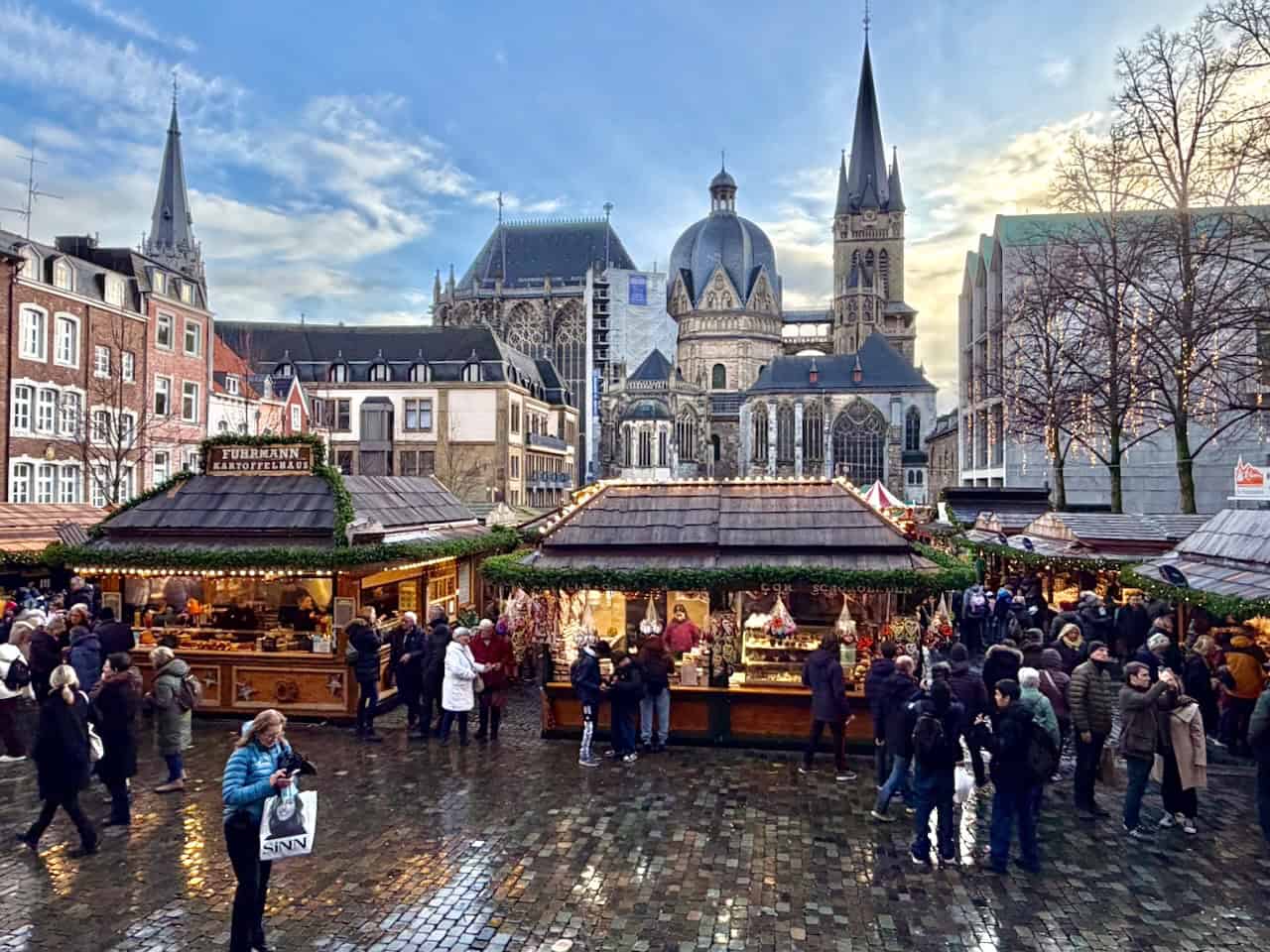
Germany is awash with small cities that are packed with history and charm. Together with my partner, Historic Highlights of Germany, I’ve made it a goal to visit many of these cities and learn about their unique history and cultural heritage. My latest trip coincided with the start of Advent, which meant that I had the added bonus of enjoying Germany’s famous Christmas markets. I covered four cities: Münster, Osnabrück, Bonn and Aachen, all of which are a short hop by rail from major cities in western Germany such as Cologne and Düsseldorf. During this six-day trip, I discovered vibrant cities with a fascinating mix of histories: from Charlemagne to the Cold War; stunning architecture; and lively cultural scenes. Moreover, I got to revel in the festivities at the Christmas markets!
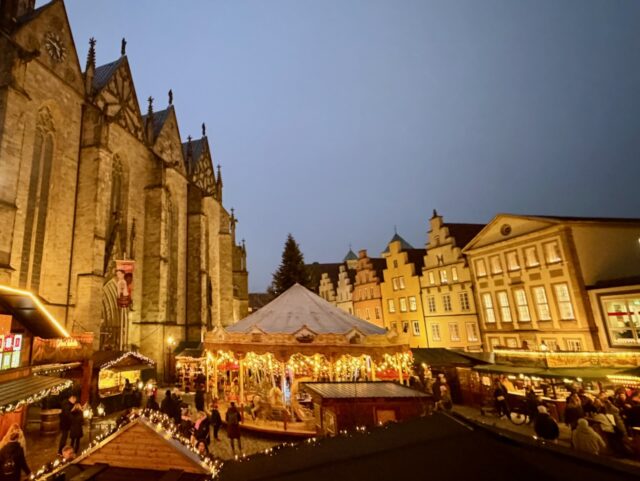 Christmas market in Osnabrück

From Amsterdam, I boarded the ICE train in the direction of Berlin and disembarked at Osnabrück. From there, it was a short train ride to Münster, my second stop. The next day, I travelled to Bonn via Cologne. The last city I visited before returning to Amsterdam was Aachen.
- Day 1: Amsterdam to Osnabrück
- Day 2: Osnabrück in the morning; train to Münster in the late-afternoon
- Day 3: Münster in the morning; train to Bonn in the late-afternoon
- Day 4: Bonn in the morning; train to Aachen (via Cologne) in the late-afternoon
- Day 5: Aachen
- Day 6: Train to Amsterdam in the afternoon.
This rail trip through western Germany, a collaboration with Historic Highlights of Germany, was full of the things I enjoy most when I travel: stunning historic cities, lush landscapes, beautiful architecture and amazing food and wines! On my previous trip, I embarked on a rail journey along the Rhine and Moselle rivers, visiting cities such as Koblenz, Heidelberg, Wiesbaden and Trier.
The cities I visited are part of the 17 heritage cities known as Historic Highlights of Germany. The 17 cities are typically university towns with a rich historical legacy, a vibrant cultural scene and a tantalising array of restaurants, local design boutiques and food stores. These cities have another important point in common: they are all easy to explore on foot. Here are my highlights in each city:
Osnabrück
A university city in the German state of Lower Saxony, Osnabrück – also known as the “City of Peace” – turned out to be a lovely surprise. Lively and youthful thanks to its 22,000 students, the city suffered extensive damage during WWII. Traces of the 1944 firebombing can still be seen in the Old Town, yet its most important buildings have been lovingly restored to their original medieval appearance.
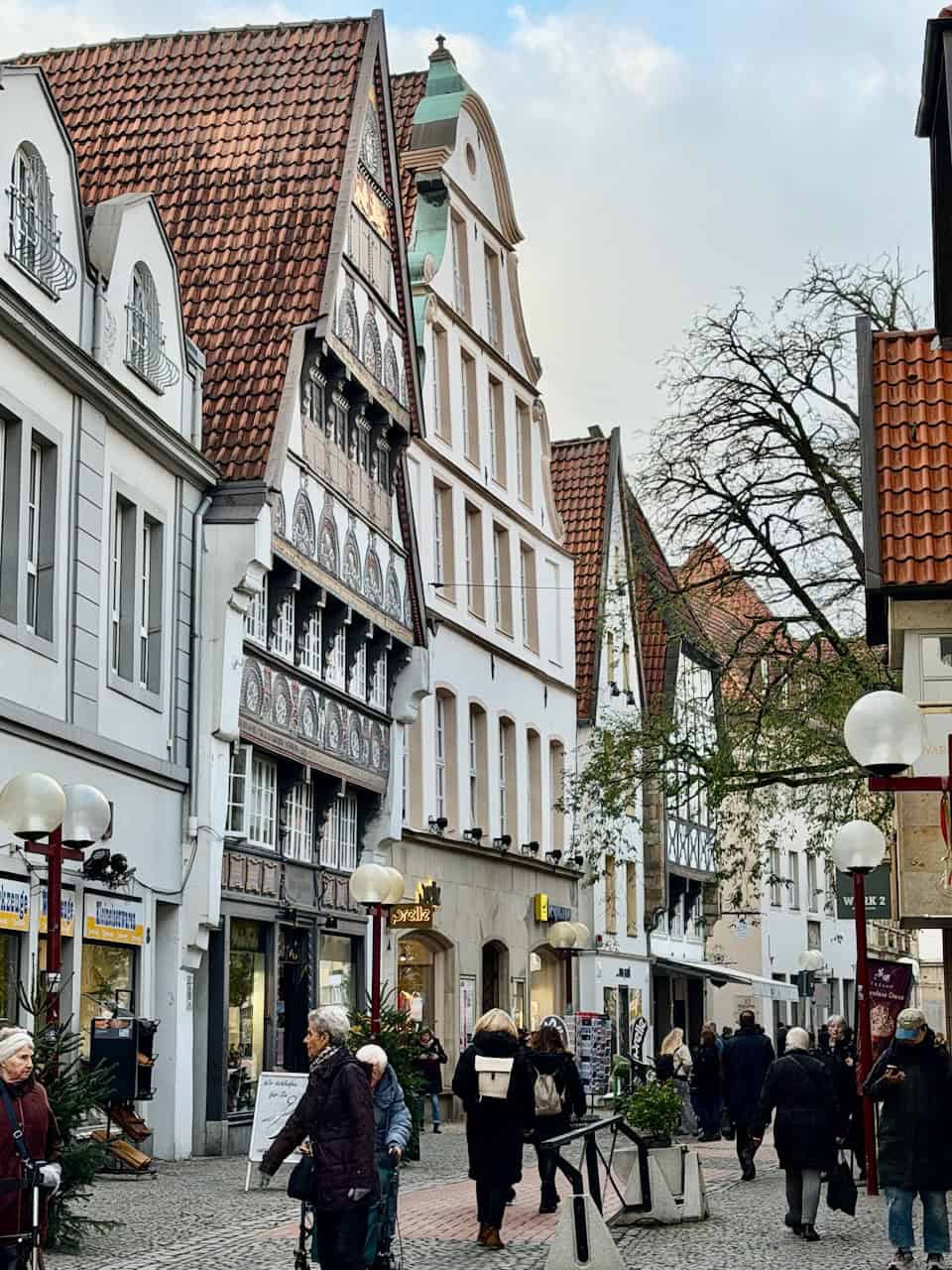 Osnabrück street
Osnabrück’s roots stretch back to the 8th century A.D., when it emerged as a small merchant community. Its fortunes grew considerably after joining the Hanseatic League, an influential network of northern European trading towns, in the 12th century. Centuries later, in 1648, Osnabrück, together with Münster, hosted the negotiations and signing of the Peace of Westphalia, the treaty that brought an end to the Thirty Years’ War and reshaped Europe’s religious and political landscape.
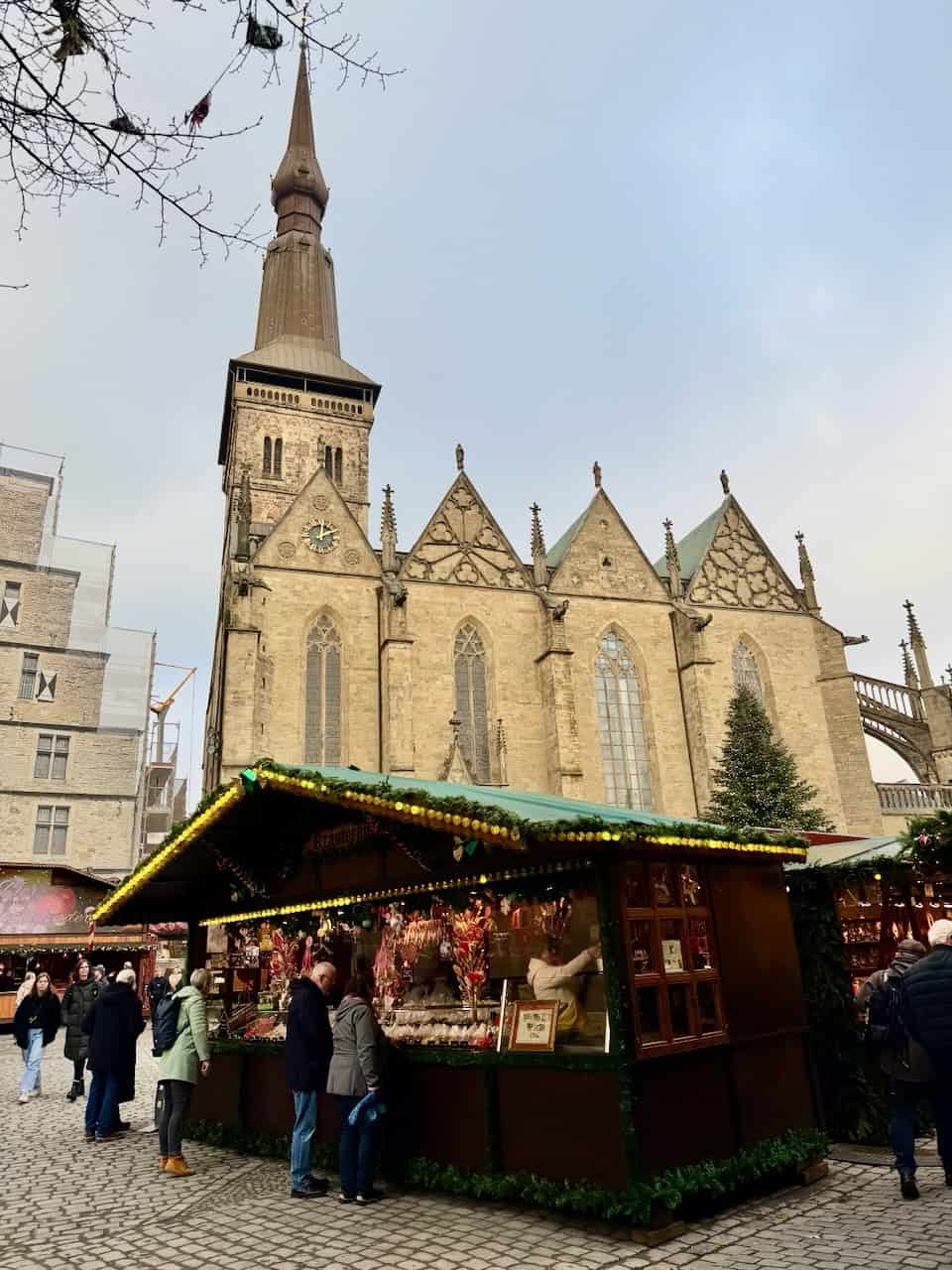 Christmas market at Marktplatz with the Marienkirche as a backdrop.
As I wandered through the city, weaving between old and new, I discovered medieval buildings, graceful half-timbered houses, lively squares, and charming streets. The main square, the Marktplatz – framed by colourful gabled houses, the soaring Marienkirche (St. Mary’s Church) and the historic Rathaus (where the Peace of Westphalia was signed) – was alive with the bustle of a Christmas market. Drifting among the stalls, I was greeted by the irresistible scents of freshly baked pastries, spiced cookies, and warm glühwein (mulled wine).
Highlights of Osnabrück
Upon my arrival, I checked into the charming Romantik Hotel Walhalla. Located in a 17th century, half-timbered building, across the road from the Rathaus, the hotel was certainly a highlight of this trip! Famous guests who have stayed there include the Dalai Lama!
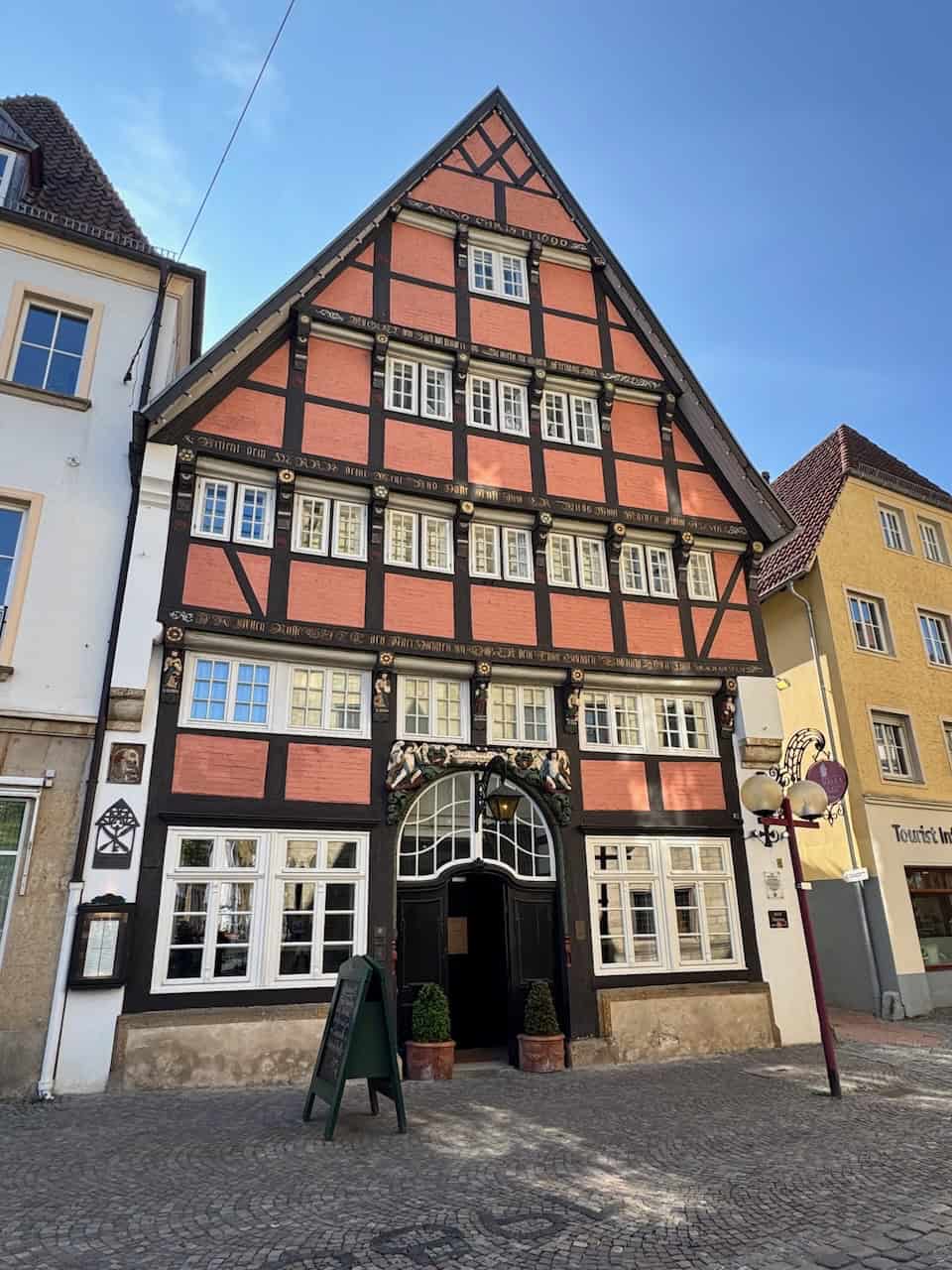 Romantik Hotel Walhalla
The first thing I did was pop into Café Sophies, situated a few doors down in another lovely half-timbered building, for a quick coffee and some cake.
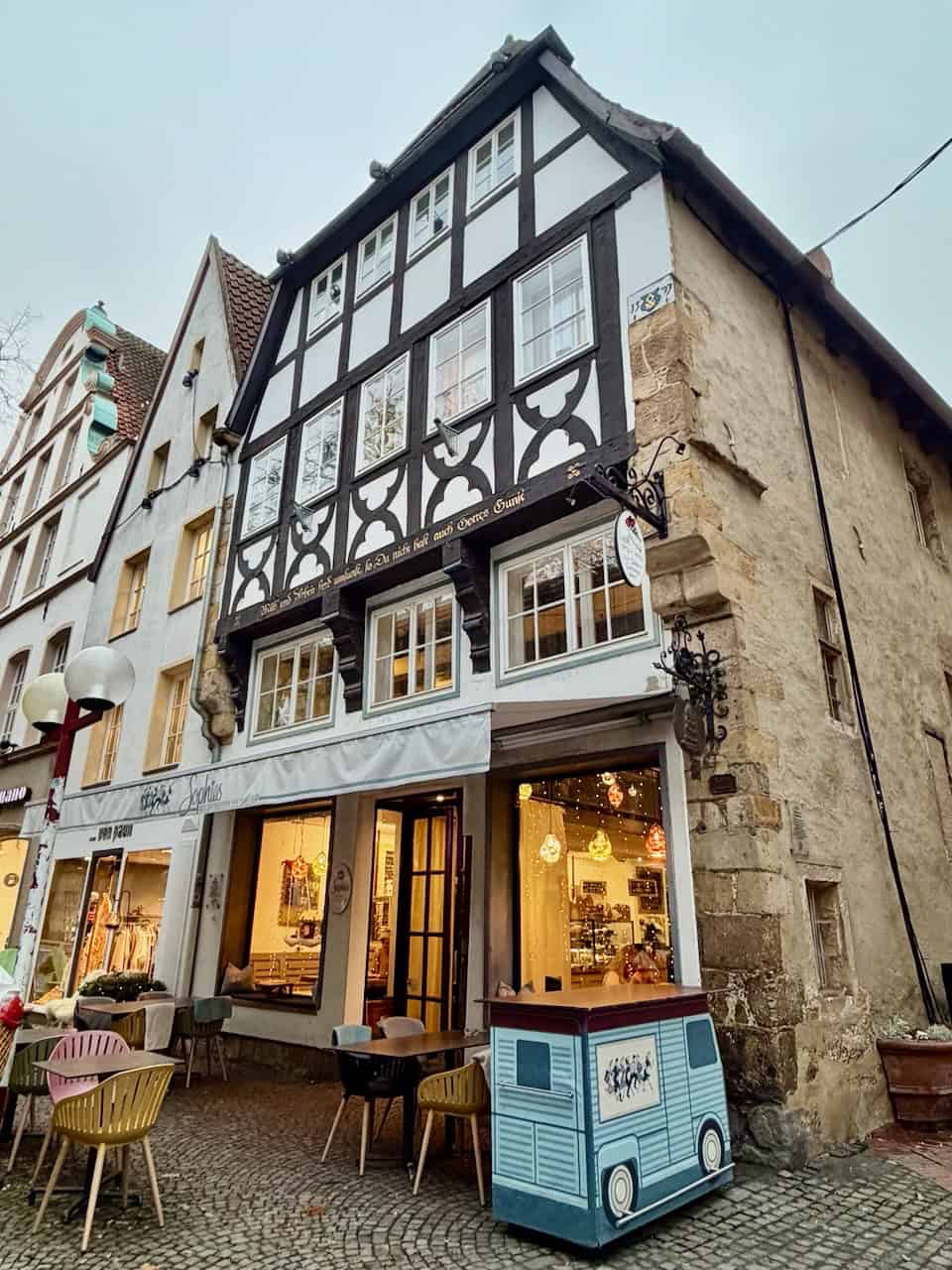 Cafe Sophies
Rathaus and the Medieval Quarter
Next on the agenda was a guided walking tour of Osnabrück’s historic highlights. We began at the striking 15th-century Rathaus, the site where part of the Peace of Westphalia was negotiated and signed in 1648. This late-Gothic building still serves as the town hall and now houses several international institutions dedicated to the study and preservation of peace.
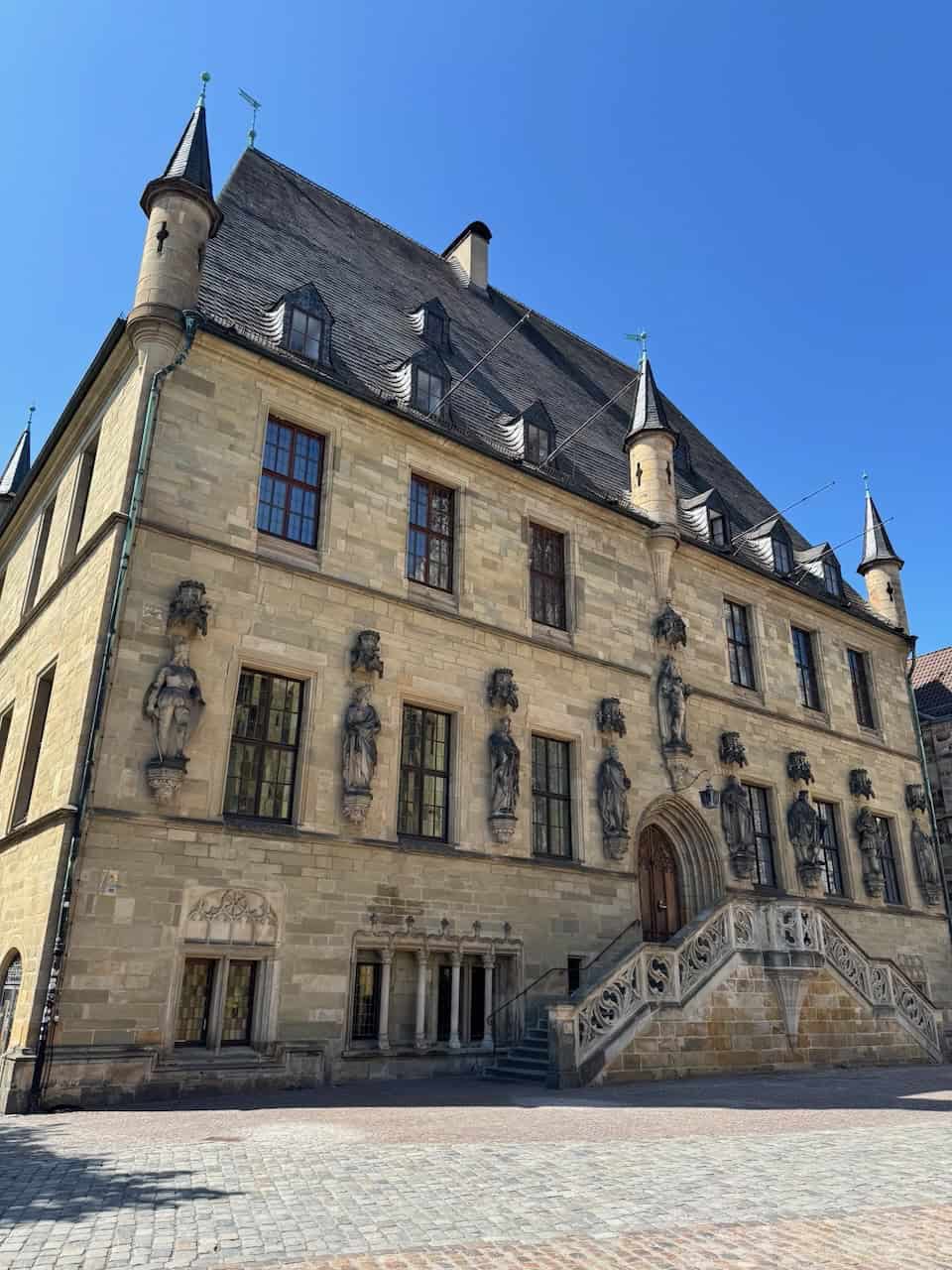 Osnabrück Rathaus
The Rathaus was heavily damaged by British firebombs during WWII, but was later faithfully reconstructed – remarkably, with the help of British soldiers.
From there, we wandered through the picturesque lanes of the medieval quarter. Lined with beautifully preserved half-timbered houses – many still used as private homes, boutiques or restaurants – these narrow streets were an absolute delight to explore.
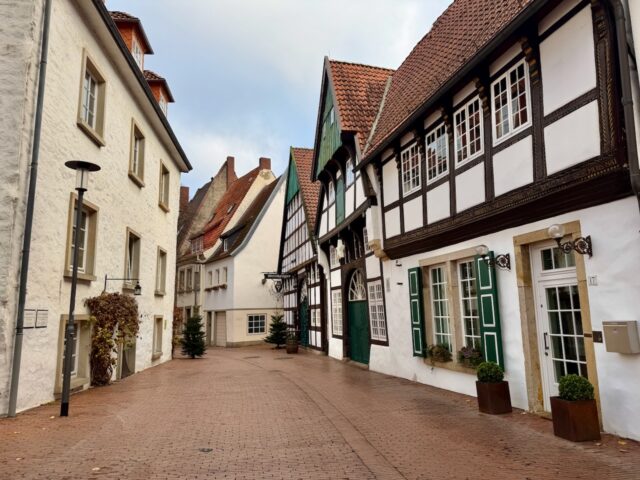 Charming houses in the medieval quarter
Bock Tower
We continued along the edges of the Old Town, stopping at remnants of the medieval walls, gates, and towers. One tower in particular, the Bock Tower, holds an especially grim history. Used as a prison in the medieval period, it still contains one of its former “cells”: a large wooden box dating back to the 15th century. The tower later served as a torture chamber during the witch hunts of the 16th century.
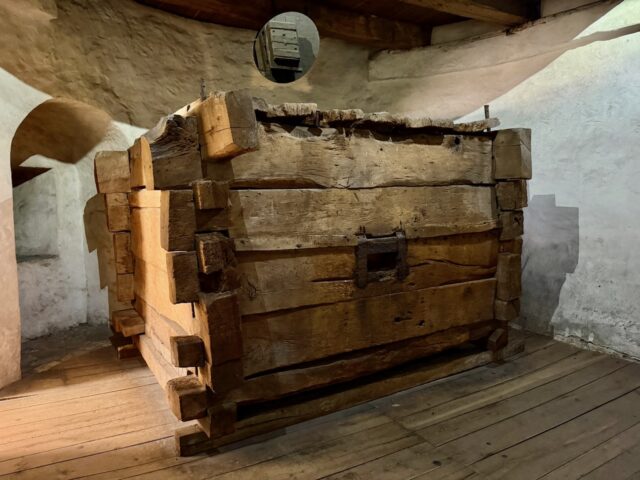 The wooden prison ‘cell’ in the Bock Tower
Felix Nussbaum House
The next morning, the guided tour resumed with a visit to the Heger Gate, a monument commemorating the soldiers from Osnabrück who died in the 1815 Battle of Waterloo.
Just across the road stands the Felix Nussbaum House, a museum designed by the renowned American architect Daniel Libeskind. Built around the remaining sections of a medieval wall and bridge, the museum is dedicated to the works of Felix Nussbaum, a Jewish artist who perished in Auschwitz.
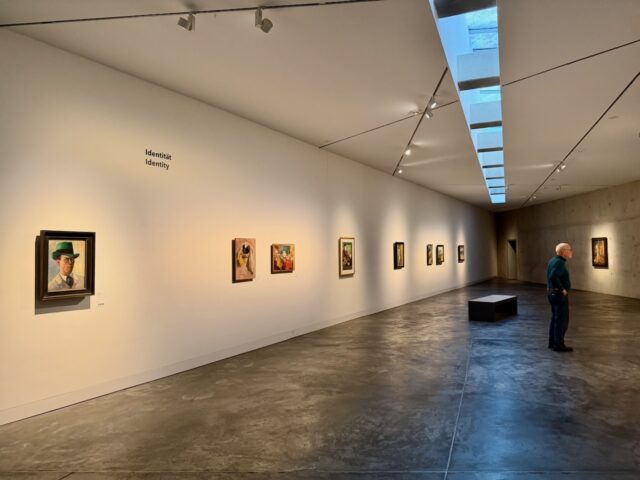 Felix Nussbaum House
This visit was another highlight. Nussbaum’s early paintings depict cheerful scenes of family and friends, but as war approached and persecution intensified, his work took a darker turn. His most famous pieces – such as Self-Portrait with Jewish Identity Card and The Triumph of Death – offer haunting, powerful portrayals of the horrors of the era.
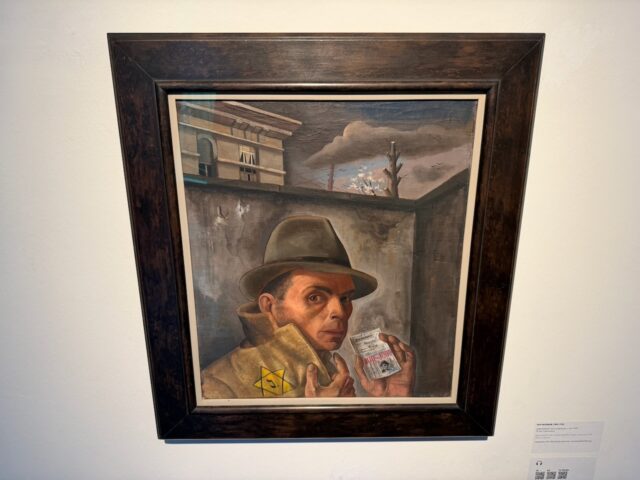 Self-Portrait with Jewish Identity Card – Felix Nussbaum
St. Peter’s Cathedral
Our final stop was St. Peter’s Cathedral. Built on the foundations of an 8th-century church, the present Romanesque-Gothic structure took shape in stages during the 11th and 13th centuries. Its most distinctive feature is its trio of towers, each a different size, with the central Romanesque crossing tower being the oldest.
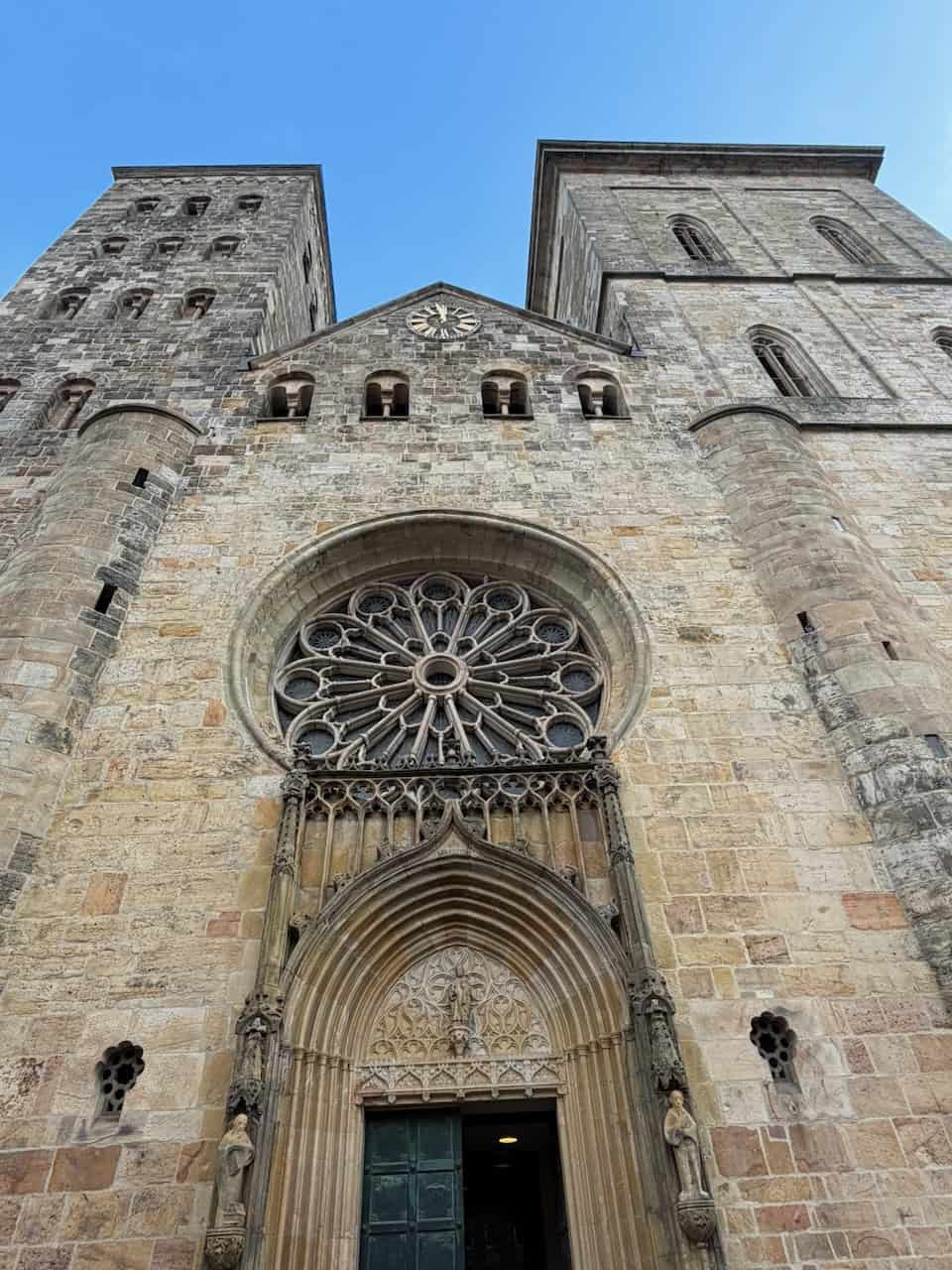 St. Peter’s Cathedral
Münster
My next stop on this rail trip was Münster, a train journey of about 45 minutes. Together with Osnabrück, Münster was the venue for the signing of the Peace of Westphalia in 1648. Known as the ‘City of Bikes’, Münster is another lively university city with a long and fascinating history. Like Osnabrück, much of Münster was destroyed during WWII, but was lovingly restored to its medieval origins, when the city was one of the leading merchant towns of the Hanseatic League.
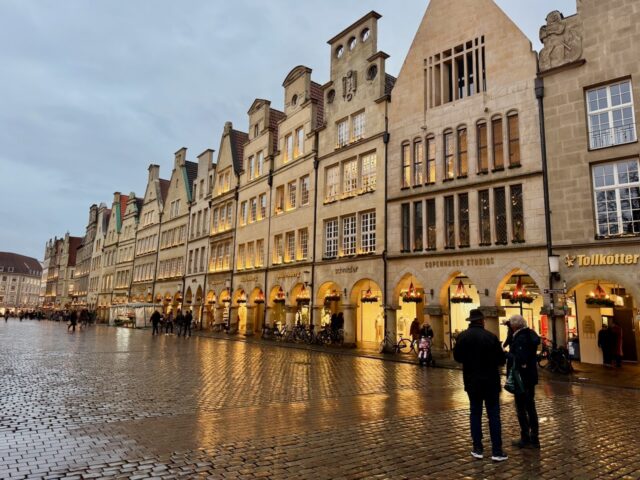 Prinzipalmarkt in Münster
I was excited to visit Münster because the city has a close historic relationship with The Netherlands. In fact, the Peace of Westphalia marked the end of the Eighty Years’ War between Spanish forces and the Dutch, and effectively created an independent Dutch Republic. These days, the University of Münster has the largest offering of Dutch linguistics/culture studies in Germany.
Though it was a dreary day, the city was very much alive. Christmas markets were bustling with revellers, and the festive lighting cast a warm glow that made Münster feel wonderfully enchanting.
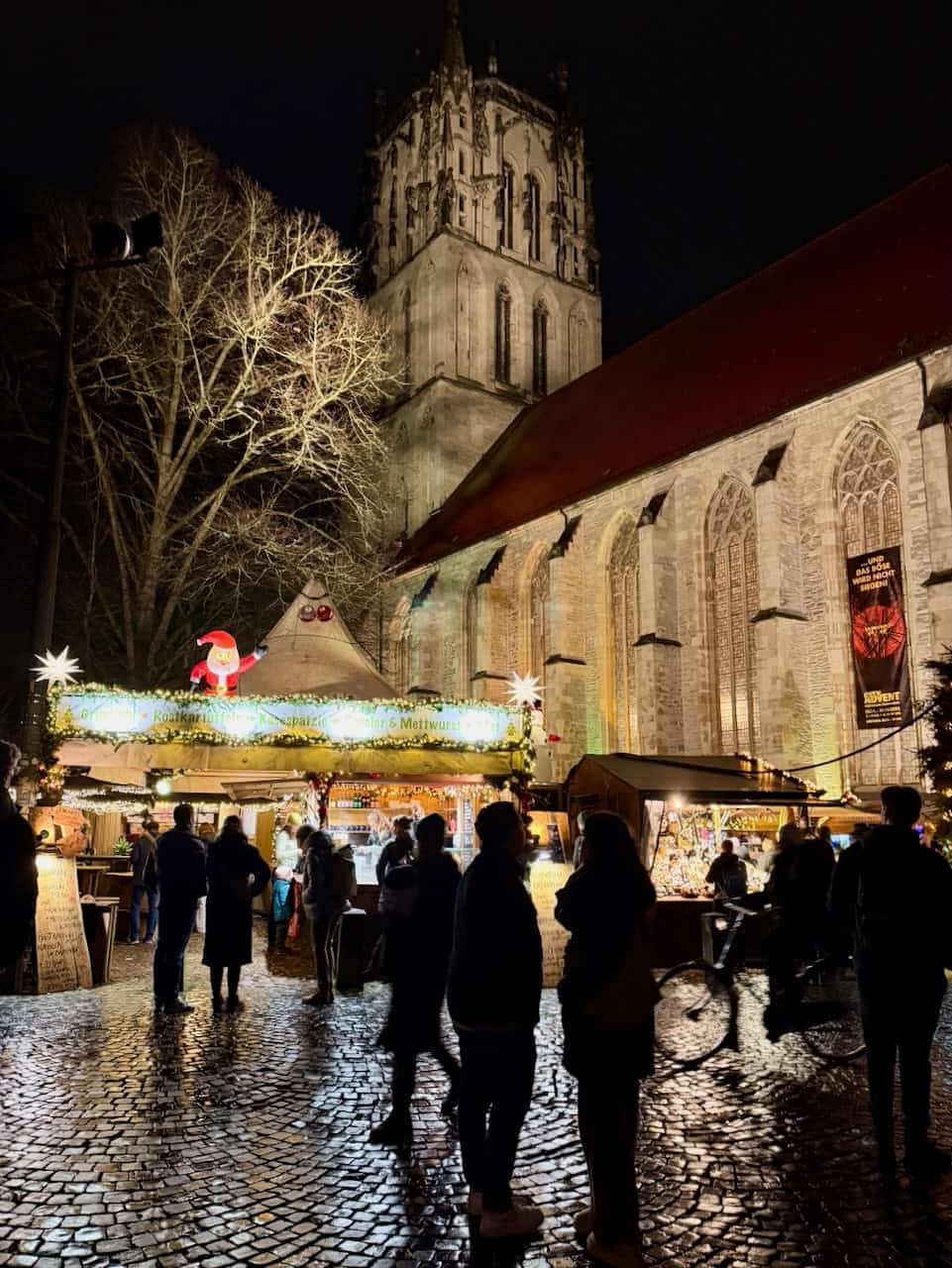 Christmas market at the Liebfrauen-Überwasserkirche
Highlights of Münster
I stayed at the Atlantic Hotel Münster, a modern and very comfortable hotel just around the corner from the central station and at the edge of the historic city centre. From there, I joined a guided walking tour that started with a leisurely stroll along the Promenade – a green belt of pedestrian and cycling paths that encircles the city, tracing the line of Münster’s former medieval walls.
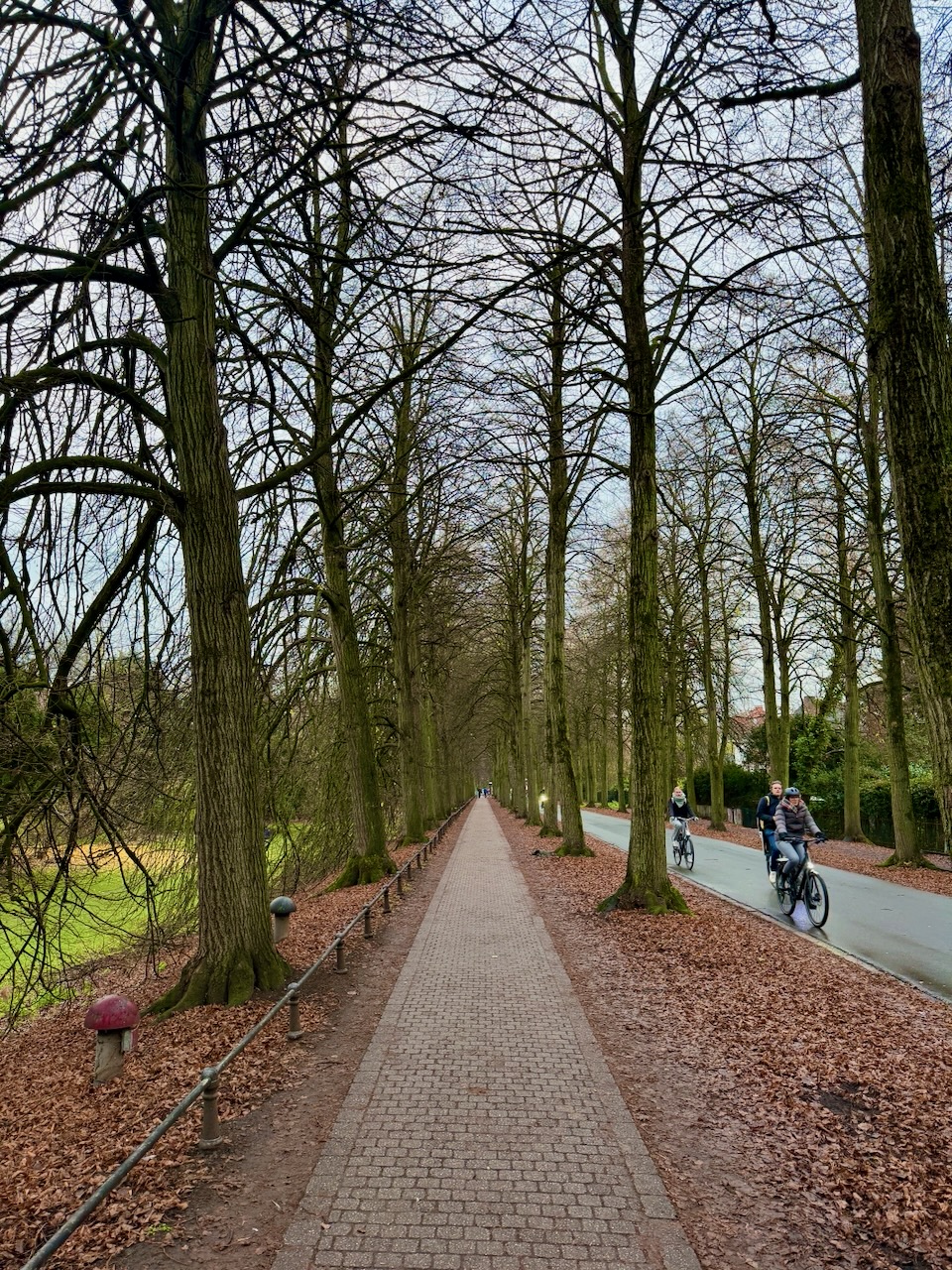 Promenade
Sculpture Project
The Promenade is dotted with artworks created for Münster’s Sculpture Project, an international art exhibition held once every ten years (the next will take place in 2027). Many sculptures remain in the city after each edition and can be found along the Promenade as well as inside the Westphalian State Museum. I paused at the intriguing Paul Wulf sculpture before continuing toward the historic centre.
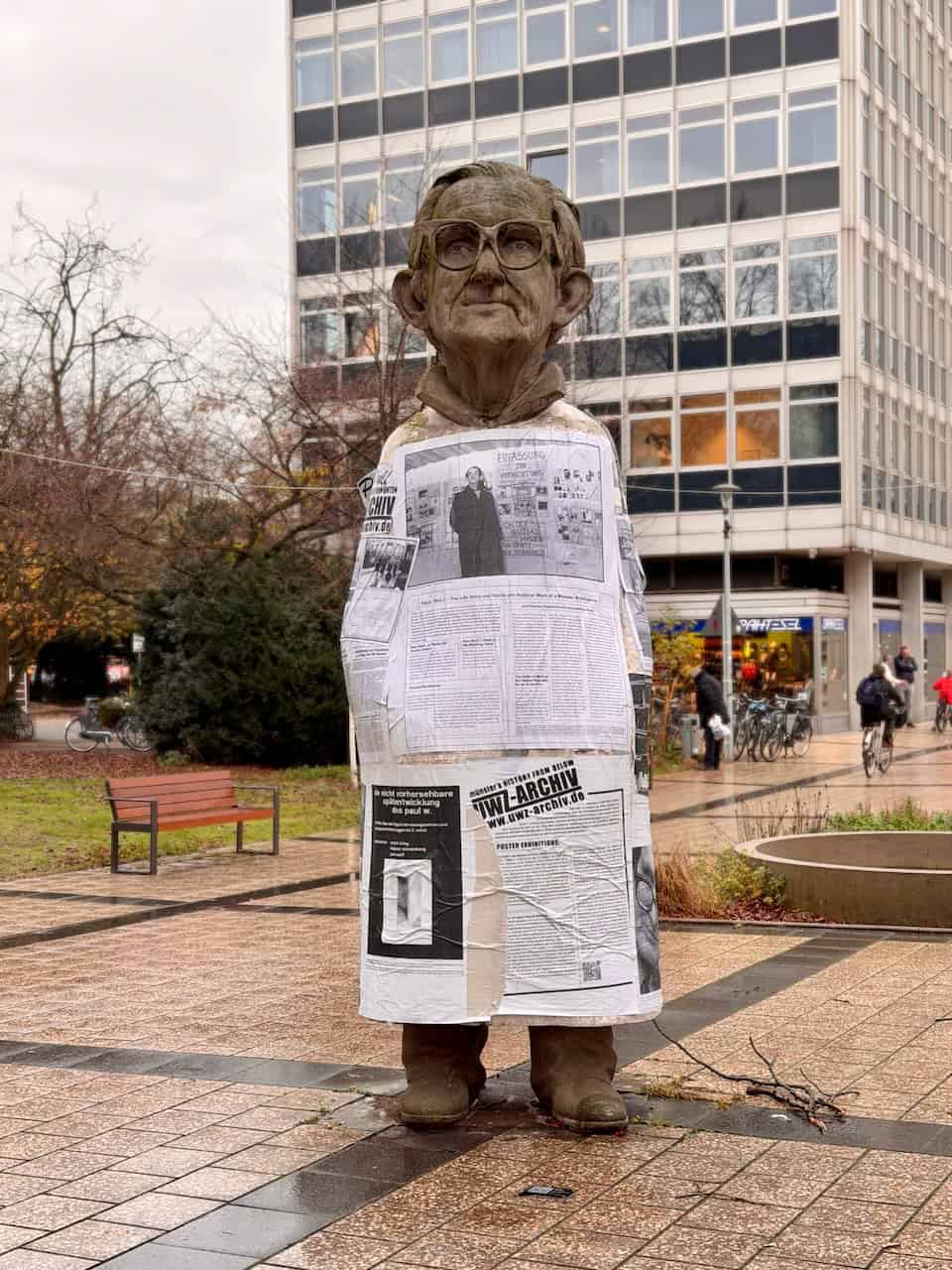 Paul Wulf sculpture
Westphalian Baroque
A short walk later, I came upon the grand Erbdrostenhof, an 18th-century private mansion designed by Johann Conrad Schlaun, the architect behind Schloss Münster (Münster Palace). Built in the Westphalian Baroque style – a regional take on Baroque that retains grandeur but feels slightly more understated – the Erbdrostenhof immediately caught my eye.
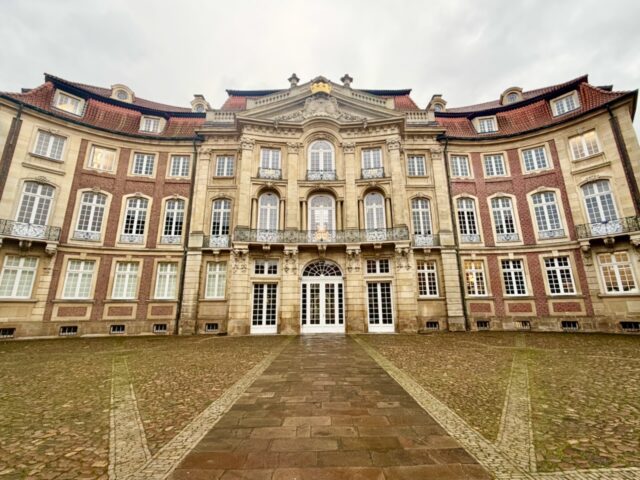 Erbdrostenhof
St. Lambert’s Church
My next stop was the 14th-century St. Lambert’s Church, its towering spire dominating the skyline. The church is perhaps best known for the three cages that hang from the tower – grim reminders of the Münster Rebellion of 1535, when Jan van Leiden and other instigators were imprisoned and executed.
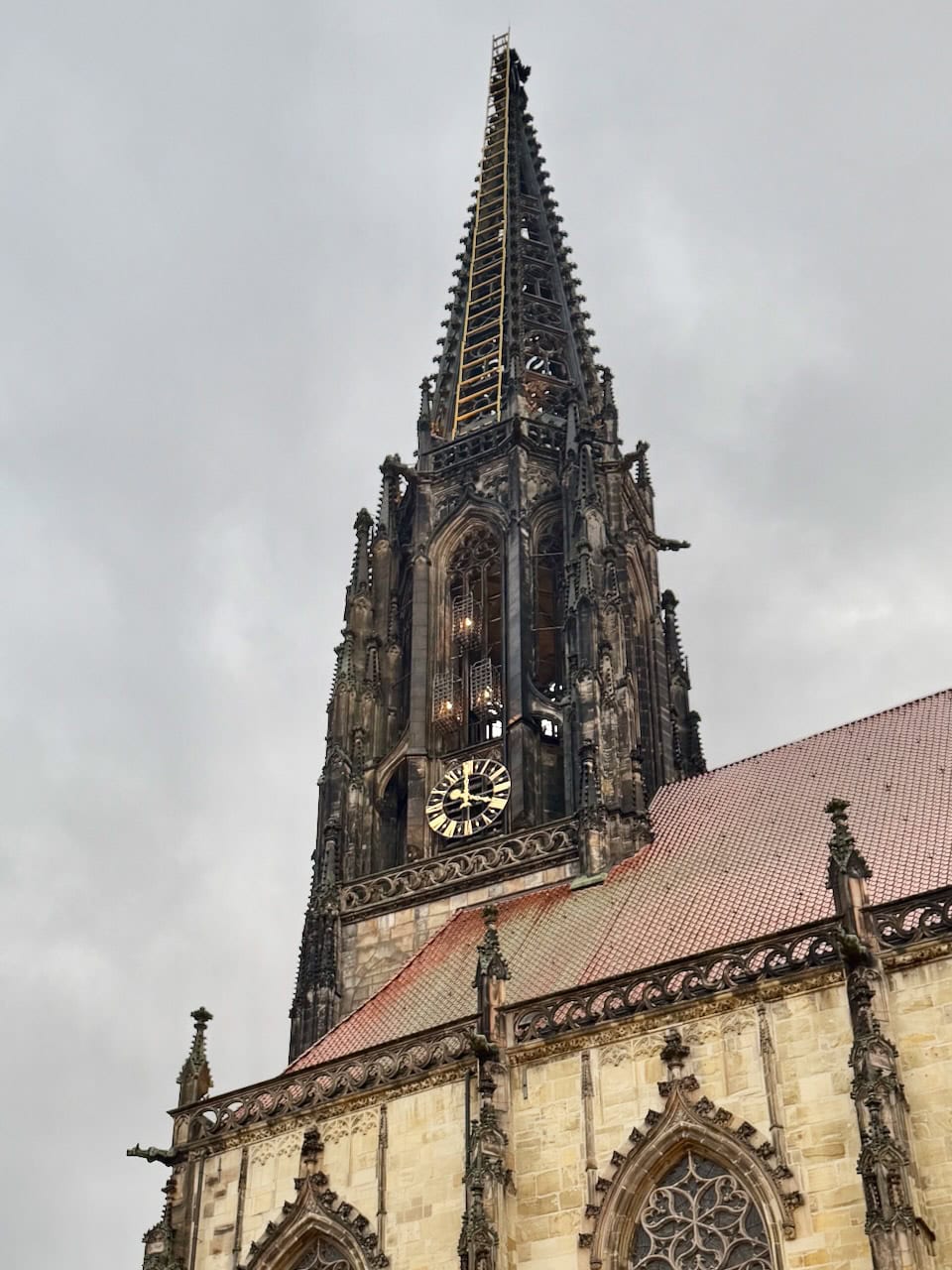 St. Lambert’s Church – spot the three cages hanging above the clock.
The 90-metre tower once housed a lookout responsible for spotting fires or incoming attacks. Remarkably, a tradition continues today: every evening, a woman climbs the tower to sound her trumpet.
Looking up, it was impossible to miss the brightly lit ladder affixed to the spire. Known locally as the “Ladder to Heaven,” it is an art installation created in 2022 by Austrian artist Billi Thanner.
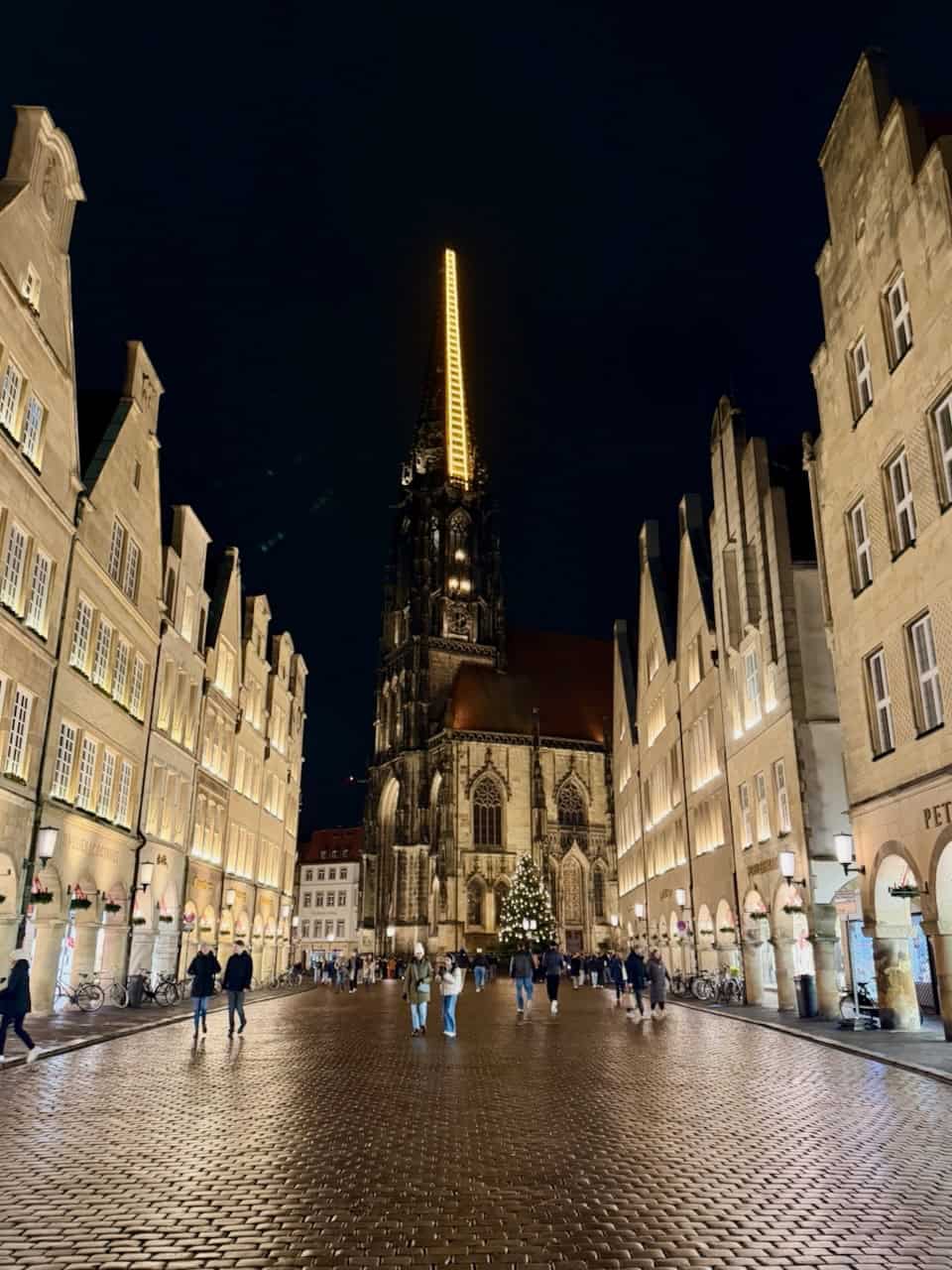 The “Ladder to Heaven” lit at night.
Just around the corner from the church, I found the House of Holland, one of Münster’s oldest buildings. In the 17th century, Dutch delegates stayed here while negotiating the Peace of Westphalia.
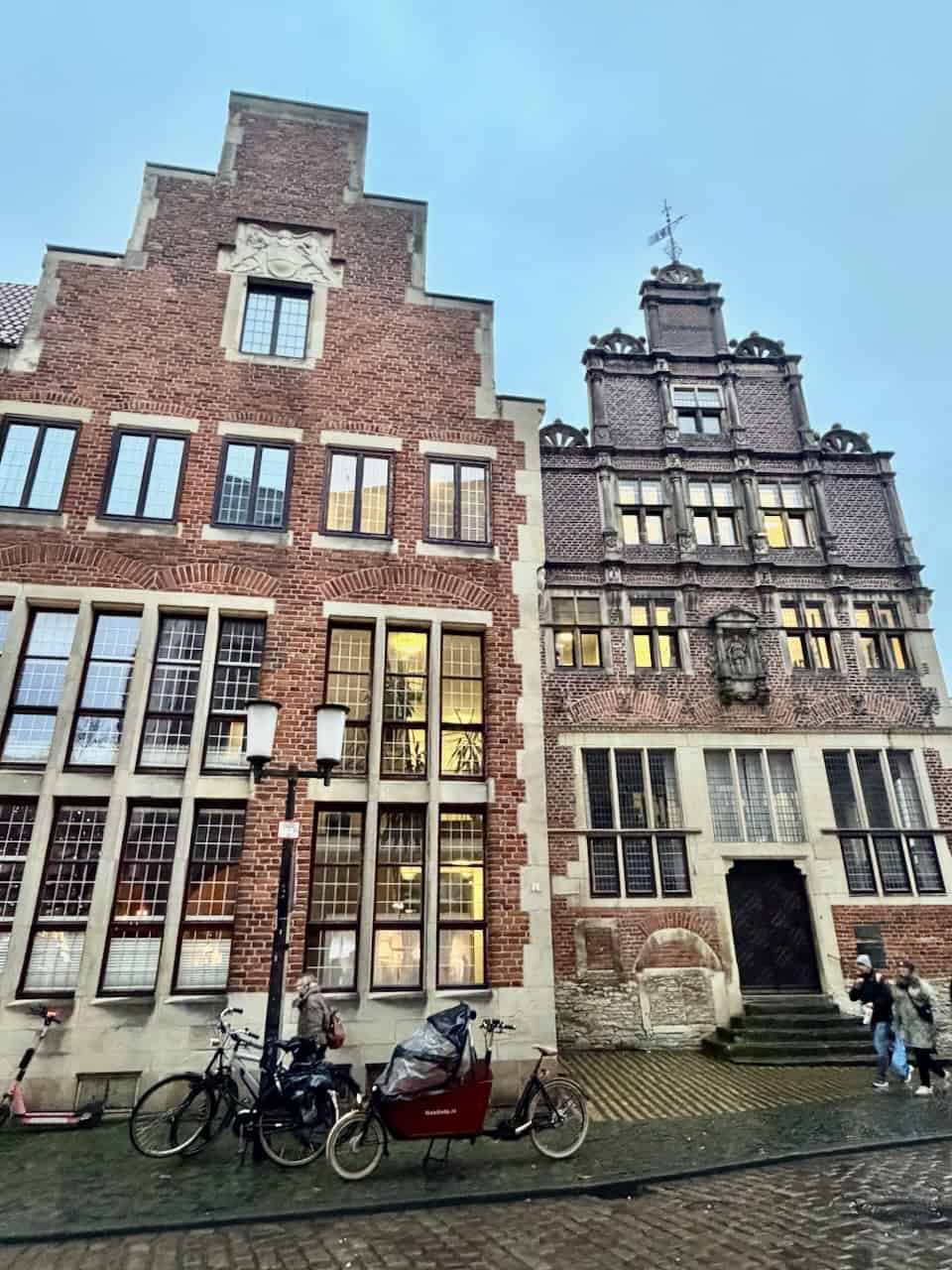 House of Holland (left)
Prinzipalmarkt
From the church, I wandered down the impressive Prinzipalmarkt – a city square in definition but more like an elegant boulevard lined with medieval-style, step-gabled buildings. I especially loved the porticoes: covered arcades filled with shops and cafés that made the street feel both stately and welcoming.
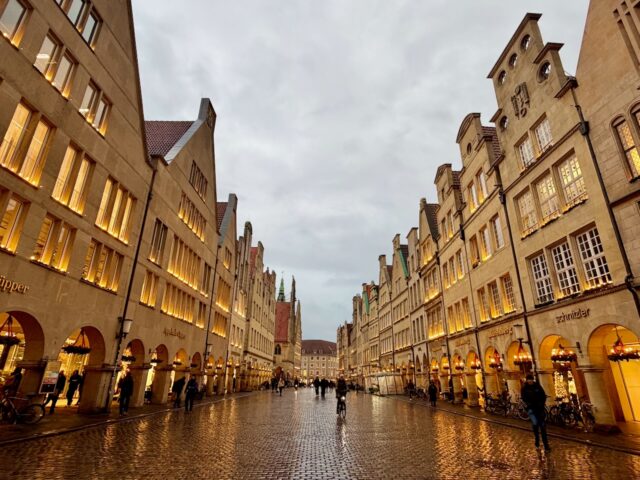 Prinzipalmarkt
Rathaus
Among the most striking buildings along Prinzipalmarkt is the Gothic Rathaus, Münster’s old town hall. It was here that key negotiations and the signing of the Peace of Westphalia took place.
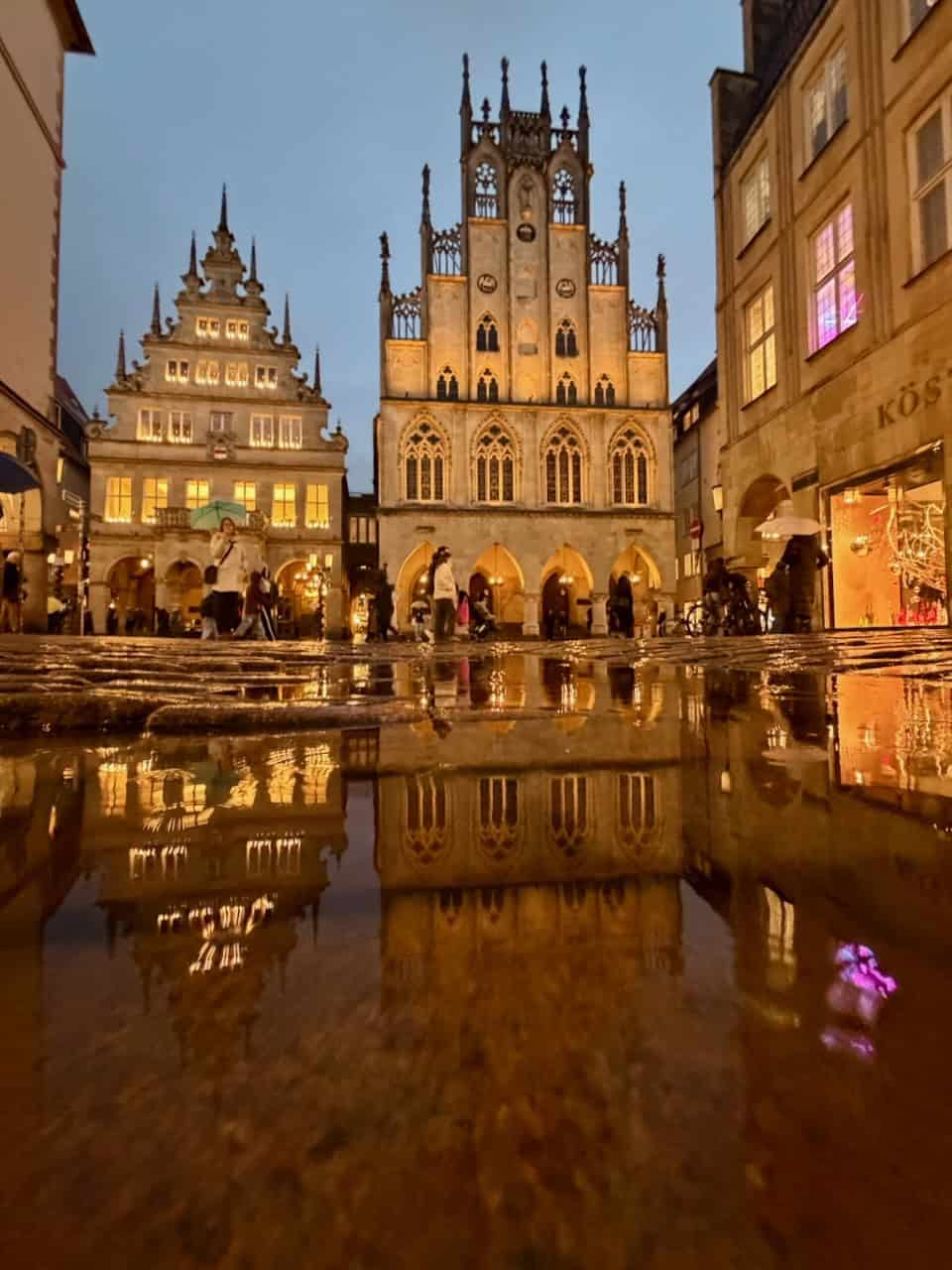 Münster Rathaus (right)
St. Peter’s Cathedral
My final stop before dinner was the expansive Domplatz (Cathedral Square) and St. Peter’s Cathedral. While its origins date back to the 9th century, the current Romanesque-Gothic structure is largely from the 13th century.
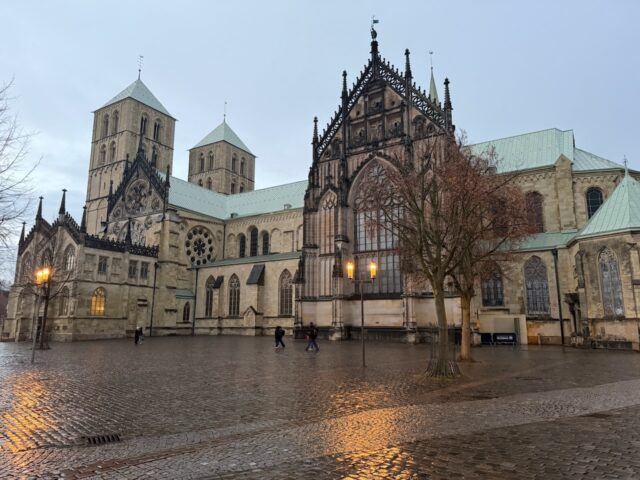 St. Peter’s Cathedral
Inside, I found one of the cathedral’s treasures: a magnificent 16th-century astronomical clock that tracks the movements of the planets.
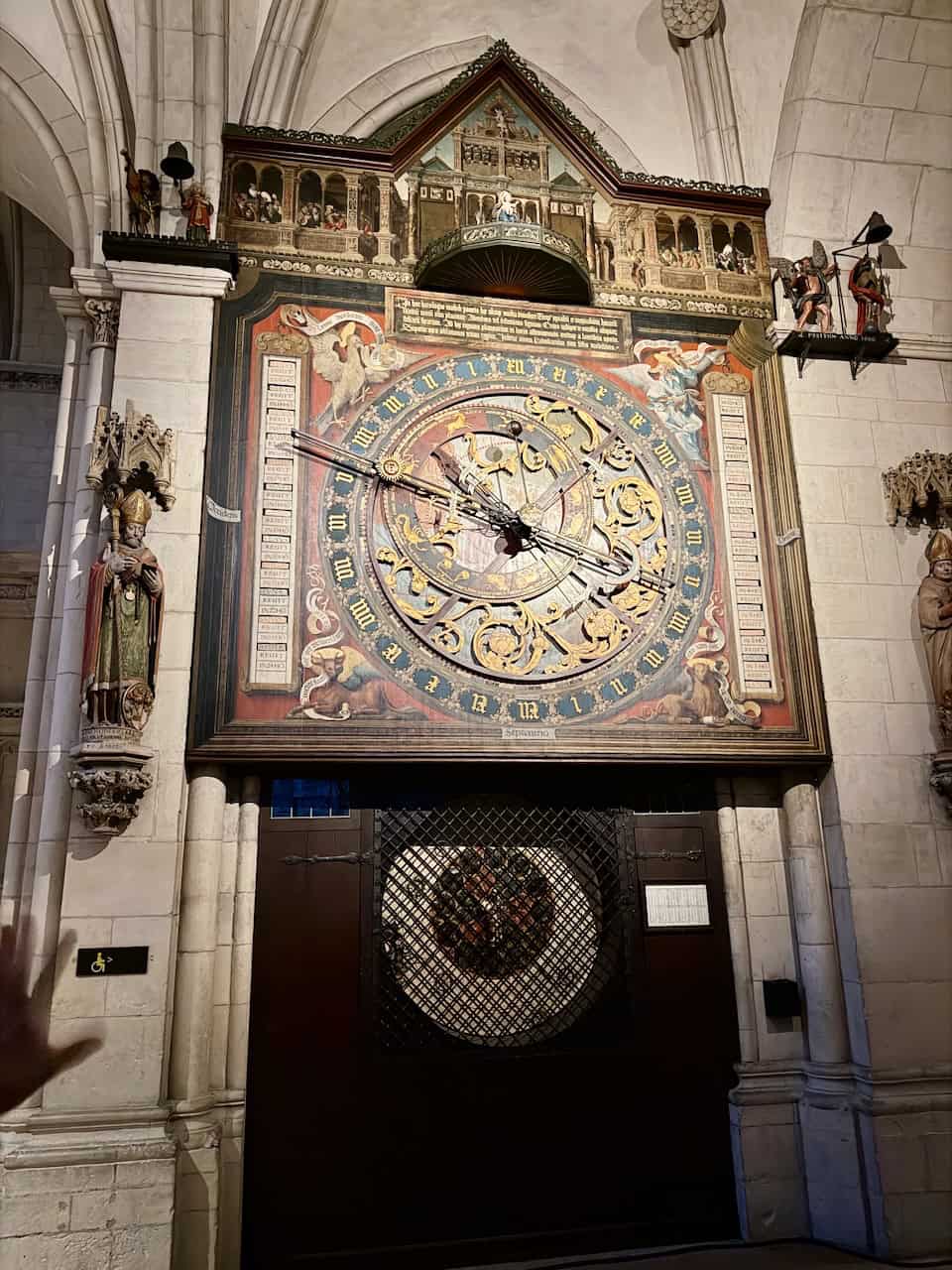 The astronomical clock
That evening, I enjoyed a terrific dinner at Pinkus Müller, a cosy family-owned brewery-restaurant serving delicious local specialties and excellent beers.
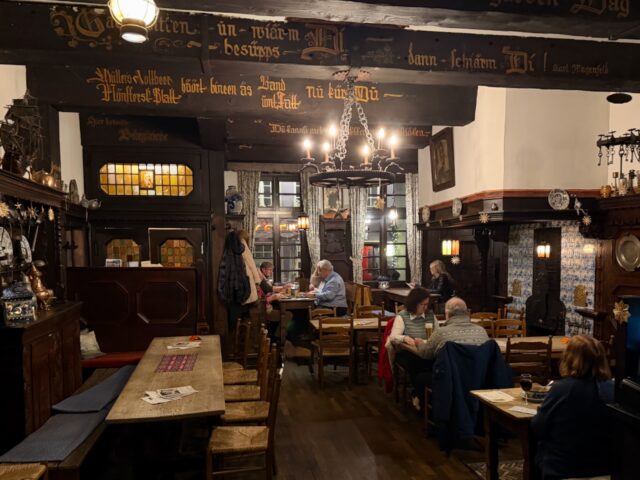 Pinkus Müller
Westphalian State Museum of Art & Cultural History
The next morning, I visited the striking Westphalian State Museum, located just across the square from the Cathedral. This modern building houses an impressive collection of art and cultural artifacts spanning centuries, including several notable works from Münster’s decennial Sculpture Project.
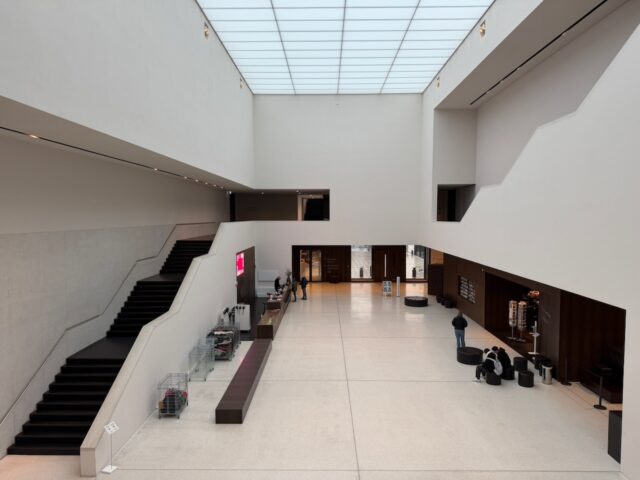 Westphalian State Museum
Bonn
The next city on my itinerary was Bonn, the former capital of the Federal Republic of Germany (West Germany). As the birthplace of Beethoven and a key player in Cold War history, Bonn turned out to be another wonderful surprise. Chosen as the temporary capital after WWII – when Germany was divided between capitalist West and communist East – the city has a fascinating past, full of diplomatic intrigue and memorable anecdotes involving world leaders. Learning about this history during my visit was a real thrill.
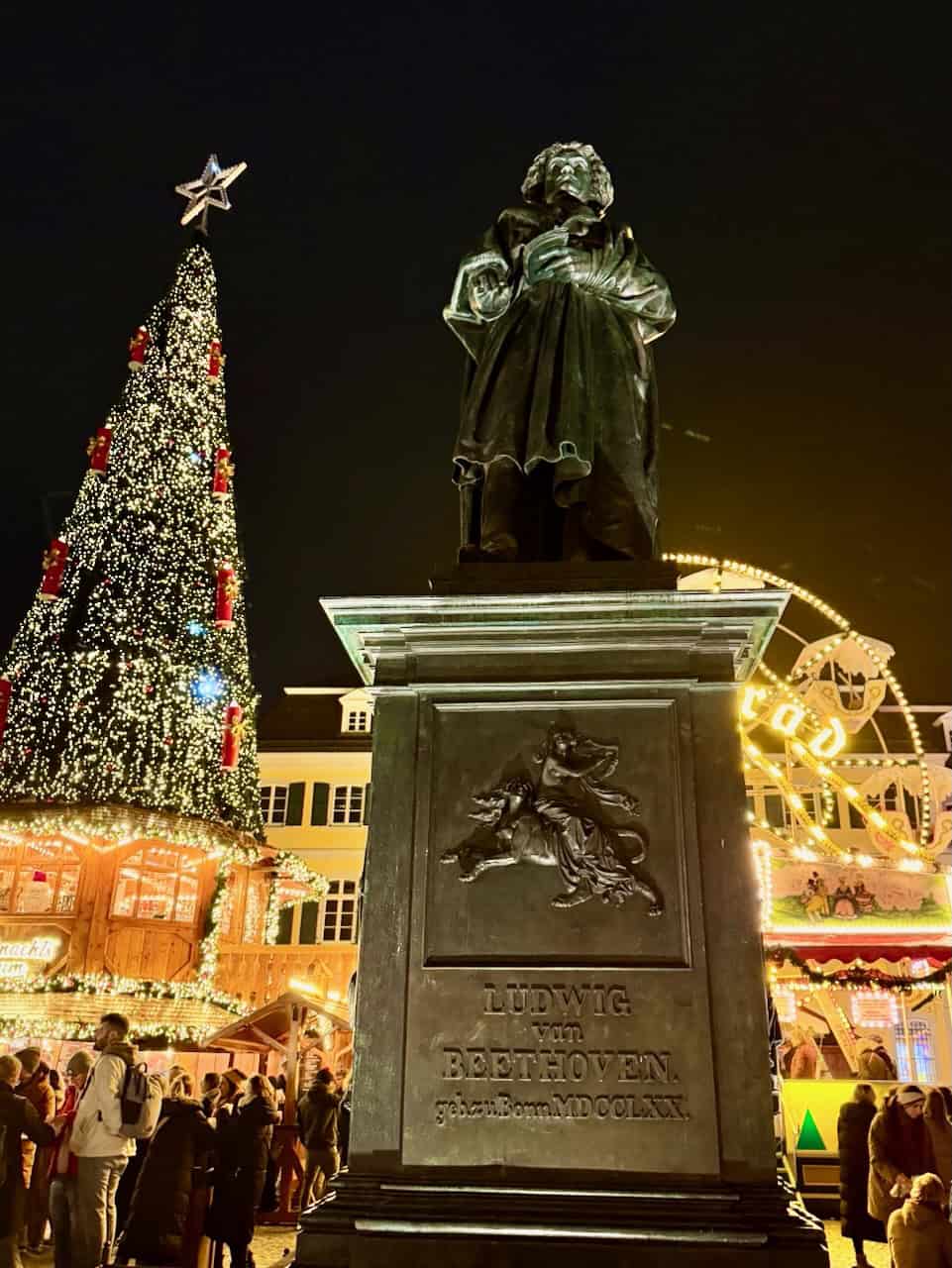 Christmas market in Bonn, the City of Beethoven.
As in Osnabrück and Münster, I arrived to find Bonn alive with festive energy. Its extensive Christmas markets were in full swing, offering an enticing mix of food, drinks, and handcrafted items. I happily browsed the stalls and picked up several souvenirs.
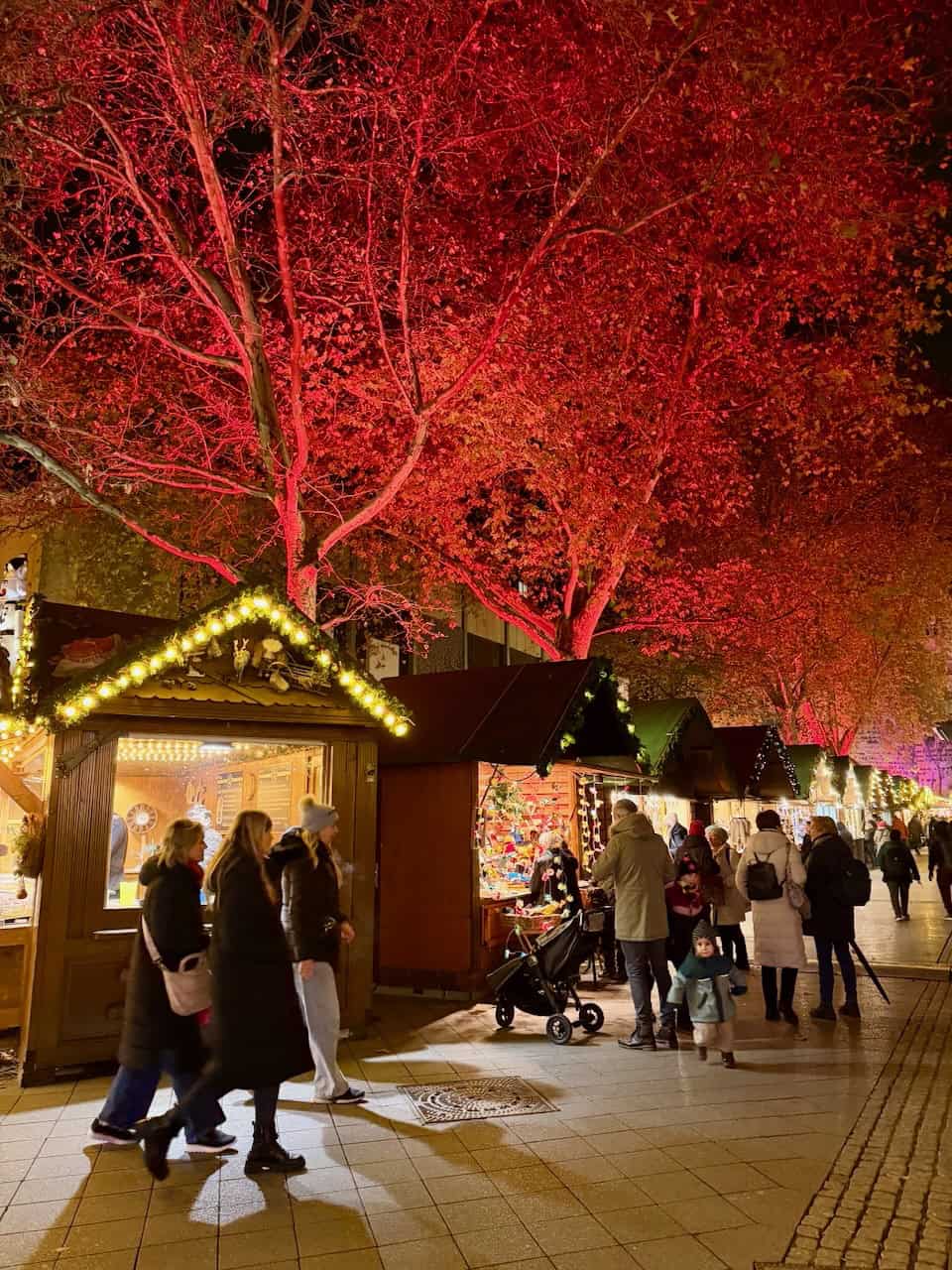 Christmas market at Bottlerplatz
Highlights of Bonn
Founded in the 1st century B.C. on the banks of the Rhine, Bonn is one of Germany’s oldest cities. Between the 16th and 18th centuries, it served as the residence of the Archbishops and Prince Electors of Cologne. During this period, magnificent Baroque palaces were constructed, most notably the Electoral Palace and the Altes Rathaus, both of which still stand proudly today.
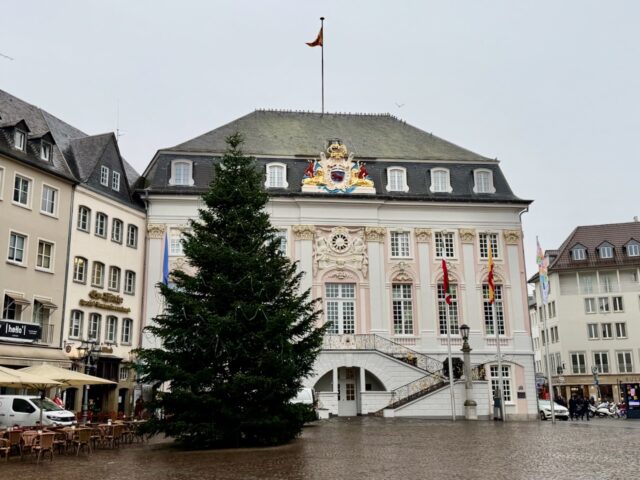 Altes Rathaus
After WWII, Bonn was chosen over Frankfurt as the capital of West Germany, largely because it was considered “unremarkable”, as my guide amusingly explained. The government assumed reunification with East Germany was imminent, and relocating the capital back to Berlin would be far easier from Bonn than from Frankfurt. Of course, no one anticipated that the division would last another 40 years. As the new capital, Bonn saw a rapid building boom to accommodate ministries, foreign missions, and international organisations.
Bonner Münster (Bonn Minster)
That evening, I wandered through the Old Town, soaking in the warm glow of the Christmas markets, before visiting the Bonn Minster, one of Germany’s oldest churches. Built between the 11th and 13th centuries, it once served as the de facto cathedral of the Archbishopric of Cologne.
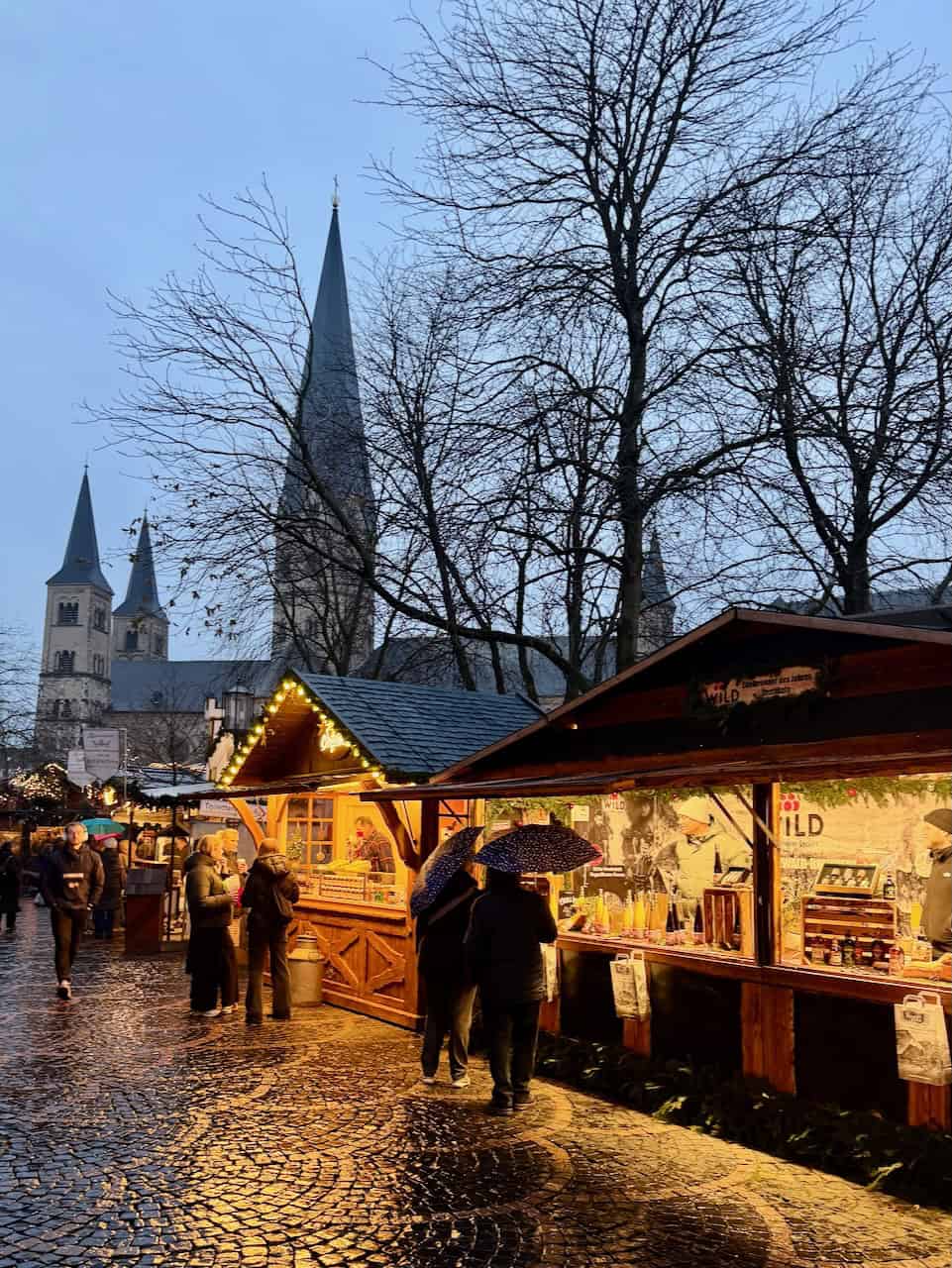 Christmas market with the Bonn Minster as a backdrop
The interior, adorned with beautiful mosaics, frescoes, and stained-glass windows, is truly impressive. Visitors can also explore the serene cloister garden and even climb the tower. The massive oak organ is especially striking.
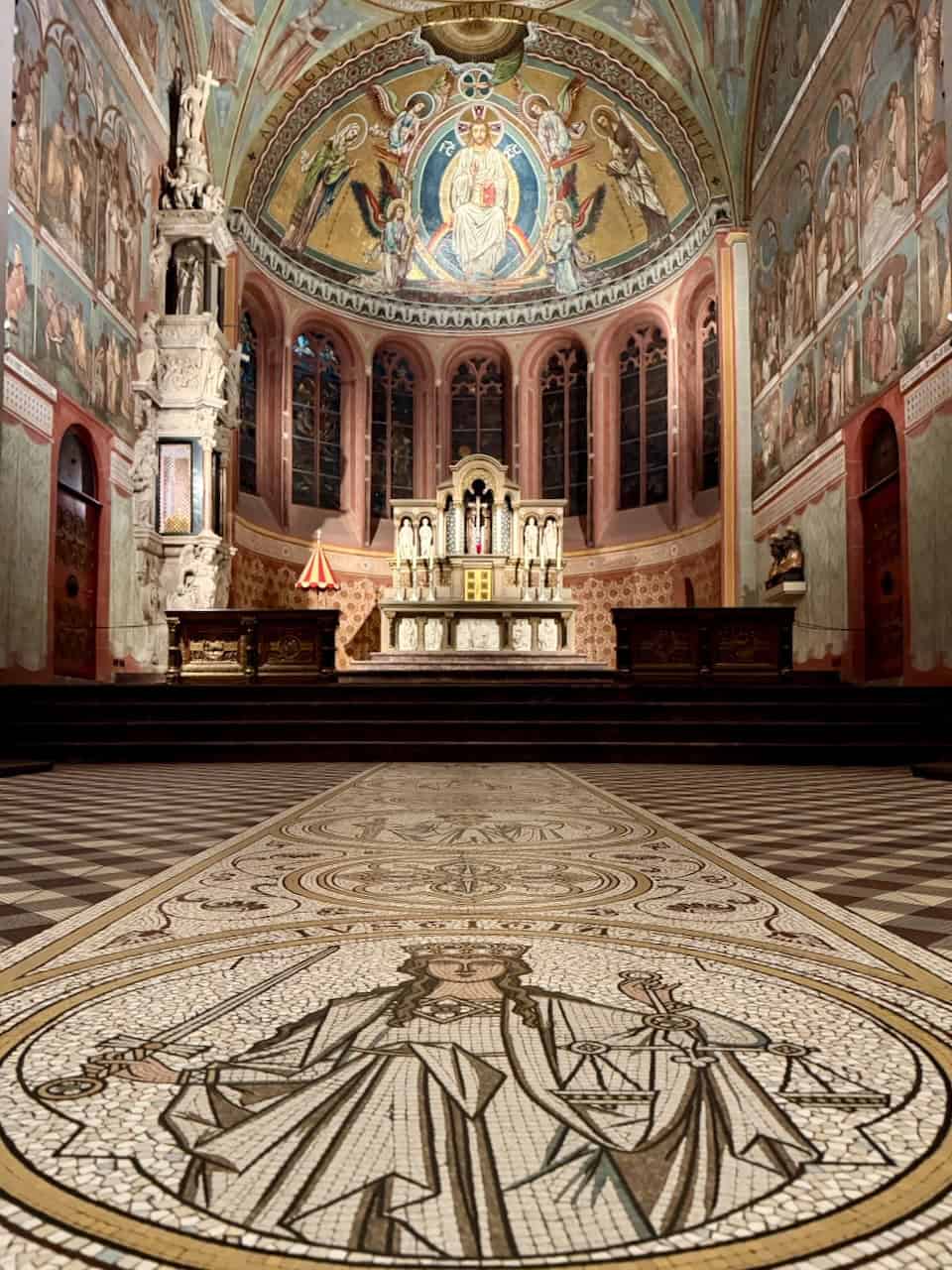 Bonn Minster
 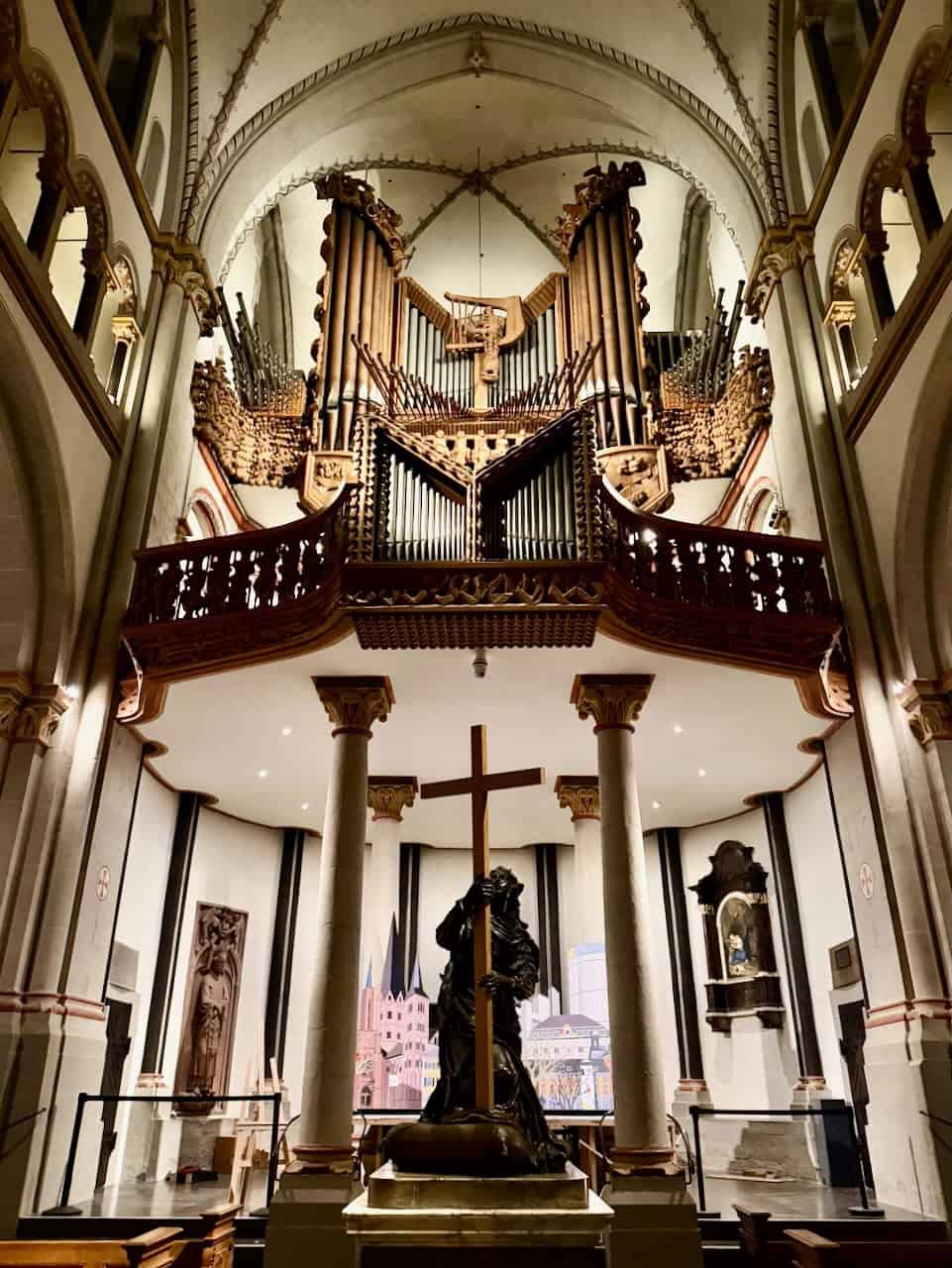 Bonn Minster organ
Search for accommodations in Bonn.
Bad Godesberg
The next morning began with a tour of Bad Godesberg, a charming suburb of Bonn. In the 19th century, wealthy families built elegant villas here to enjoy the local hot springs. When Bonn became the capital, many of these villas, especially along Rheinallee, were repurposed as embassies. Today, most have returned to private or commercial use, though a few remain tied to the countries that once occupied them.
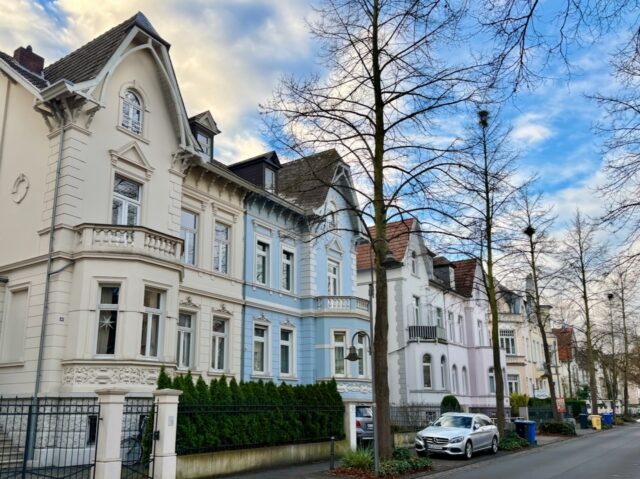 Some of the villas along Rheinallee
Bad Godesberg is also home to La Redoute, a small 18th-century palace built by Prince Elector Max Franz as a recreational retreat. Joseph Haydn famously stayed here, and it was in this very palace in 1792 that he met the young Ludwig van Beethoven, whom he would later bring to Vienna, where Beethoven quickly rose to fame.
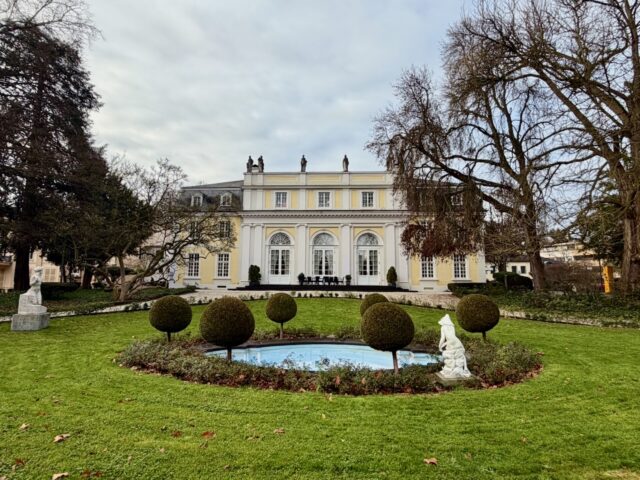 La Redoute
Petersberg
We then crossed the Rhine by ferry to Königswinter and made our way up Petersberg (Peter’s Mountain) to the Grand Hotel Petersberg. Once the headquarters of the Allied High Commission – representatives from the USA, UK, and France overseeing post-war West Germany – the hotel became the official state guesthouse in the 1950’s and played a pivotal role in Cold War diplomacy.
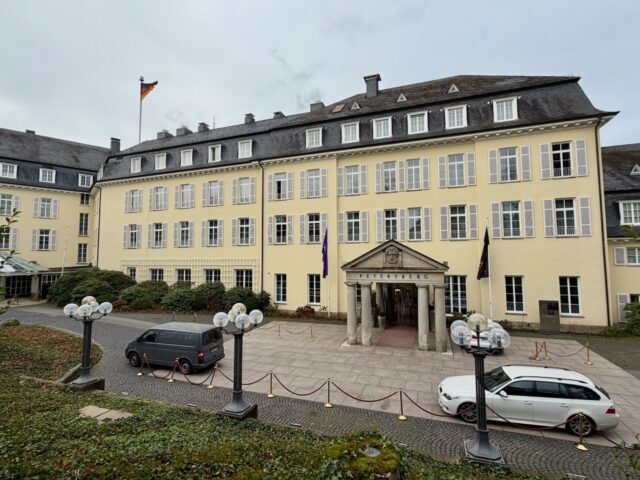 Grand Hotel Petersberg
Over the years, it has hosted an extraordinary list of world leaders, royals, politicians and artists, including the Shah of Persia, Queen Elizabeth II, Leonid Brezhnev, Mikhail Gorbachev, Nelson Mandela and Bill Clinton. I highly recommend visiting with a guide; the stories and anecdotes are absolutely captivating.
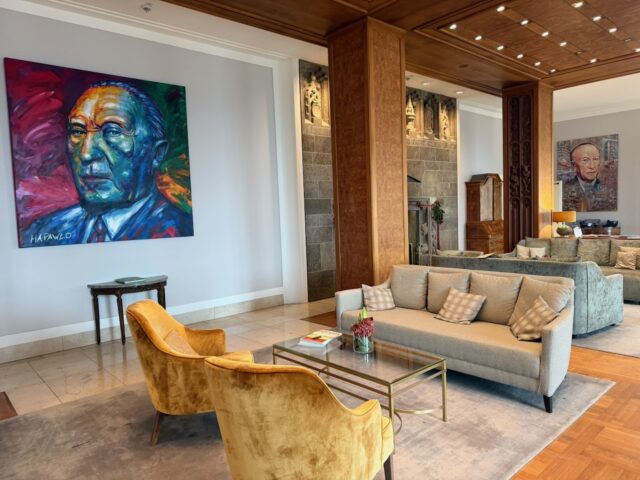 Grand Hotel Petersberg Adenauer lounge
I also recommend walking around the terraces and gardens to enjoy the gorgeous views across the Rhine valley.
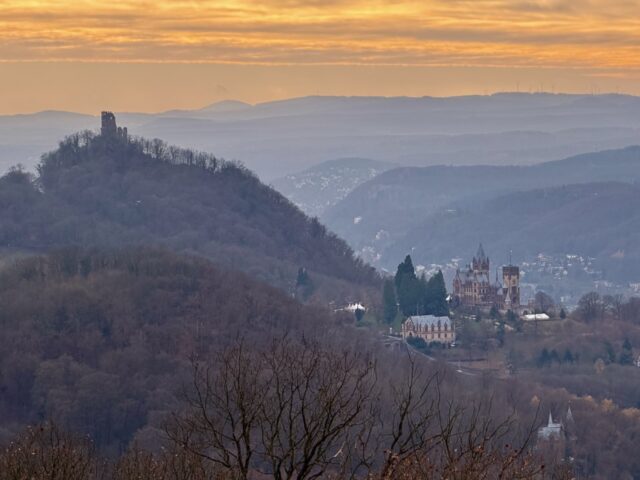 View towards Schloss Drachenburg
Beethoven House
The tour concluded back in Bonn, where I visited Beethoven House, the birthplace of the great composer.
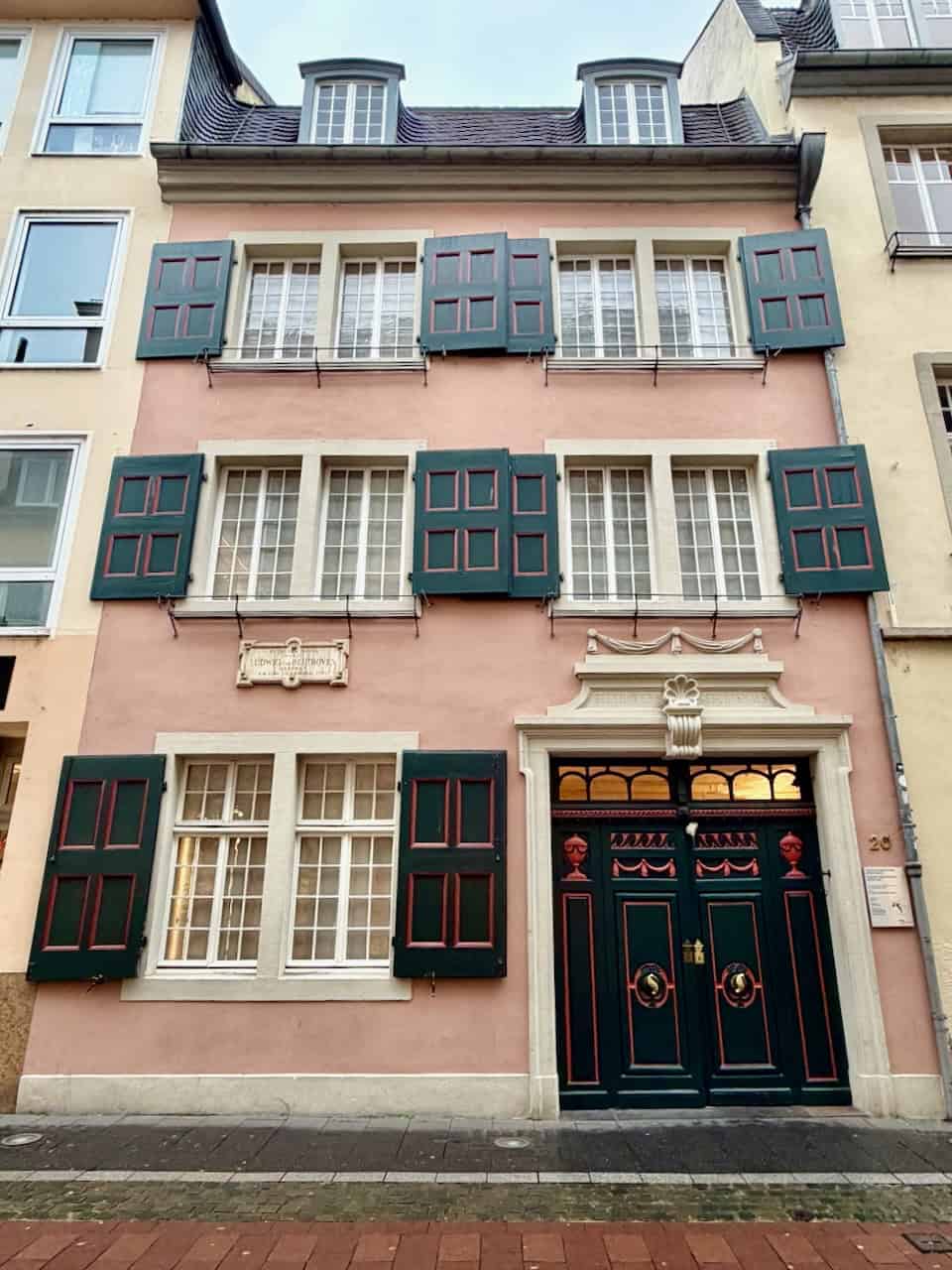 Beethoven House
A must-see for anyone visiting the city, especially lovers of classical music, the museum houses an impressive collection of Beethoven’s manuscripts, instruments, and personal items, along with several iconic busts.
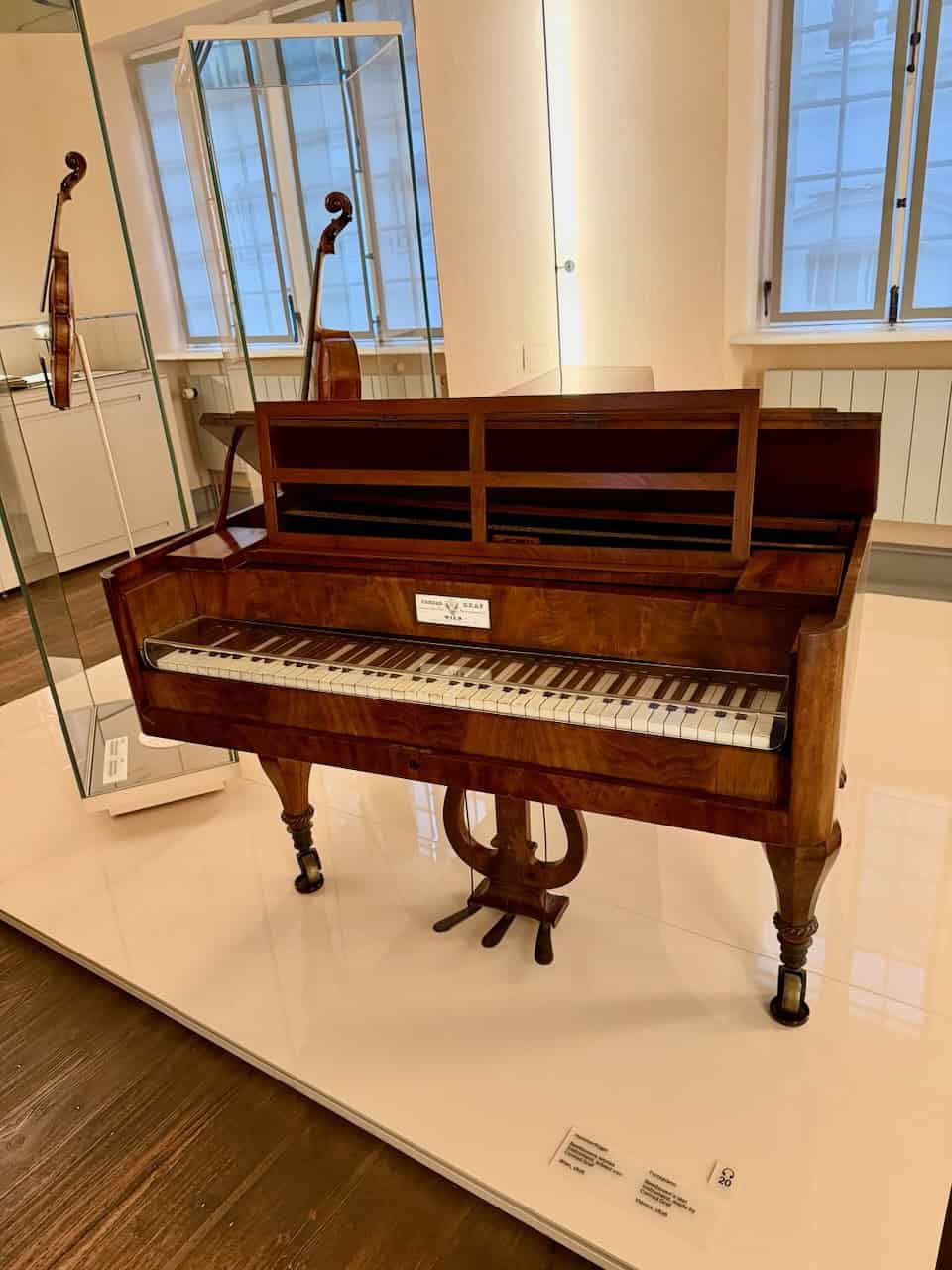 Musical instruments played by Beethoven
Aachen
The final stop on my western Germany rail trip was Aachen, the country’s westernmost city, located about 1.5 hours by train from Cologne. Founded by the Romans, who were drawn to its thermal springs, Aachen later became the capital of the Frankish Empire under Charlemagne in the 9th century. It subsequently formed part of the Holy Roman Empire and served as the imperial coronation city for many kings. Reminders of this illustrious past are still visible today – most notably the Aachen Cathedral, Germany’s first UNESCO World Heritage Site.
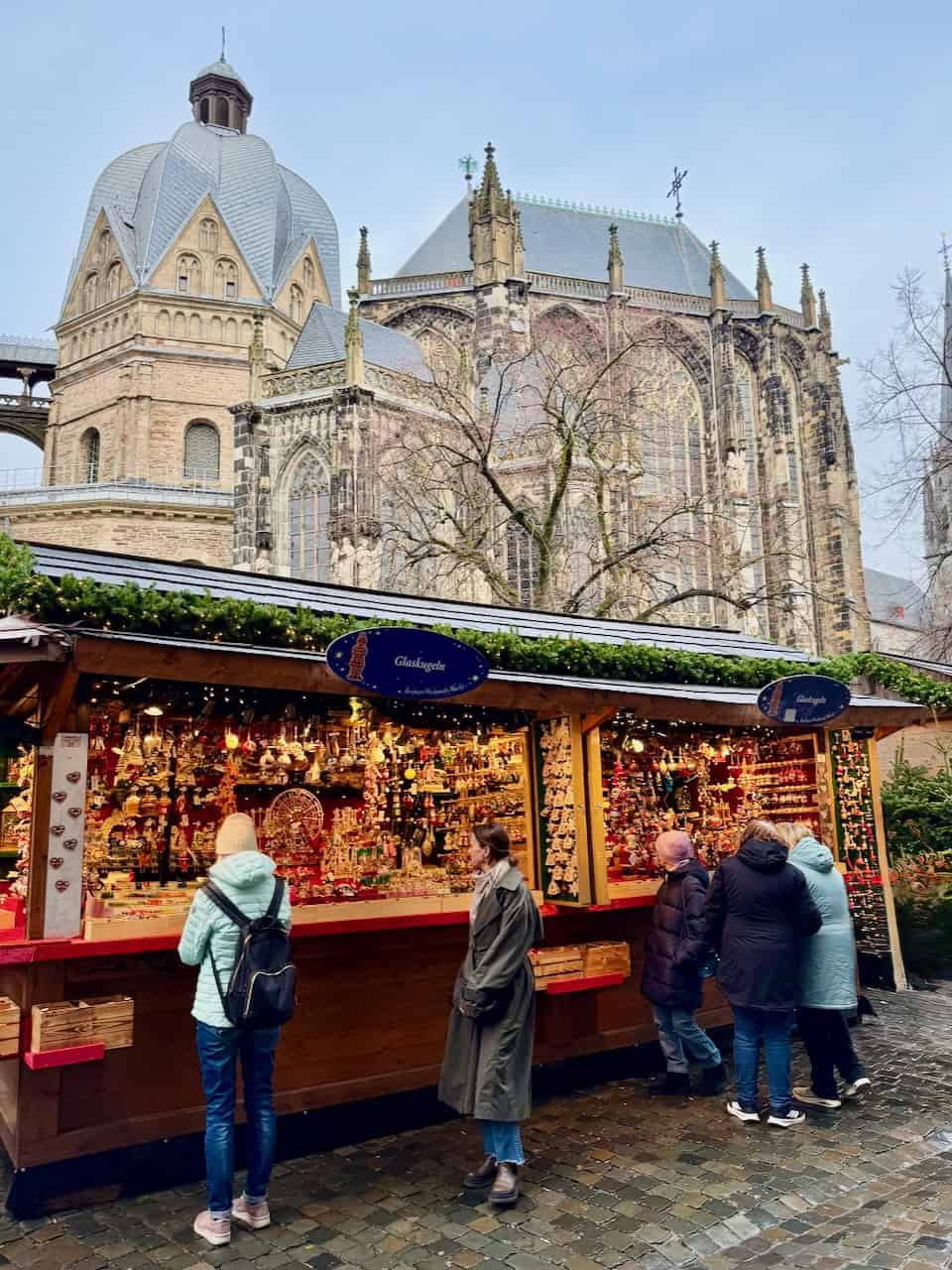 Christmas market with the Aachen Cathedral
This was my third visit to Aachen, and it was a joy to rediscover its awe-inspiring monuments, charming streets and lively squares.
Search for accommodations in Aachen.
Highlights of Aachen
Aachen’s compact historic centre makes it perfect for exploring on foot. The city was bustling with visitors enjoying the Christmas markets, each set against a magnificent backdrop – either the Cathedral or the Rathaus. Many shop windows were beautifully dressed, adding to the festive atmosphere.
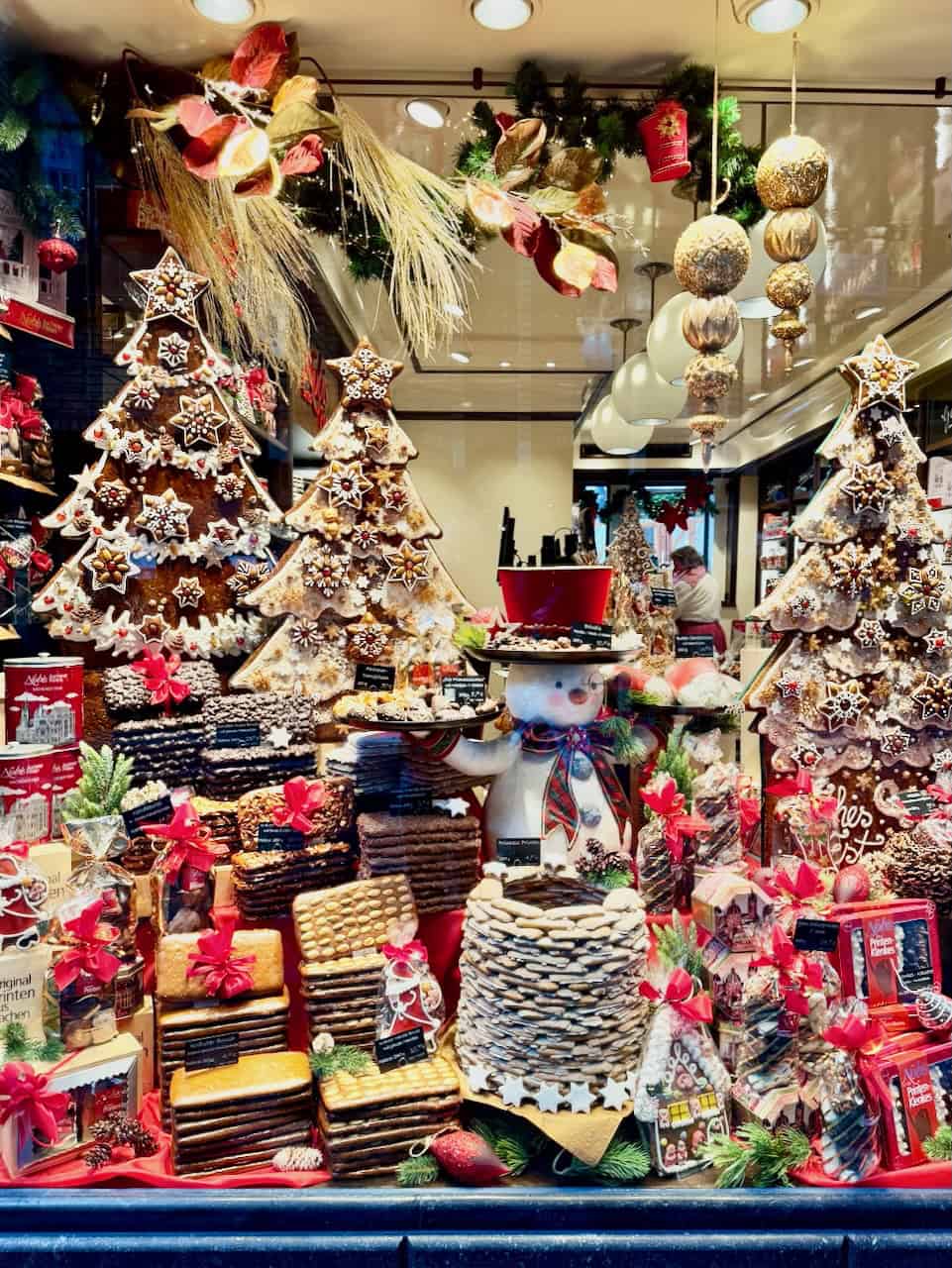 When in Aachen, drop by at a bakery such as Nobis for some ‘printen’, a traditional Aachen spiced cookie.
I stopped at Münsterplatz for a warming cup of glühwein before continuing my walk through Aachen’s historic treasures.
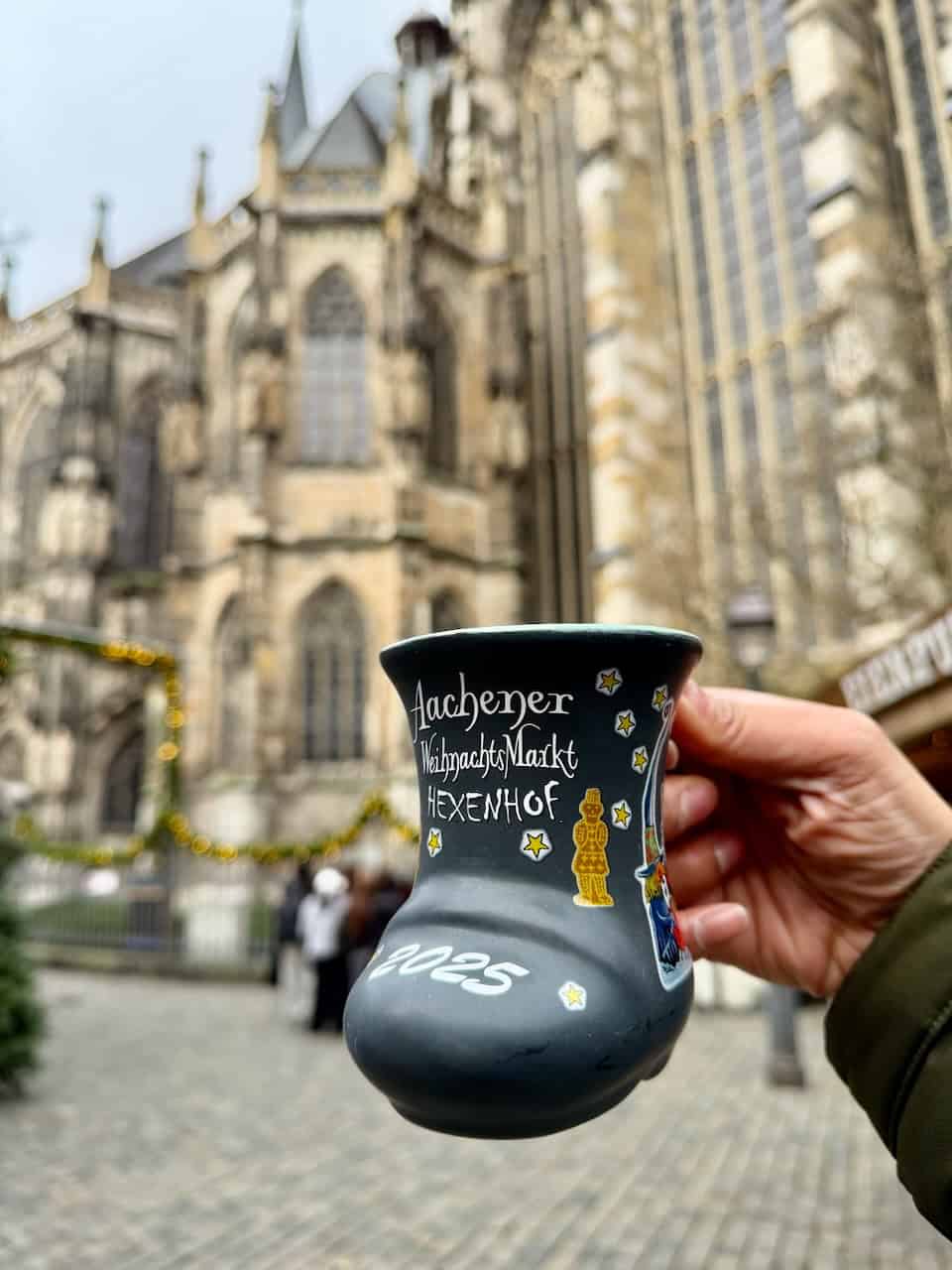 Glühwein at the Aachen Christmas market
Aachen Cathedral
My first stop was the Aachen Cathedral, an architectural masterpiece. Its origins lie in the 8th century, when Charlemagne commissioned the construction of the Palatine Chapel. This octagonal structure, with its soaring dome and sweeping arches, is truly breathtaking. Inspired by the 6th-century Basilica di San Vitale in Ravenna, the chapel is richly decorated with marble, frescoes and dazzling mosaics.
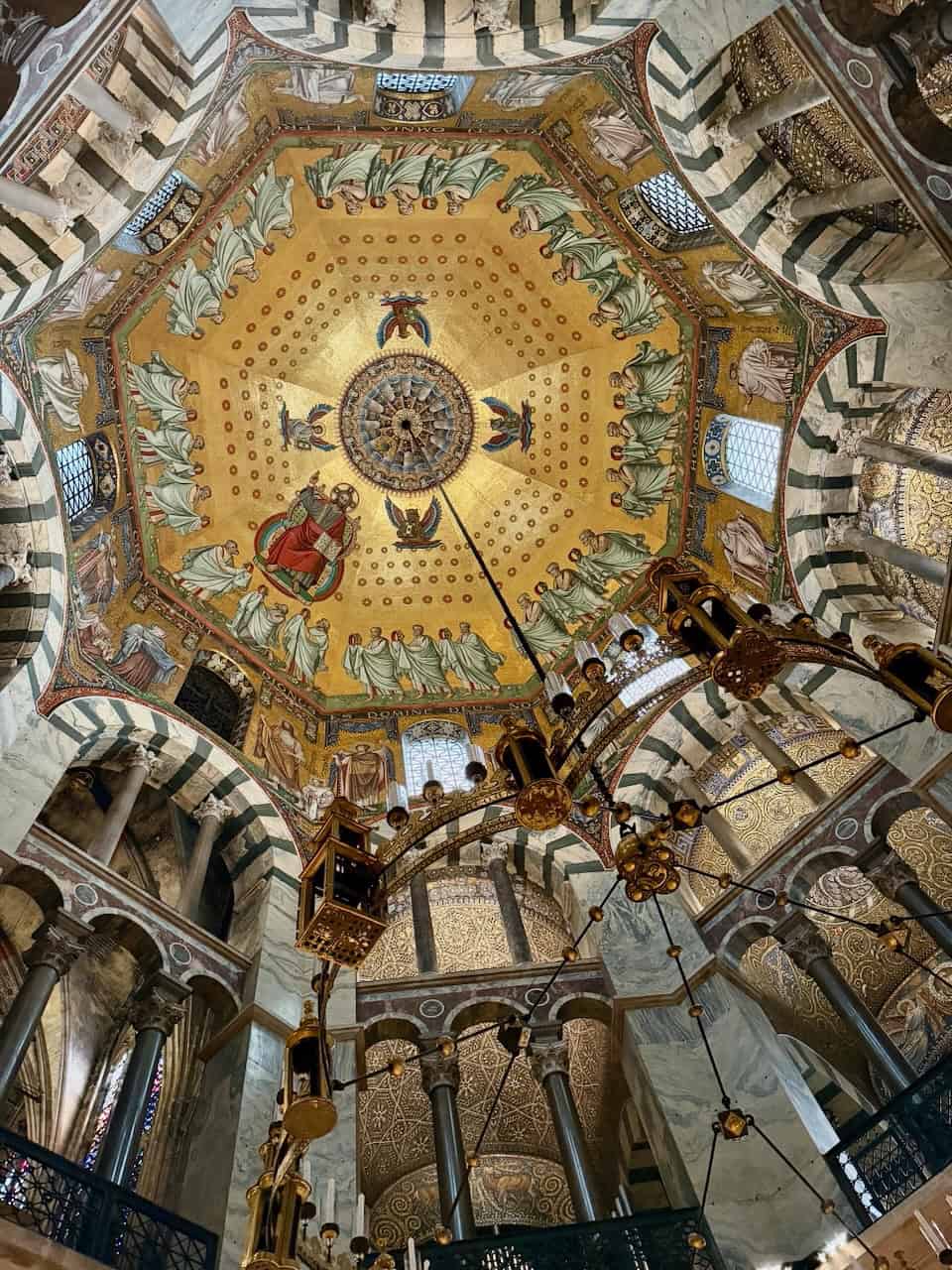 Looking up inside the Palatine Chapel
 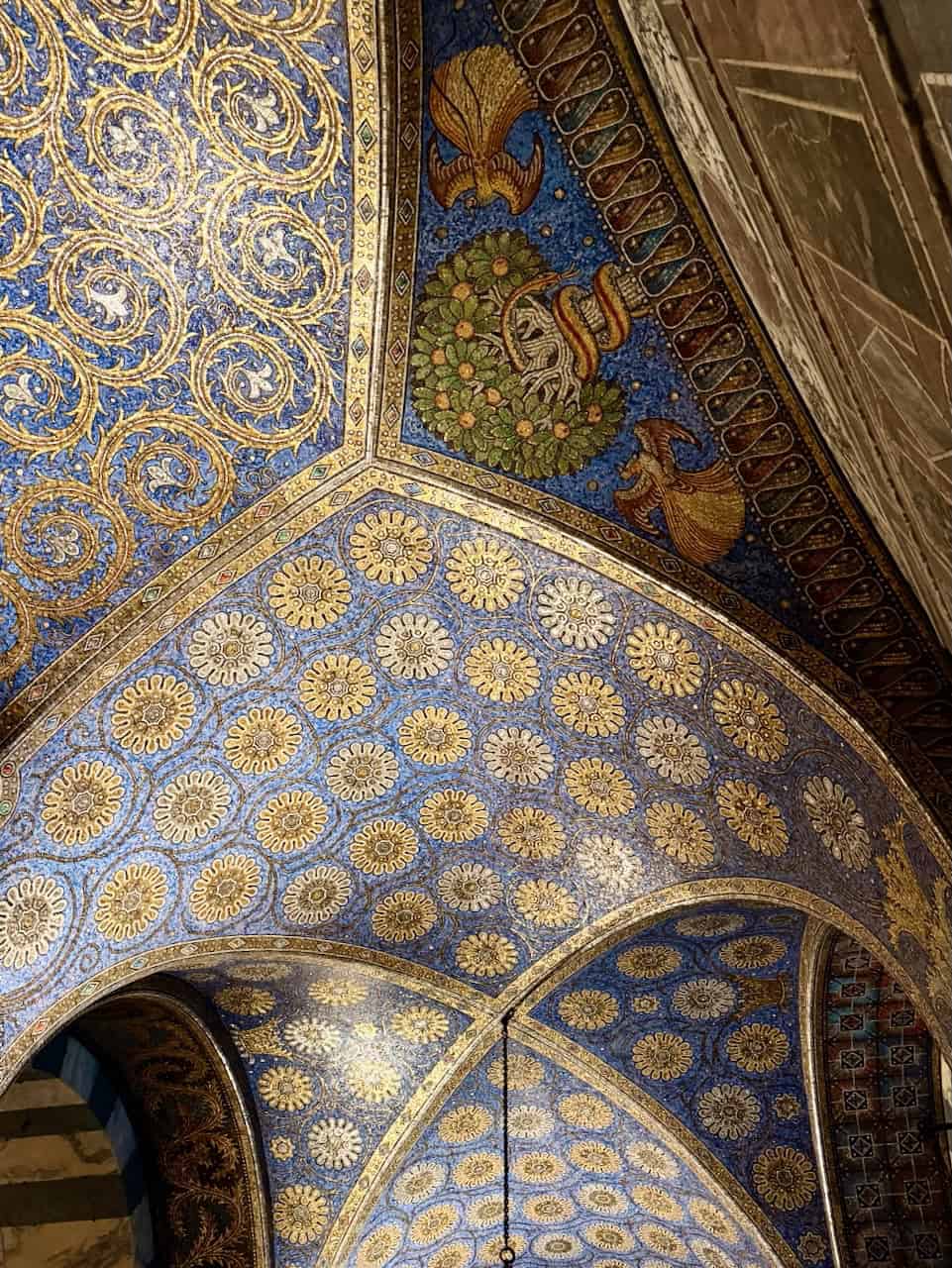 Stunning mosaics
Over the centuries, the complex expanded, with additions such as the Gothic choir hall. Entry to the Cathedral is free, but I highly recommend joining a guided tour, which grants access to the choir hall, where Charlemagne’s shrine is kept, and the first floor, home to Charlemagne’s ancient throne.
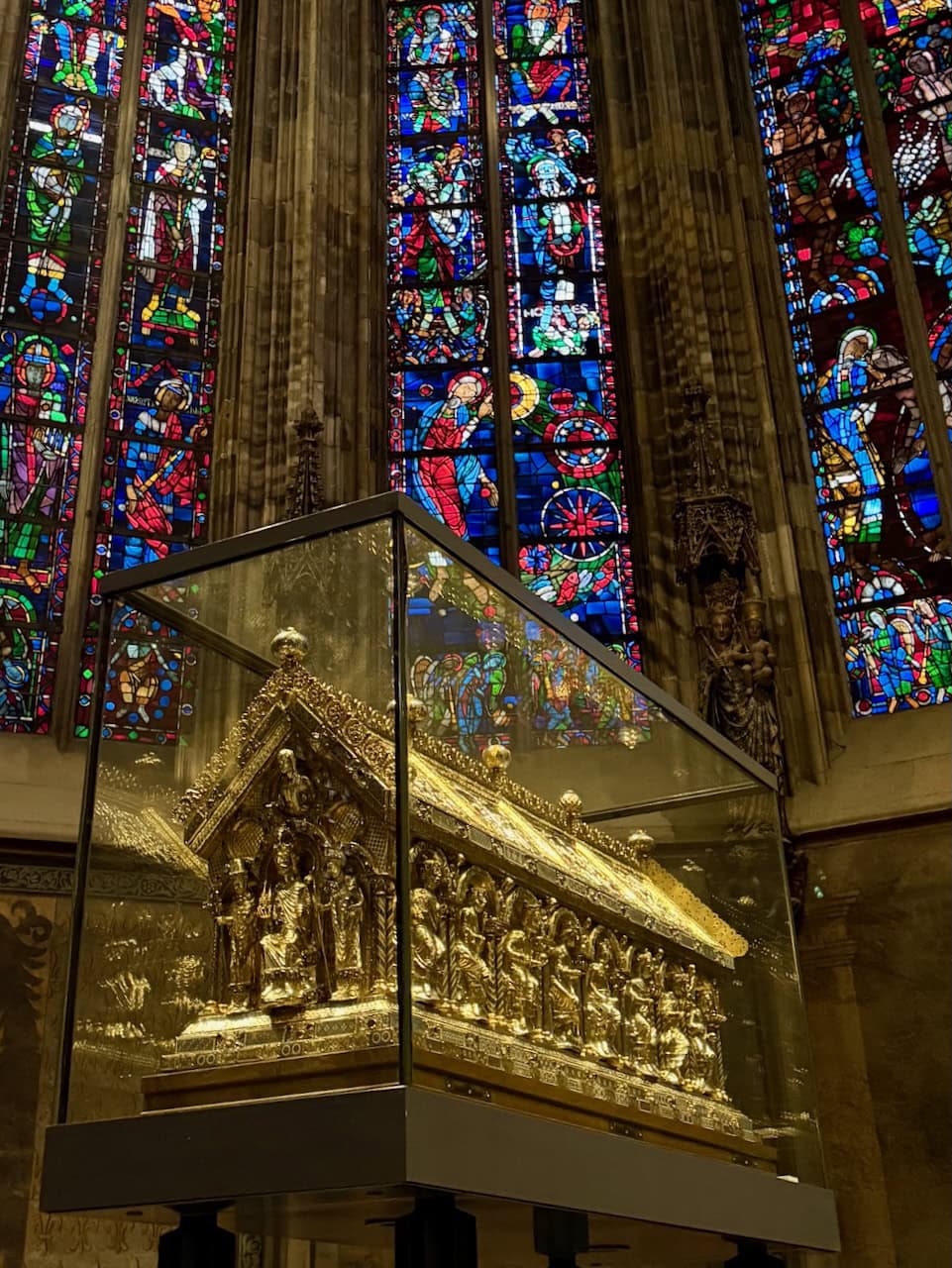 Charlemagne shrine
Cathedral Treasury
Just around the corner, I visited the Cathedral Treasury, which houses an exceptional collection of medieval church art spanning the era of Charlemagne through to the Gothic period.
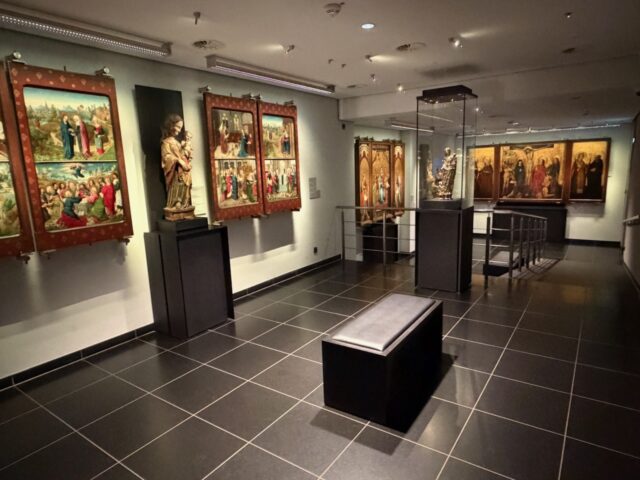 Cathedral Treasury
Katschhof and Rathaus
From the Treasury, I crossed the Katschhof, a large square often referred to as Aachen’s “living room.” It regularly hosts events and concerts and becomes home to a large Christmas market during the festive season. The square is framed by some of the city’s most iconic landmarks, including the Cathedral and the Rathaus, as well as the Charlemagne Centre, a museum dedicated to Aachen’s history. From the steps of the Rathaus, there’s a stunning view of the Cathedral’s distinctive silhouette.
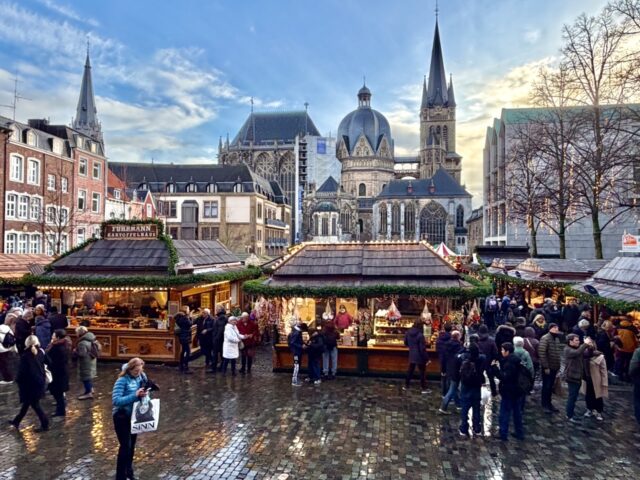 The Aachen Cathedral seen from the steps of the Rathaus at Katschhof
I then walked around the building to Marktplatz, the market square at the Rathaus’s main entrance. From here, I had a beautiful view of the 14th-century Gothic town hall, with its ornate façade and slender towers. Inside are numerous halls, including the impressive Coronation Hall on the first floor, used for exhibitions, weddings and official functions.
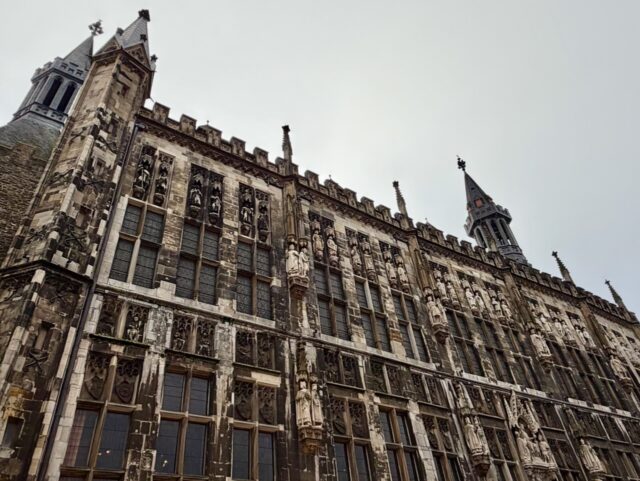 Aachen Rathaus
Aachen’s Roman Legacy
From the Rathaus, I continued down Krämerstrasse, passing several historic monuments along the way: the medieval Granus Tower, the stately Couven Museum housed in a 17th-century townhouse, and the whimsical Puppenbrunnen (Puppet Fountain).
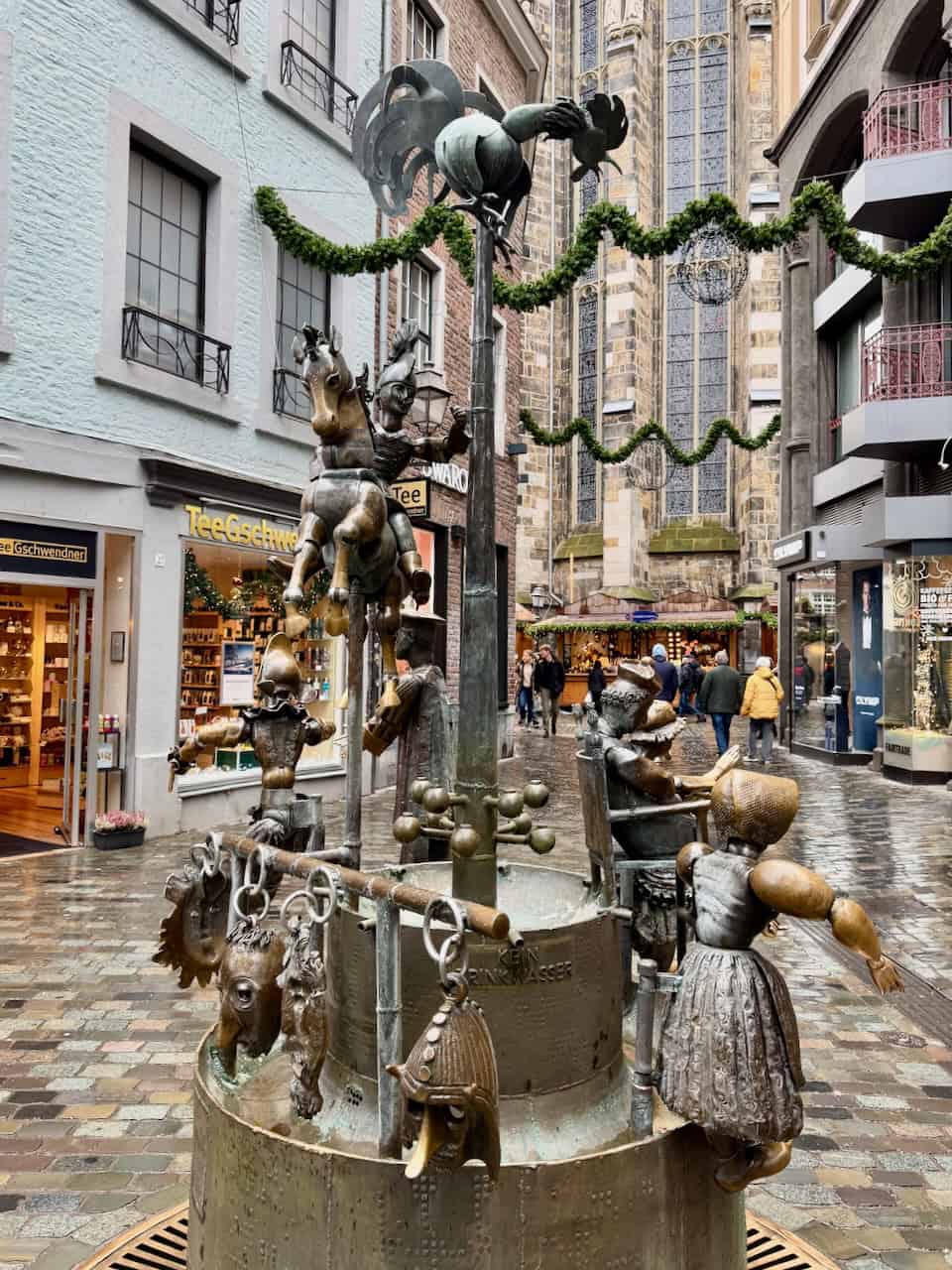 Puppenbrunnen
My next stop was the Elisengarten, where remnants of Aachen’s Roman past are preserved inside a glass pavilion in the centre of the park.
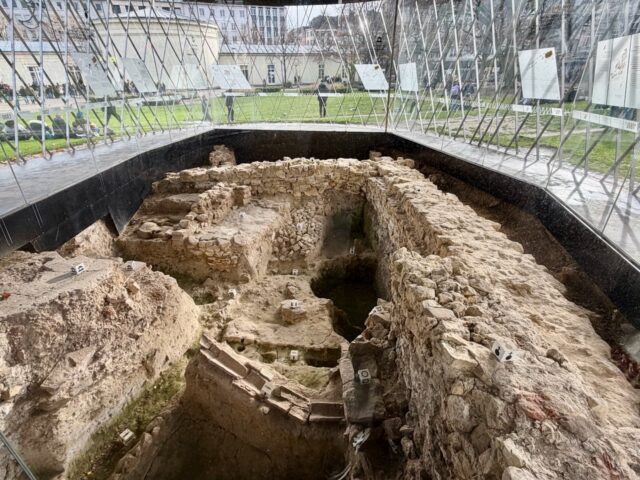 Archeological window: Roman ruins at Elisengarten
Just a short stroll away is the Elisenbrunnen, home to both the local tourist information office and hot-spring fountains. Visitors are welcome to try the hot, sulphurous water – if they can get past the unmistakable smell of rotten eggs. Evidence of the city’s underground thermal activity can be seen outside the pavilion: clouds of steam (and that same tell-tale sulphur smell) billow up from nearby manhole covers.
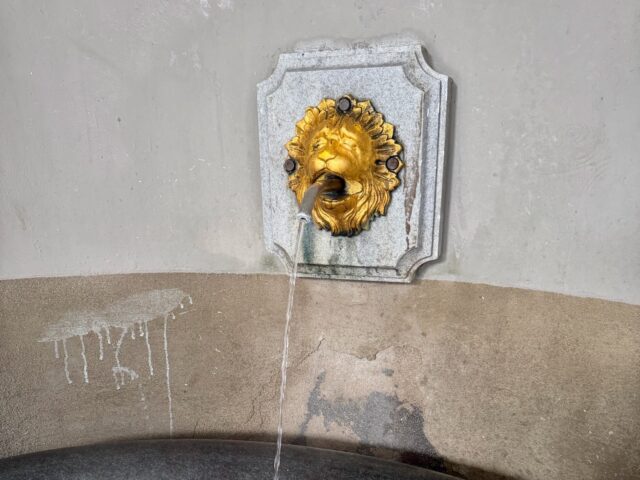 Have a sip of the hot spring water at Elisenbrunnen.
This was another delightful journey through the historic highlights of western Germany, made even more special by the chance to visit so many wonderful Christmas markets! It served as yet another reminder of the incredible array of history and beauty in this part of Germany.
Read about the cities I previously visited:
Please visit:
Our Sponsor