

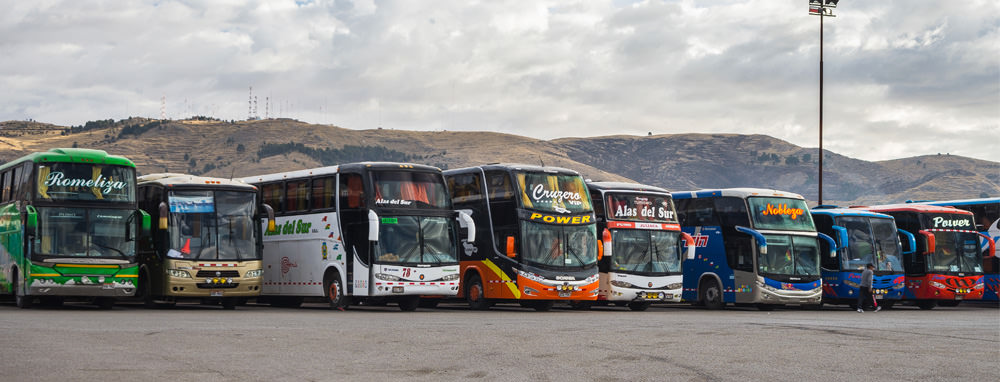
In my two backpacking trips through Peru I’ve learned the hard way that while its transport system can be quite efficient it also, well, rewards preparation.
After a brutal 12-bus ride where the AC blasted all night (I shivered in a t-shirt) and after flying straight from Lima to Cusco’s 3,400m elevation (cue two days of shuffling around like a zombie due to altitude sickness), I’ve figured out what actually works.
If it’s your first time in Peru then the various modes of transport, the mountainous geography, and potential language barriers can lead to a fair bit of head-scratching and anxiety when getting from A to B. But don’t worry, in this guide I’ll take all of the guesswork out of exploring Peru.
Here’s all you need to know to connect the dots in your itinerary…
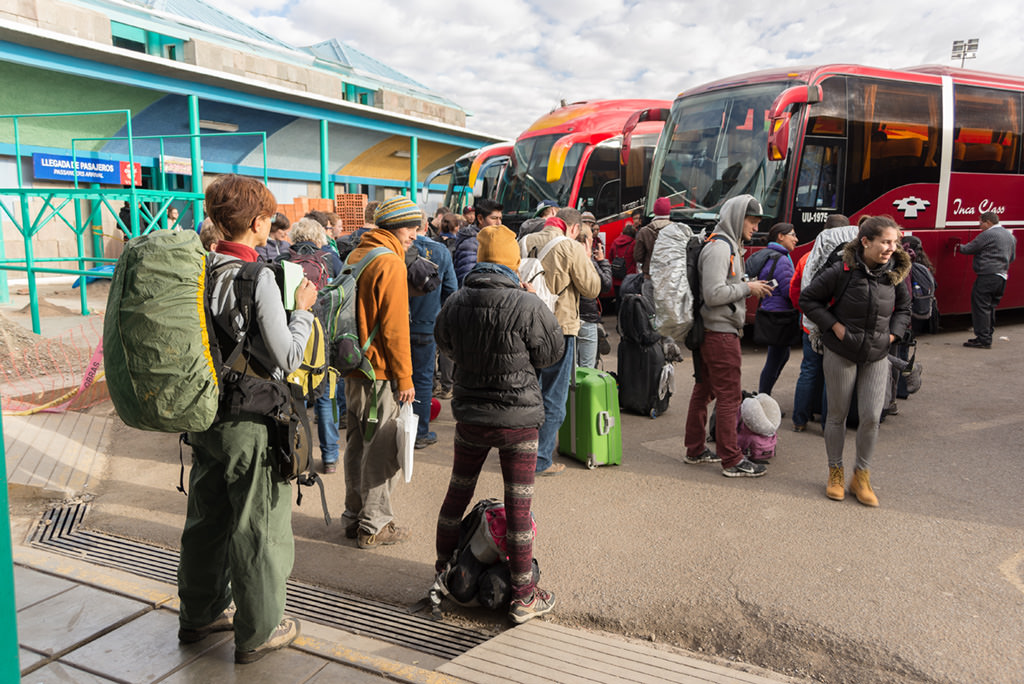
3 Main ways of getting around
Travelling around Peru by bus is definitely the way to go if you want to save money (versus, say, vehicle rental or flying) and also admire the scenery as much as possible. You’ll find an abundance of good providers serving all the key routes.
The major downside with using buses in Peru is that distances can be huge, so you’ll need to get used to many 8+ hour journeys.
Some trips can even be as long as 24 hours(!), such as from Lima to Cusco as you navigate through the spiralling Andean peaks along the way.
For this particular route I opted to fly from Lima to Cusco rather than slog it out in a life-destroying bus ride — it’s been my only flight so far within Peru. However, this had another downside: immediately travelling from sea level to 3,400m elevation can give you serious altitude sickness. I was drowsy and for 2 days had to walk at snail’s pace through Cusco. Planning for a more gradual change between the lowlands and the Andes can be a good idea.
Although many journeys are long, night buses are very common and they typically have well-padded seats that are fully reclining, letting you get some decent sleep. During the day a lot of the journeys are very scenic, letting you get a more complete impression of Peru’s different landscapes.
Price & comfort: what to expect
If you’re imagining being stuck in a rickety bus amid some chickens, this is not what long-distance transportation in Peru looks like.
Coach buses in Peru are modern and generally very comfortable. While domestic flying isn’t as big as it is in other countries, the excellent coach buses fill this gap.
Boarding a bus in Peru has at times felt a bit like boarding a plane, especially whenever I went with the operator Cruz del Sur (which is known for a bit more a luxury vibe). Neatly uniformed staff ushered me on board, my VIP seats had individual touch screens, USB ports, and blanket/pillow, and there were even hot meals on board.
But even if you go with regular 2nd class tickets it’s often an excellent way to get around. Overlanding is also the most budget-friendly way to travel; for example, a one-way bus from Lima to Arequipa will cost you around $25 USD (roughly 85 Soles), while a flight between the two starts around $50 USD (170 Soles – excluding extra fees for baggage).
Another thing to factor is is that if you take an overnight bus, you could potentially save on a night’s accommodation.
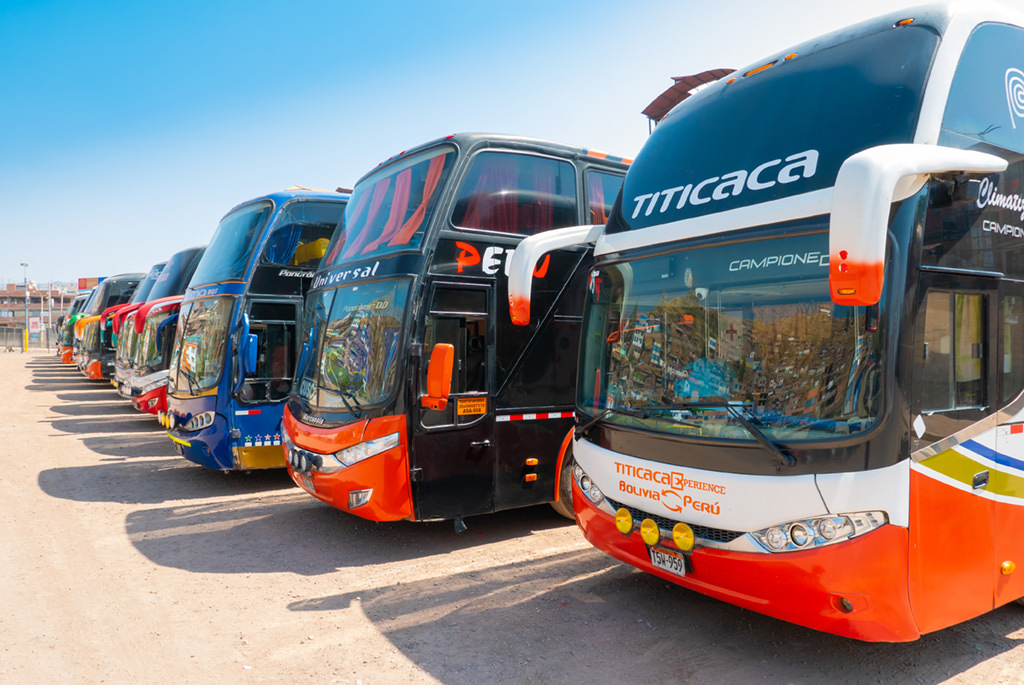
Buses in Peru are usually of very good quality, where you can either choose a regular seat or an Ejecutivo — this is a little more pricey but has a 180° reclining seat. Some of the premium Peruvian bus providers include Oltursa and Cruz del Sur, although you can also sometimes find cheaper ones within the terminal (which don’t market themselves online).
Having said that, Cruz del Sur has recently suffered more bad reviews so its service level may not be what it used to be. Another better-rated option more tailored towards travellers is Peru Hop, which runs dedicated coach bus services using a hop-on-hop-off system (so you maintain complete flexibility over your itinerary). But more on them later.
On long trips, it’s best to buy lots of snacks, food and water at a local shop or the bus station prior. While you will get some vendors hop on and off from time to time, it’s better to come prepared.
On the typical southern Peru loop (Cusco, Lima, Lake Titicaca, etc.) it’s very easy to use buses. There are many frequent departures daily and you can easily pre-book tickets online via Busbud.
The less-visited northern Peru is a bit different as it has less of a tourist trail. You’ll most likely have to book buses within the terminal or even take flights between some remote areas.
Tip: Pack something warm! The majority of buses tend to keep the air conditioning on regardless of whether it’s day or night. On a short trip this is okay, but it can get pretty uncomfortable and chilly at night. If on an overnight bus or long-haul, make sure to bring a jumper and/or blanket on board.
How to book a bus in Peru
There are two main ways of booking buses in Peru.
The first option is using online sites like Busbud, where you can easily pay with your card and get tickets sent to your phone. Not only is it easier as everything is clearer and in English, you’ll also be able to plan in advance and arrive at the terminal without needing to rush.
Check buses on Busbud
The disadvantage of this option is that you’ll sometimes pay a bit more, as the online platform do add small booking fees. Several companies also don’t market themselves as much online, so they won’t show up as options, though the main companies are all on Busbud.

The second option is to buy your ticket at the bus terminal. There will be many counters, so you’ll need to head to a counter that serves your destination. This is the cheapest option and if your times are flexible then the costs could be further reduced.
However, for this method, you’ll need to know some Spanish (unless you are fine improvising) and Peruvian bus terminals can get quite wild and hectic at times.
Here are some Spanish phrases that can come in handy:
I want to go to Cusco = Quiero ir a Cusco
How much is it? = ¿Cuanto cuesta?
Do you offer luxury seats? = ¿Tienes asientos ejecutivos?
How many hours is the trip? = ¿Cuántas horas es el viaje?
Tip: Avoid the front seats on the upper deck! While these do give you a wonderful view of the road ahead, they often lack curtains and this can be awful if driving through the searing deserts during the day. From Cusco to Arequipa I was sadly unfortunate to have this seat and after hours of full-frontal sun I felt like I was being burned alive! Lesson learned…
Travelling by air in Peru certainly has its perks, and is an ideal option for those who are short on time or don’t mind spending a bit more for extra comfort.
Peru’s mountainous terrain forces roads to wind endlessly around peaks or cut through dense jungle.. While it’s definitely an experience in and of itself, it can easily rack up hours of travel time.
Flying is definitely ideal for reaching destinations further afield, including on routes such as from Lima to Cusco, Lima to Piura, or Lima to Tarapoto. The cost of flights in Peru won’t have to break the bank either and can be highly worth the time savings.
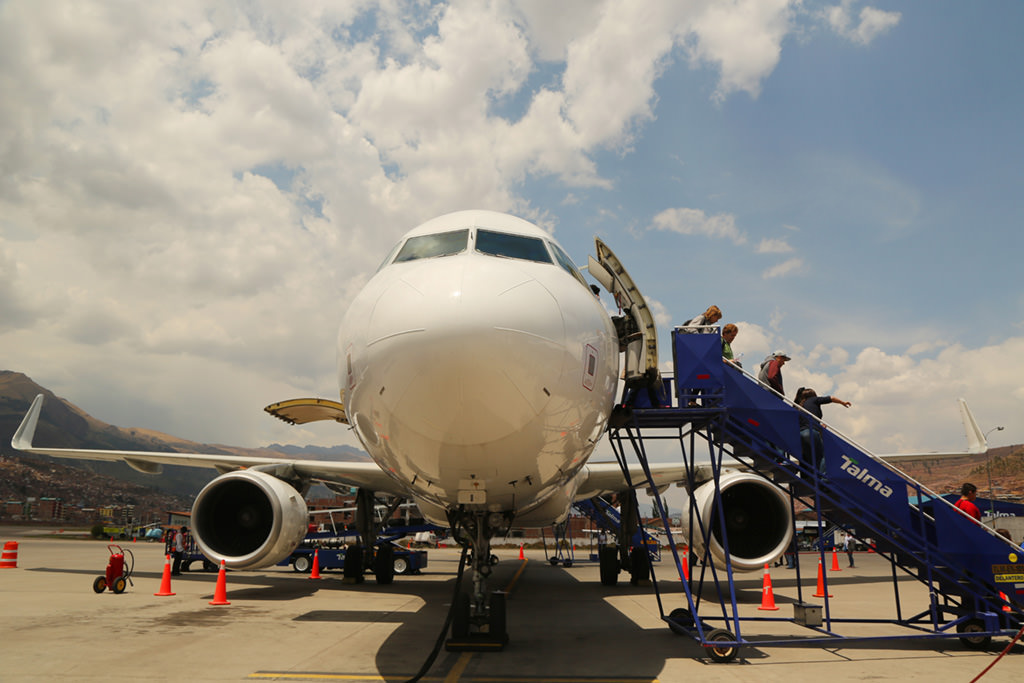
The classic example is when heading from Lima to the imperial city of Cusco. The bus will cost between $30-40 USD (120-140 Soles), and also take as long as 24 hours to arrive. However, the flight can sometimes cost as low as $40 USD (150 Soles, including baggage), which is more or less the same price! And that’s without mentioning the 15+ hours of travel time saved either…
In some cases, planes are the only practical way to reach a destination. Those heading to Iquitos will have to take a plane, or otherwise need to spend multiple days using public buses and also a boat too!
Most domestic flights stopover in Lima, though some cities like Arequipa, Ica, and Piura have direct connections.
Some of the best airlines in Peru are LATAM and SKY Airline, and you can check itineraries here on SkyScanner.
Lastly, we come to the more touristy (and organised) transportation option.
The private bus company PeruHop has become an increasingly popular option, seen as the best of both worlds between using public buses or travelling with a tour company.
Unlike standard tours where you have a fixed itinerary that must be followed, PeruHop is much more flexible in that once you’ve bought your pass you can travel on any chosen date.
You won’t need to go to any bus terminal or use Spanish to buy tickets, making this a very easy option for tourists — especially if it’s your first time in Peru or South America.
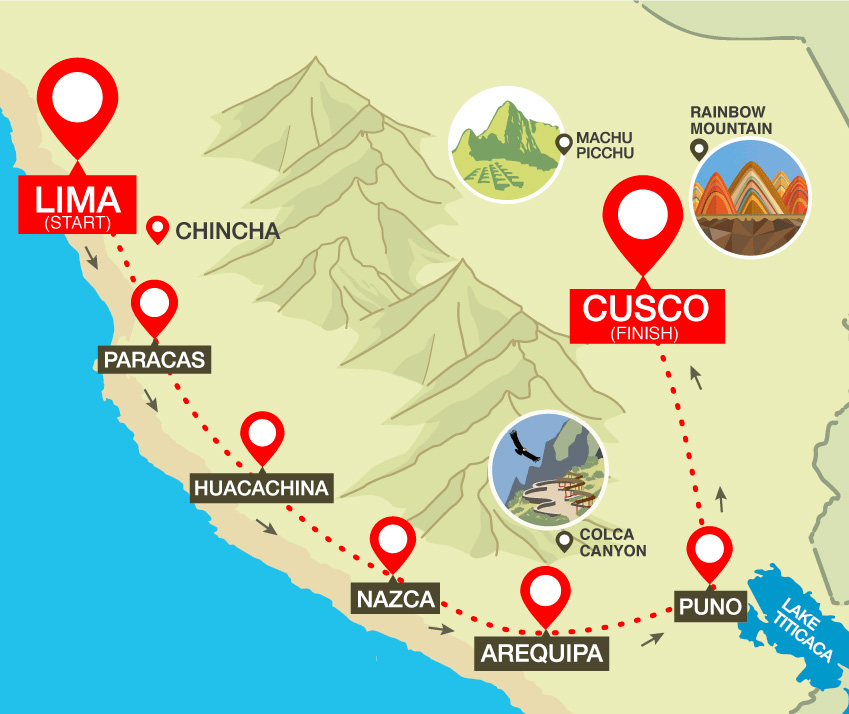
You can check out PeruHop’s extensive range of passes here, with most beginning in Lima (although you can start anywhere along the route) and heading down to Lake Titicaca and even into Bolivia. Prices start at $79 USD, but it’s worth comparing with the local bus costs before you book.
A disadvantage of PeruHop is the higher cost versus public buses. Those looking for a more local and authentic experience may also want to think twice, given that it feels much more ‘Gringo’ and touristy. Finally, PeruHop only serves the southern portion of Peru.
While other countries have an extensive train network to get around, Peru has very limited rail service. However, there are certain areas where using the train will be advantageous.
One of the biggest is when heading to Machu Picchu. From Cusco, your bus will stop off at the railway, where many travellers walk along the tracks to the town of Aguascalientes. You can instead opt to take the scenic train from Cusco to Aguascalientes, while breathing in all of the incredible sceneries along the way.
There are other trains used throughout Peru too, which are rarely used by tourists, though can be a good option for the more adventurous traveller.
These include the service from Cusco to Puno, which is provided by PeruRail. The other one is from Lima to Huancayo (Ferrocarril Central Andino), where you’ll pass by many mesmerising mountain sceneries along the way.
 Train to Machu Picchu
Once you’ve arrived in a new city or destination, you’ll now need to know how to make your way around. Through my experience, I’ve found there to be 5 main ways of exploring Peruvian cities and their nearby regions.
Taxis
Once you arrive at a new city or town after a long bus ride, it’s best to use a taxi to get to your accommodation. Not only is it the safest method of all (given you and your belongings are riding private), but you’ll also be travelling directly to your destination.
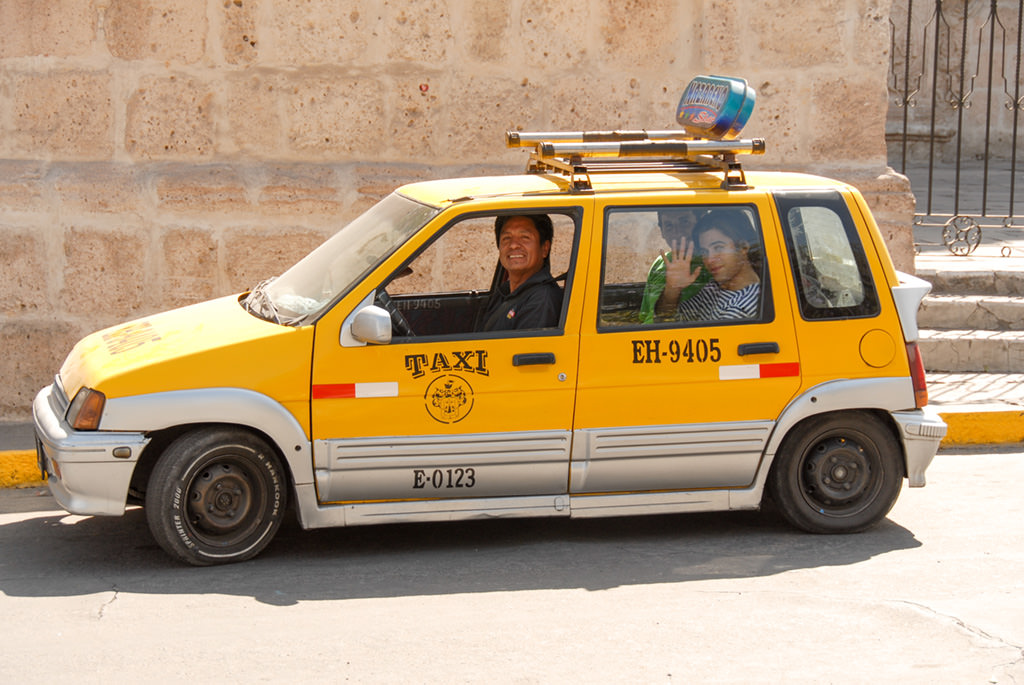
Of course they can be expensive, and unfortunately some drivers have been known to increase prices for unsuspecting tourists. It’s always good to ask a kiosk at a bus terminal or airport how much a route costs, or even a local who may have a good estimate.
If you are already in the city, I would recommend using Uber instead to get around, in particular at night.
Mototaxis
Personally for me, the mototaxi is the undisputed king when it comes to travel in Peru!
This three-wheeled rickshaw is not only a fraction of the price of a taxi. You’ll also be alone which alleviates any safety worries (or missing your stop on the busy colectivos).
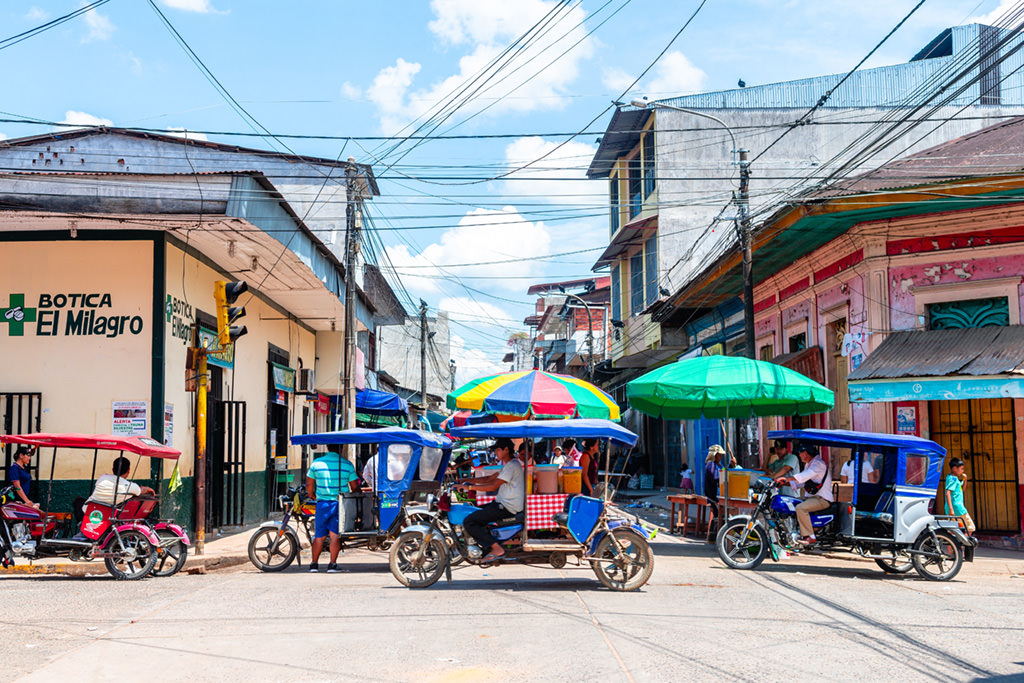
While they’re not found in every city (usually the bigger ones like Lima and Arequipa do not have them), those that allow mototaxis see them flying around the streets in hordes. You only need to flag down an available driver, let them know where you’re heading (best to agree the price before setting off) and then head off for what is quite an enjoyable ride.
The only disadvantage is that the ride can be quite bumpy, with some even missing doors (common in hotter areas like Iquitos). However, that’s all part of the adventure at the end of the day!
Colectivos
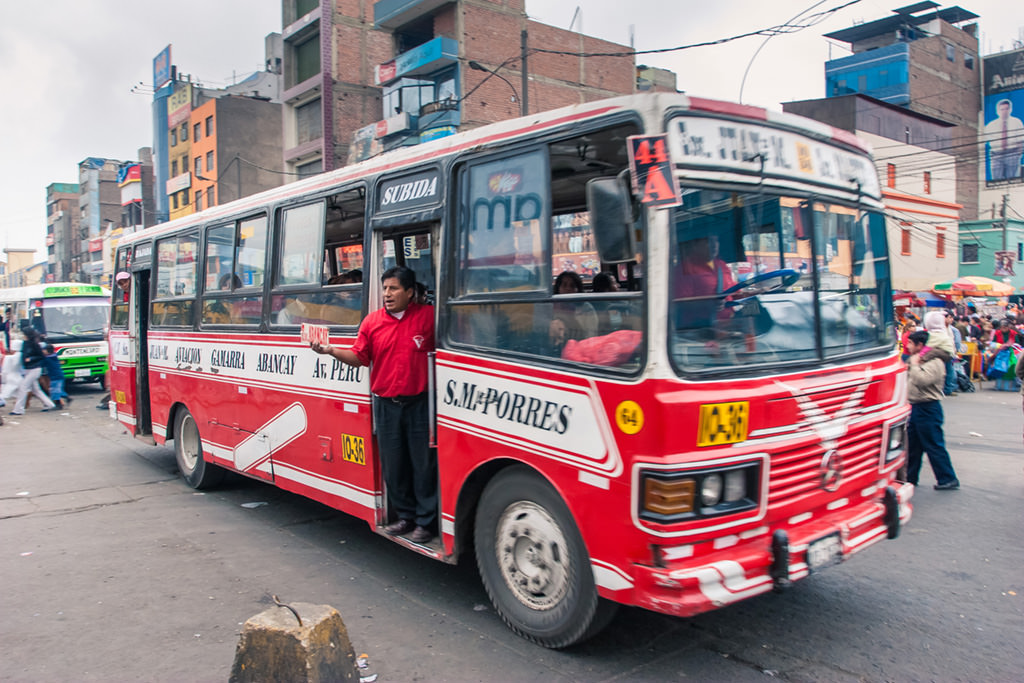
Next we have the colectivos, which are like vans or small buses that run along the roads. These are also pretty cheap, and are also reliable given there’s so many of them (just don’t expect any timetables!).
All you need to do is ask your accommodation or a local where you’re heading, and they’ll let you know which one to take. Once on, let the driver know your stop and they should stop for you (although you should keep checking on maps just to be safe).
Colectivos are also the best way of getting out of cities and exploring the nearby regions. They connect with smaller towns, and often have stops at major tourist destinations along the way (such as a hiking trail or Incan site).
Just make sure to bring small change with you before boarding, since they are always on a hectic schedule and also don’t usually carry large amounts of cash.
Uber and similar apps
Uber is the usual ride-hailing app in Peru and can be found in many cities or towns.
It’s by far one of the safest ways of getting around, given all drivers are certified and registered. You’ll also be able to relax, since it’s impossible to get ripped off (with the costs of routes already pre-determined on the app).
There are also other apps like inDrive which are also worth a try. With this one you can select your price for a route, then you simply wait until a driver accepts. Of course it can be hard without the local know-how (for example how much a certain route should cost), so it’s best to use this one with the guidance of locals.
Please visit:
Our Sponsor