
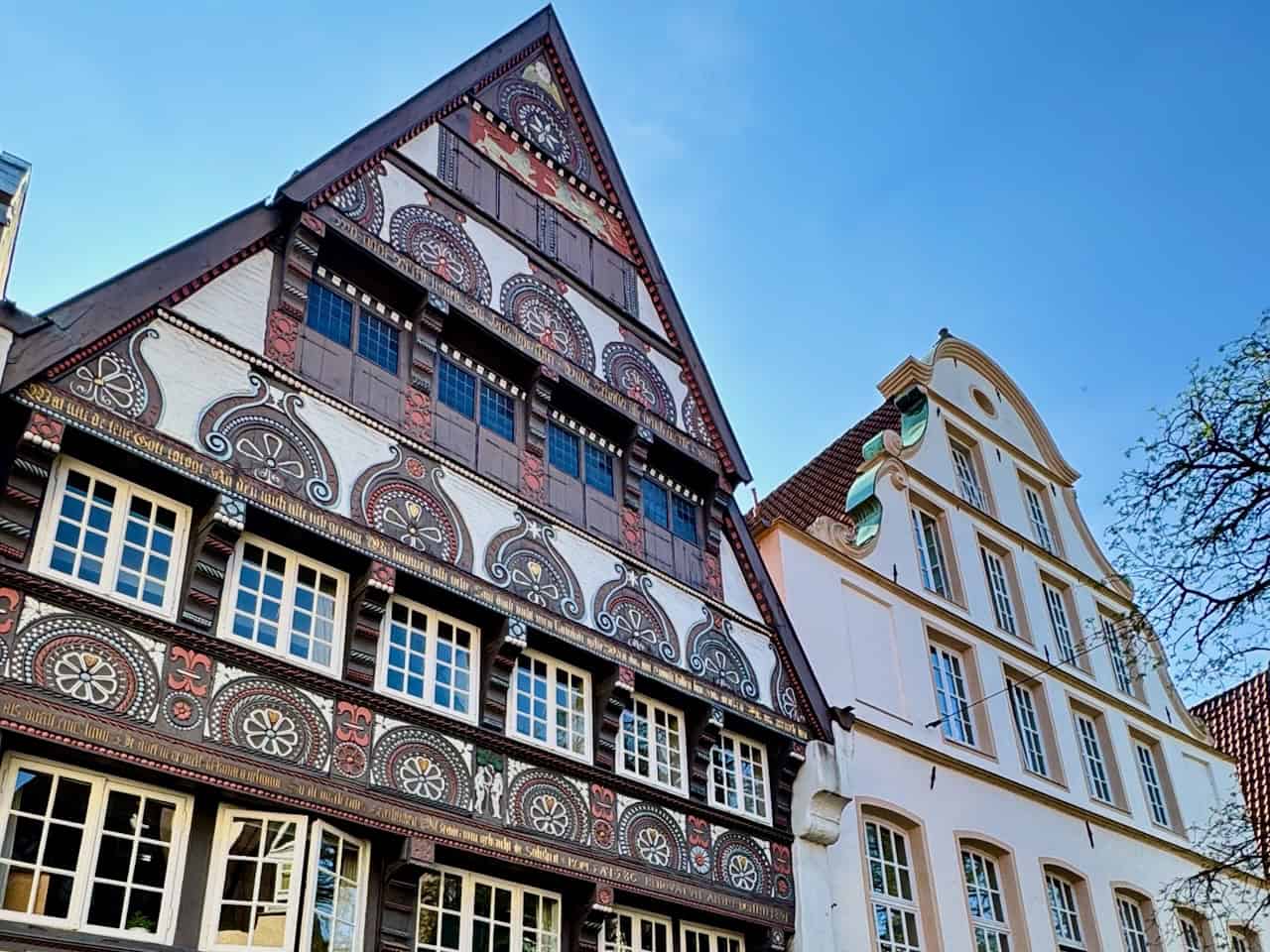
A university city in Lower Saxony, Osnabrück was a wonderful surprise during my recent rail tour of western Germany. I wasn’t quite sure what to expect but as I wandered through the city, weaving between old and new, I discovered medieval buildings, graceful half-timbered houses, beautiful squares and charming cobblestone streets. Everywhere I went, I was greeted by a lively atmosphere – thanks to its 22,000 students – and gorgeous historic architecture. Whether you arrive by train or car, the compact city centre invites exploration on foot, making it a perfect destination for a weekend or short city break. Read on to learn about the top things to see in Osnabrück’s Old Town. I’ve also included a self-guided walking tour that covers the highlights, as well as my suggestions for restaurants and accommodations.
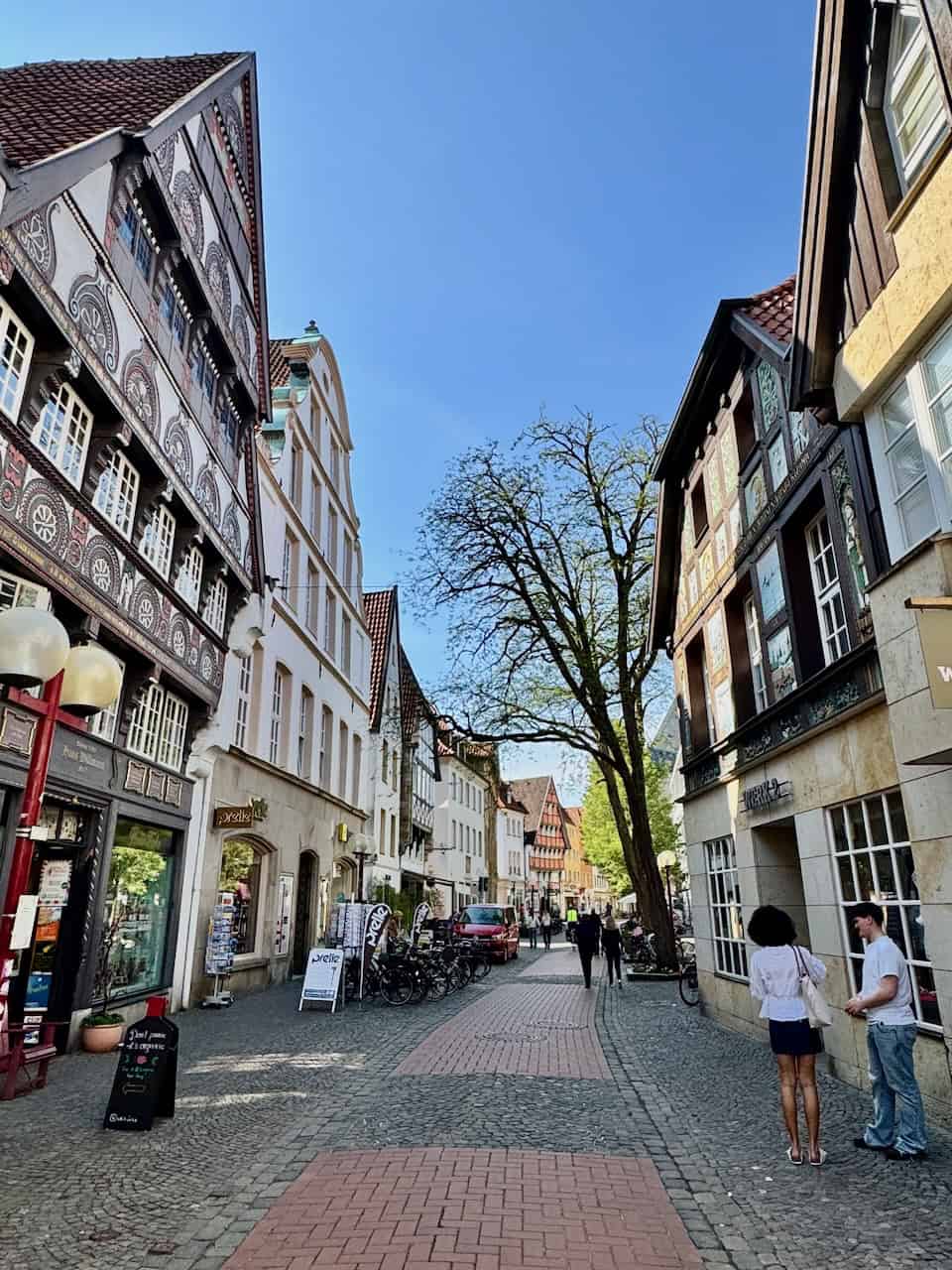 The lovely Krahnstrasse

A brief history of Osnabrück
Osnabrück has a history that dates back more than a millennium. St. Peter’s Cathedral, first built around 785 A.D. in the new bishopric under the orders of Charlemagne, stands as a testament to this legacy. The town’s fortunes grew considerably after it joined the Hanseatic League, an influential network of northern European trading towns, in the 12th century.
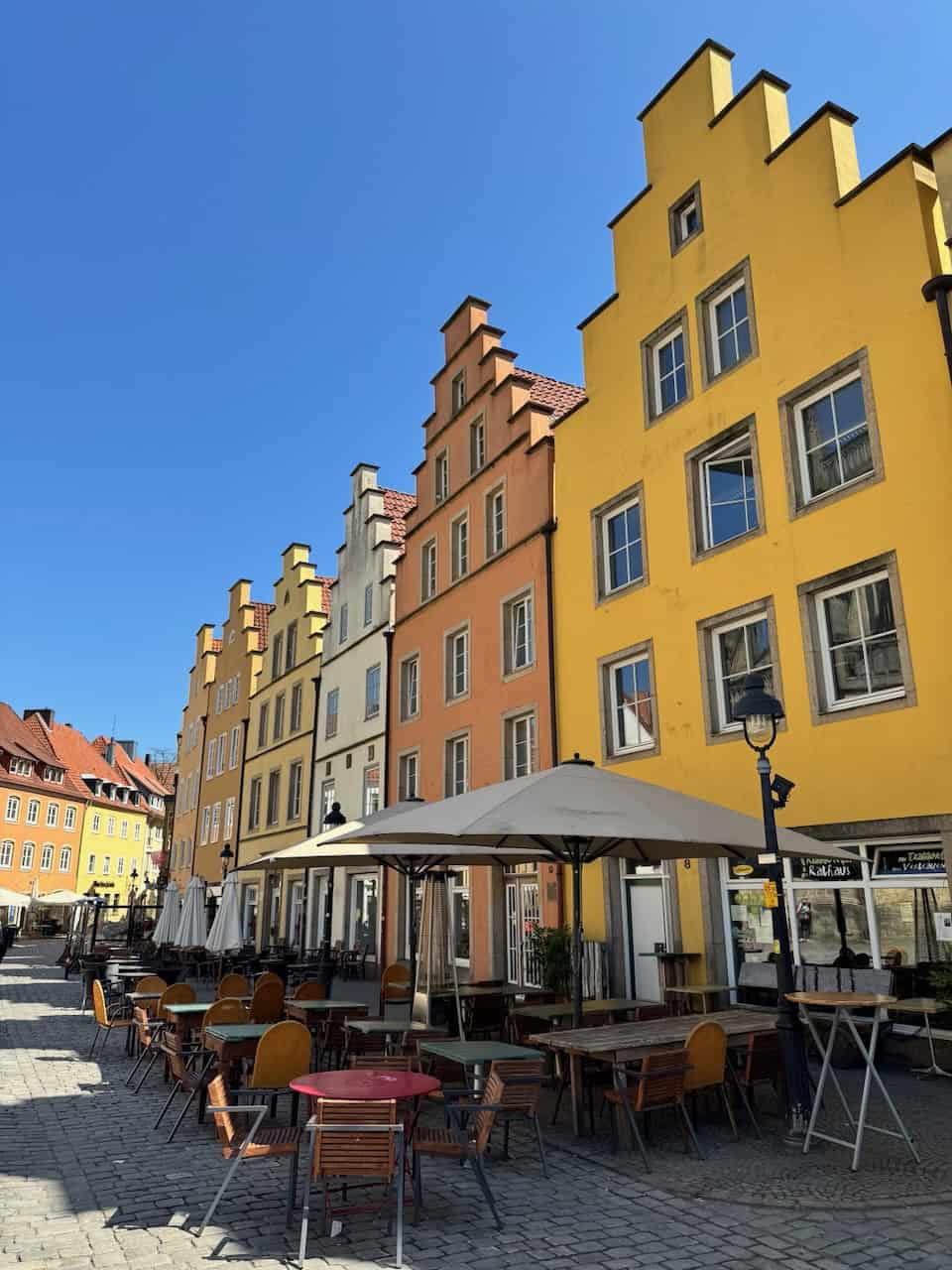 Stepped gable houses in Flemish style on Marktplatz, a legacy of the city’s Hanseatic past
What truly cemented the town’s place in European history was the negotiation and signing (that took place in Osnabrück and Münster) of the Peace of Westphalia in 1648. This treaty ended the calamitous Thirty Years’ War and brought a period of peace to the Holy Roman Empire. The seat of these negotiations was the Osnabrück Town Hall, today a symbol of peace and reconciliation. For this reason, Osnabrück is called the “City of Peace”.
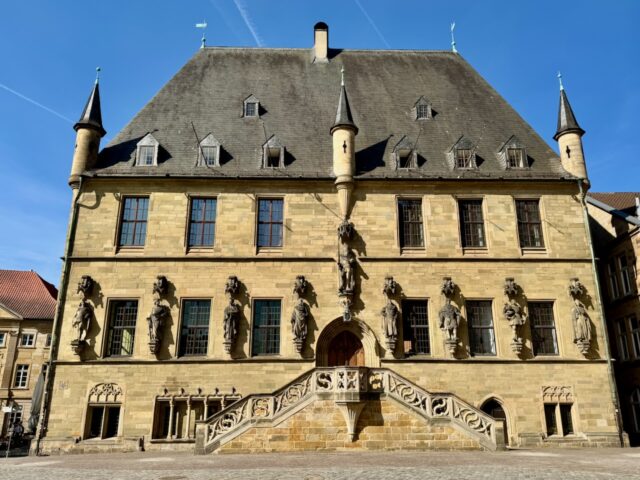 Old Town Hall
In modern times, despite suffering wartime destruction during WWII, much of Osnabrück’s historic core was carefully restored. Today, visitors can still see the layers of history during a stroll through the Old Town.
Osnabrück’s Old Town is compact. Much of the medieval legacy can be found in the triangle formed by the Hegertor, Barenturm and Dom St. Petrus. My self-guided walking tour of Osnabrück, illustrated in the map below, includes the top historic attractions.
The route can quite easily be covered in a day but I recommend spending a night or two in Osnabrück to truly get a sense of the city and its fascinating history. It also gives you the opportunity to stay in the lovely Romantik Hotel Walhalla, a historic hotel located opposite the Old Town Hall. Here are the top attractions:
Marktplatz
The Old Town’s ‘living room’, the Marktplatz (Market Square) should be the start of any exploration of Osnabrück. The square is surrounded by numerous historical buildings, including the Rathaus (Old Town Hall) and the Marienkirche (St. Mary’s Church), as well as a row of colourful stepped-gable houses, destroyed during WWII but rebuilt in the original 16th century Flemish style. The square is used for various events, most notably the Christmas market, one of the most beautiful in northern Germany.
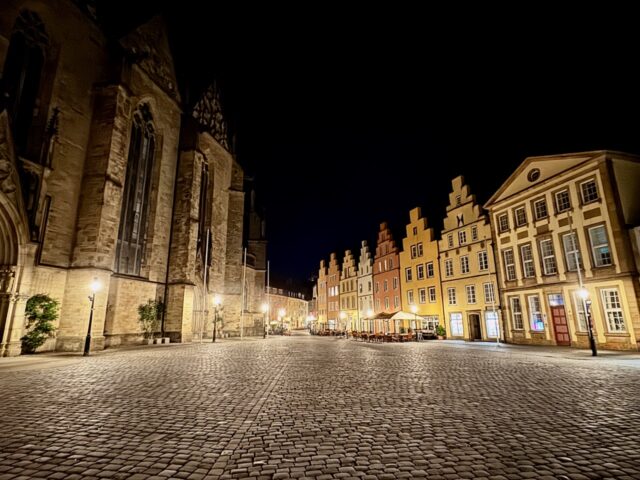 Marktplatz on a quiet evening.
 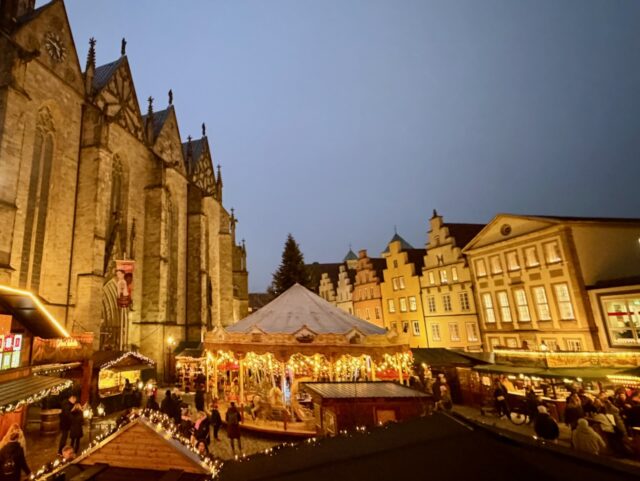 The Christmas market at Marktplatz
Rathaus
The late-Gothic Osnabrück Town Hall is one of the city’s most important landmarks. Completed in 1512, its façade is decorated with statues and its interior houses the famed Friedenssaal (Peace Hall), where envoys signed the Peace of Westphalia in 1648. This late-Gothic building now houses several international institutions dedicated to the study and preservation of peace.
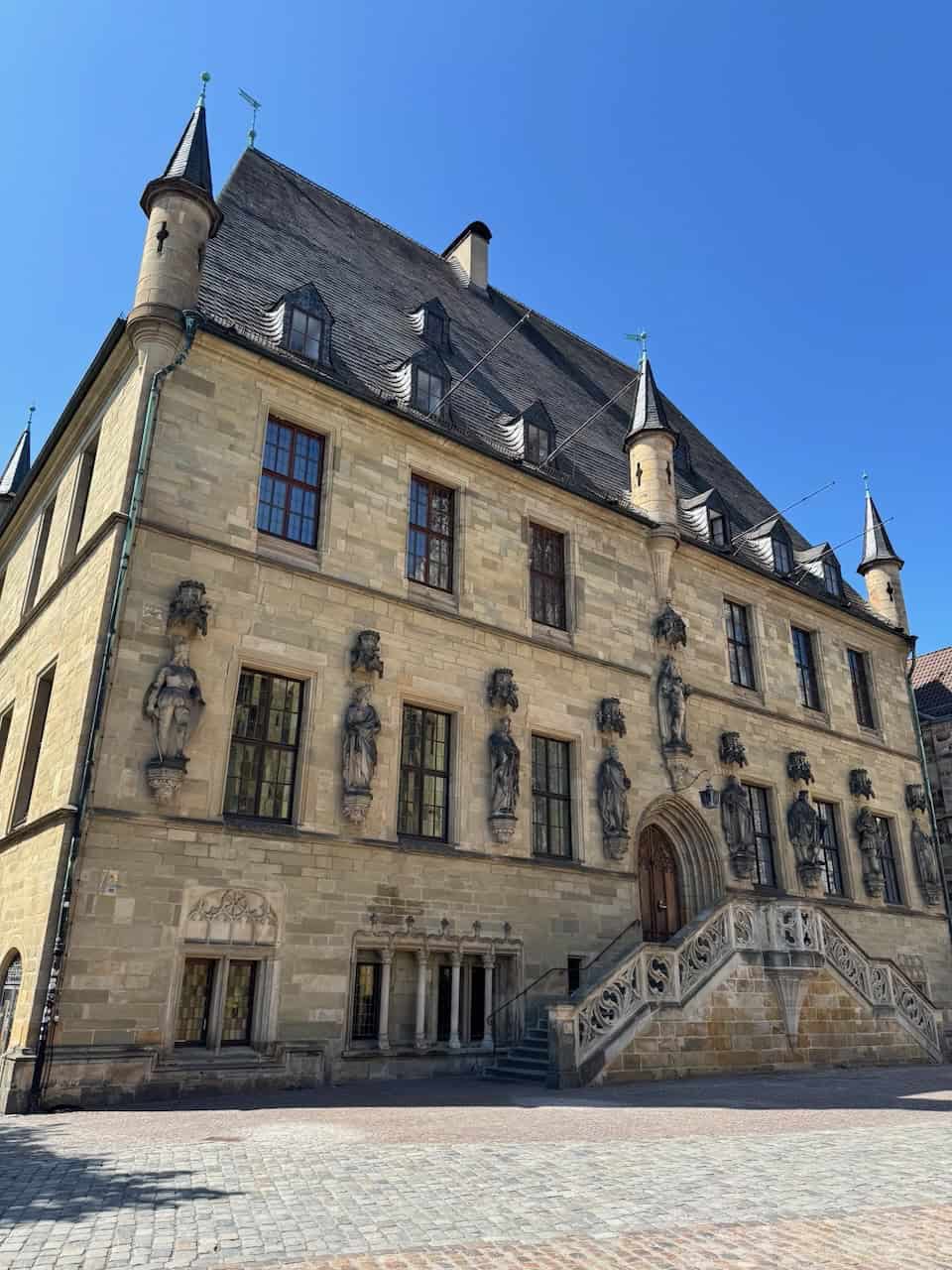 Osnabrück Rathaus
As you enter the building, notice the bronze door handle with the words “Friede 1648” (Peace 1648), a reference to the Peace of Westphalia. On the left of the main hall, you’ll find the Friedensaal. There’s a miniature model of 17th century Osnabrück on the first floor that’s also worth visiting.
Marienkirche (St. Mary’s Church)
This Protestant-Lutheran church, completed in the 15th century in the Gothic style, is another Marktplatz landmark. It’s possible to climb the church tower for beautiful views across the Old Town.
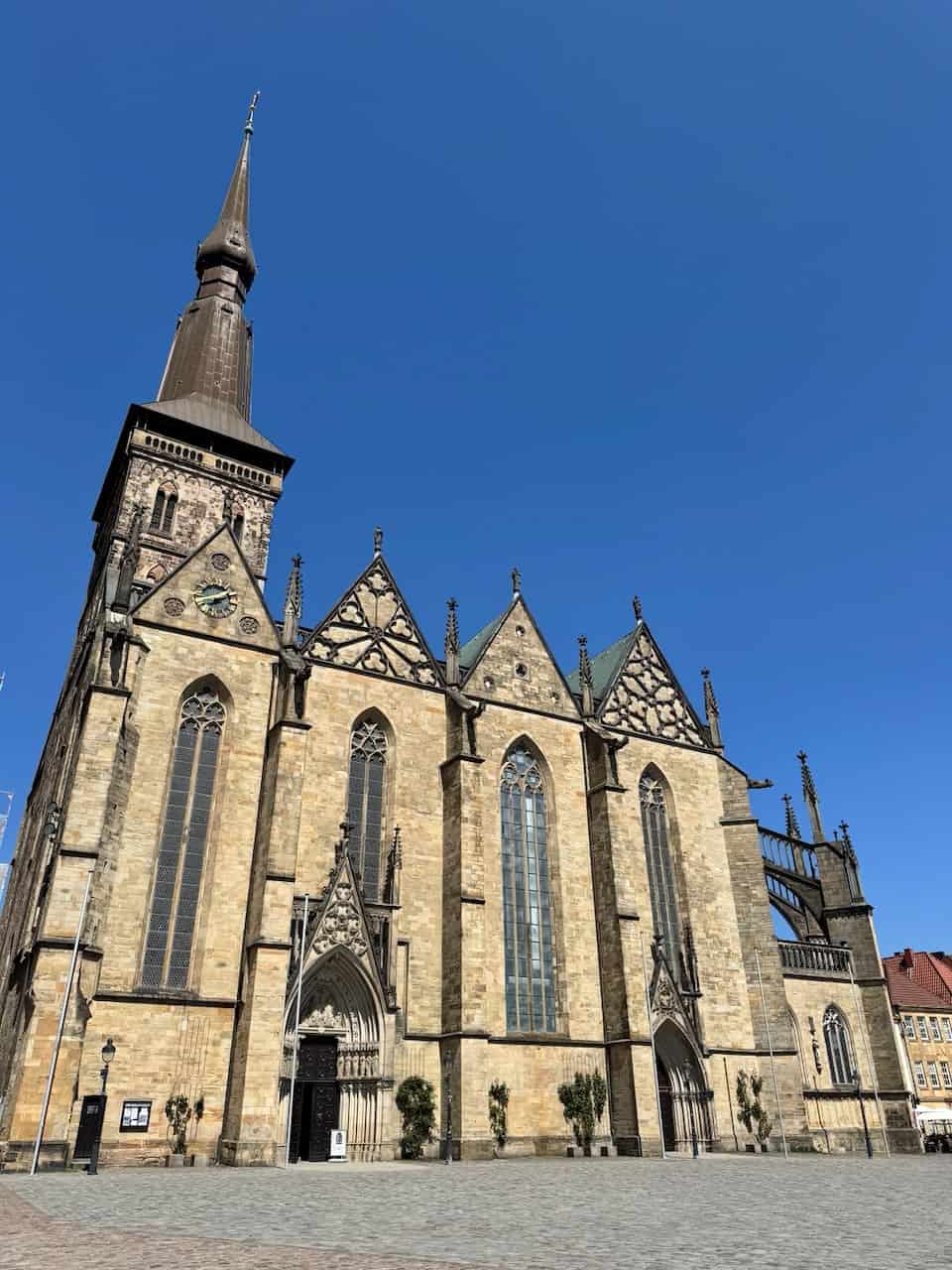 Marienkirche
 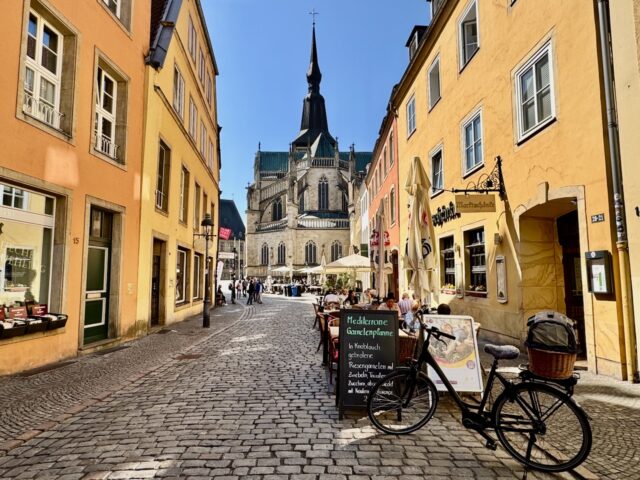 Markt – looking towards Marienkirche
Dom St. Petrus (St. Peter’s Cathedral)
A short walk from the Marktplatz leads to the Domhof (Cathedral Square). The first church on this site was built in the 8th century under the orders of Charlemagne, when Osnabrück first became a bishopric. Over the centuries the Cathedral was rebuilt and expanded, with significant work during the 13th century that shaped its current Romanesque-Gothic mixture.
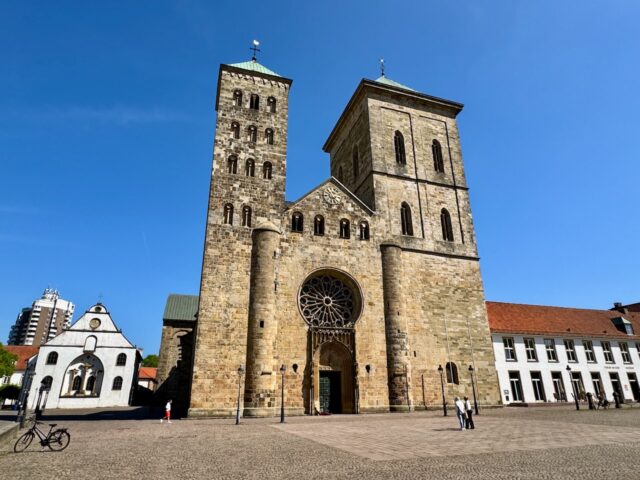 St. Peter’s Cathedral
The Cathedral impresses with its Romanesque towers and Gothic influences, a remarkable blend reflecting centuries of changes. The highlights include a vaulted nave, a stunning 13th-century triumphal cross (one of the oldest in Germany) and a 13th century baptismal font.
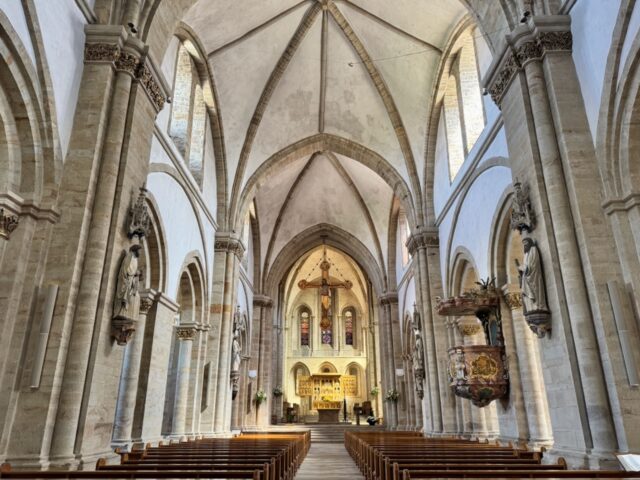 The nave in the St. Peter’s Cathedral
Medieval streets
The area west of Marktplatz is home to some of the city’s oldest buildings and most charming streets. It really is a treat to explore the streets in this area.
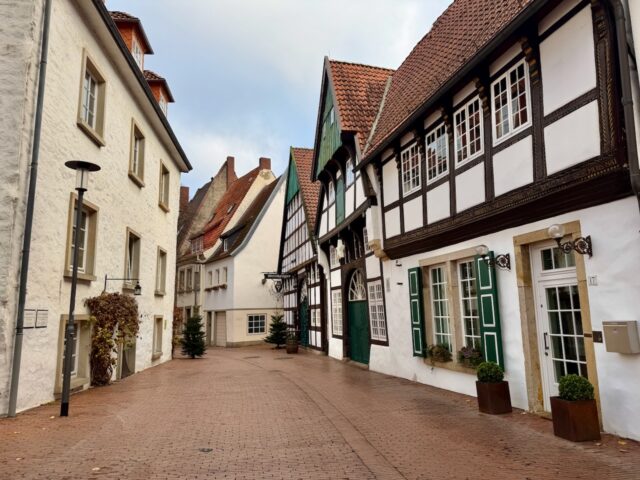 Charming houses in the Marienstrasse
I recommend strolling along streets such as Bierstrasse, Krahnstrasse, Hegerstrasse and Marienstrasse to see beautifully restored half-timbered buildings. You’ll also find numerous wine bars, restaurants, boutiques, specialty shops and art galleries.
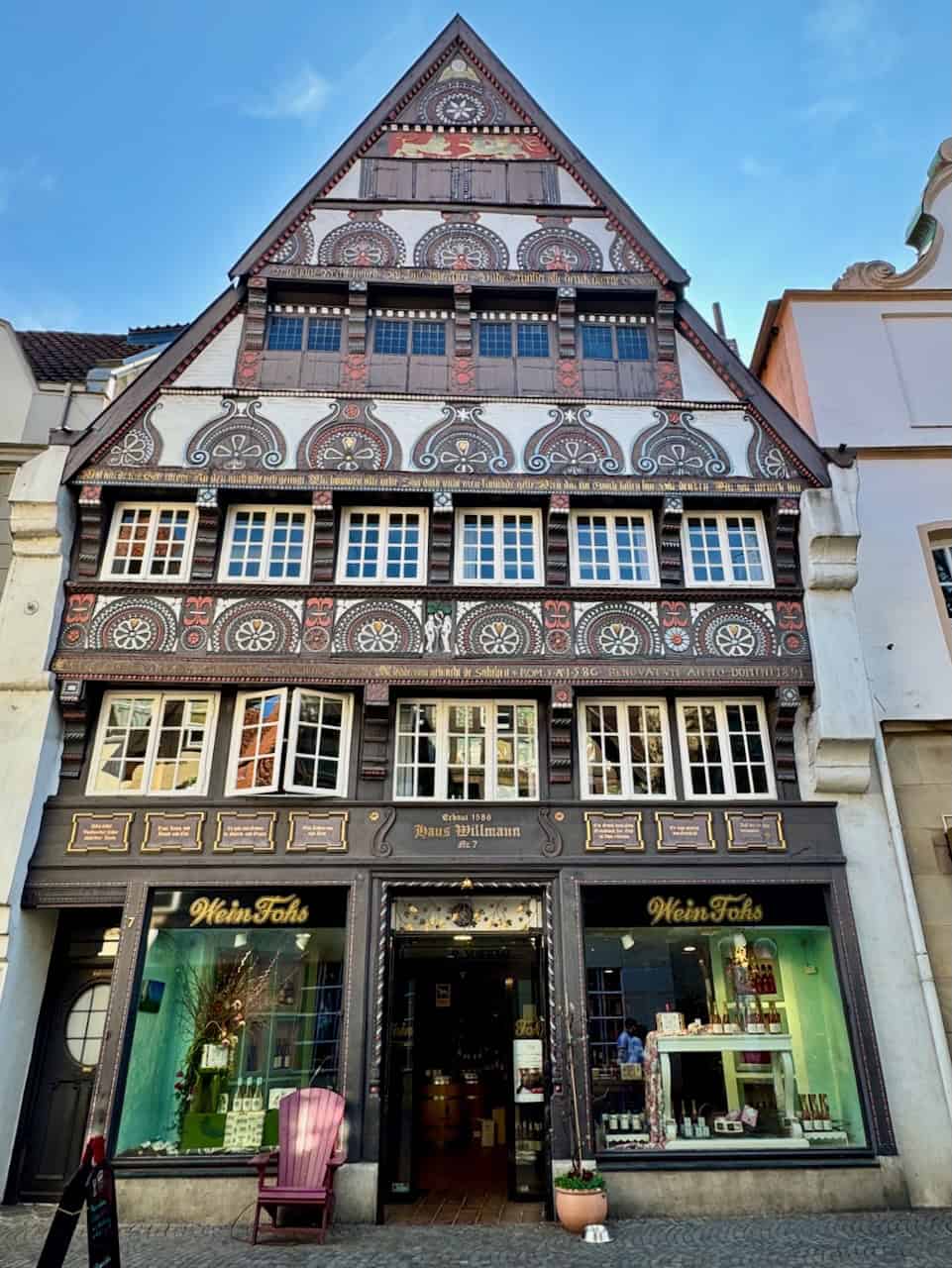 Don’t miss this gem in the Krahnstrasse!
Medieval fortifications
Remnants of the city’s medieval walls can still be seen today, especially along the stretch between the Hegertor and the Barenturm.
 Hegertor, a monument built to commemorate the soldiers from Osnabrück who died during the Battle of Waterloo.
The most visible structures are the medieval towers, such as Bucksturm (Bock Tower) and Citizenship Obedience Tower. The Bock Tower is especially interesting due to its grim history. Used as a prison in the medieval period, the tower is most famous for its “Johanniskasten”, a large oak box dating back to the 15th century. The robber baron Johann von Hoya was kept imprisoned in this box, that can be found on the second floor, for seven years! The tower later served as a torture chamber during the witch hunts of the 16th century.
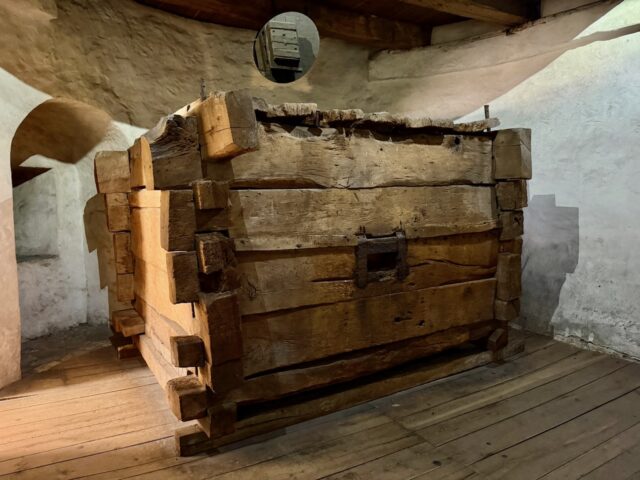 The “Johanniskasten” in the Bock Tower
Steinwerke (Stoneworks)
During the medieval period up to the Renaissance, many steinwerke or stoneworks were constructed in Osnabrück. These were stone buildings adjacent to the more glamorous half-timbered houses of wealthy families. The stoneworks were used as warehouses but also played an important role during fires or invasions. At one point, there were about 300 stoneworks in Osnabrück. One of the best surviving examples, from the 13th century, can be found in the courtyard of Bierstrasse 7.
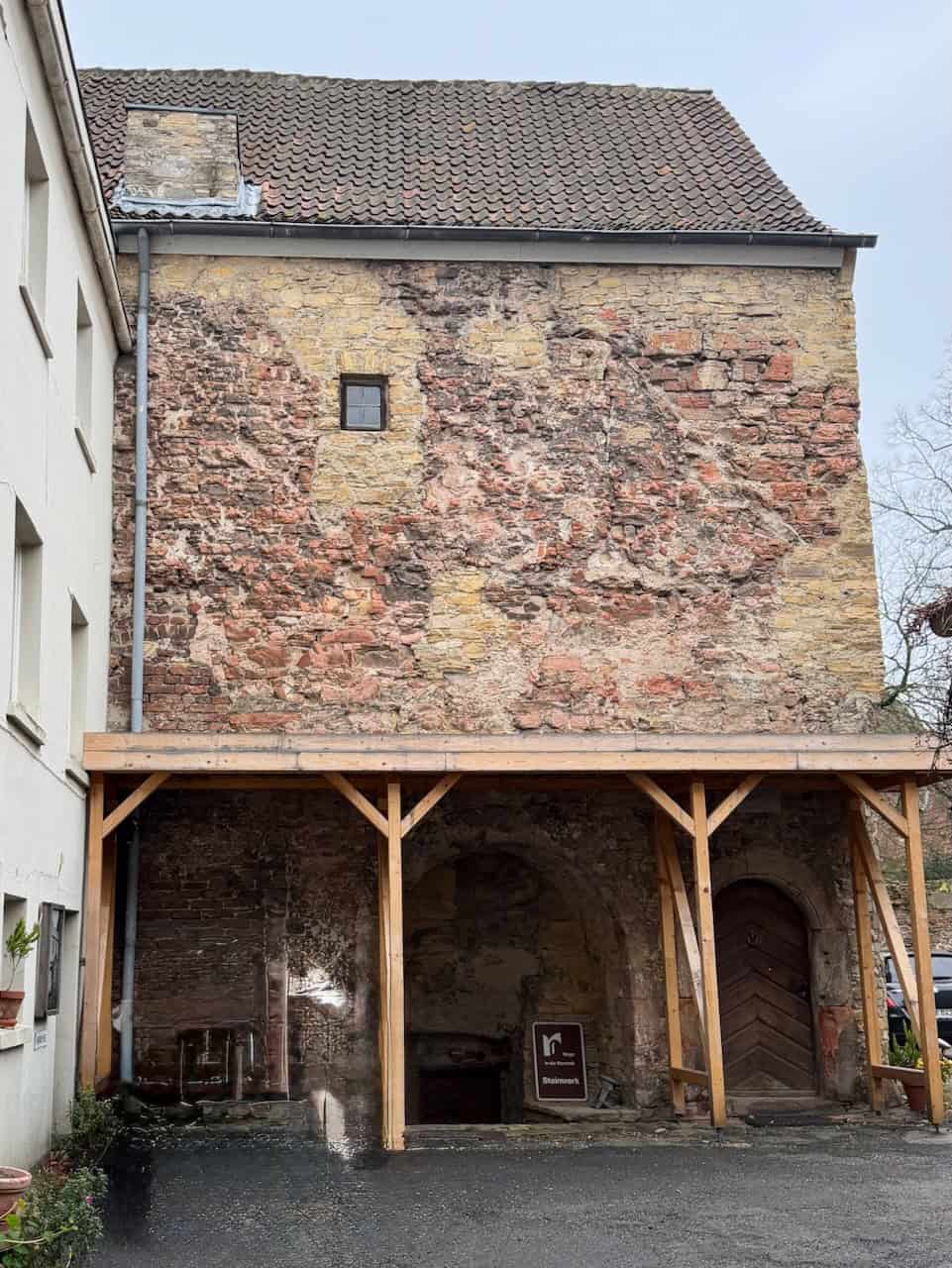 Stonework at Bierstrasse 7.
Its bare brick façade reveals the ravages it has endured across the centuries. The different colourations are the consequence of fires, notably the devastating fire bombs during WWII.
Felix Nussbaum House
From the medieval quarter, walk through the Hegertor (Heger Gate), a monument commemorating the soldiers from Osnabrück who died in the 1815 Battle of Waterloo, and cross the road. Here, you’ll find the Felix Nussbaum House/Museum.
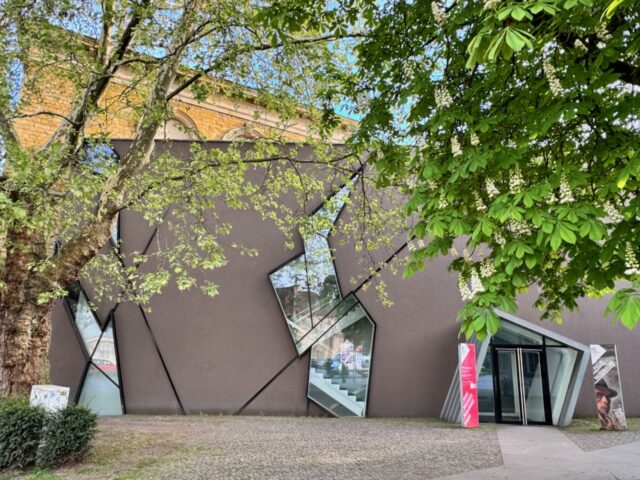 Felix Nussbaum House
Designed by the renowned American architect Daniel Libeskind (who also redeveloped the World Trade Center site following the devastation of 9/11), the museum was built around the remaining sections of a medieval wall and bridge, and is dedicated to the works of Felix Nussbaum, a Jewish artist born in Osnabrück, who perished in Auschwitz.
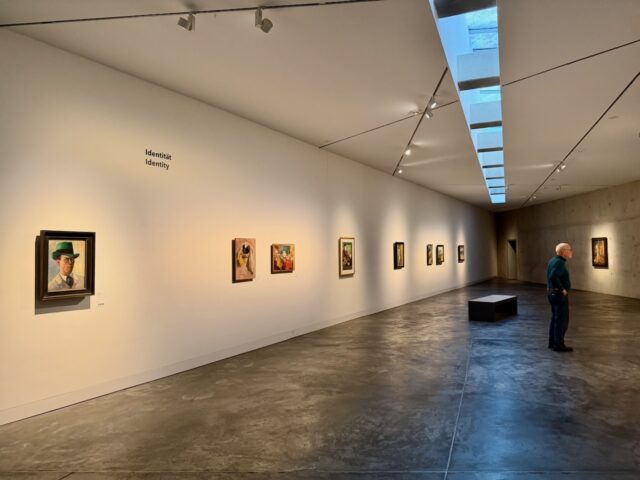 Felix Nussbaum House
Nussbaum’s early paintings depict cheerful scenes of family and friends, but as war approached and persecution intensified, his work took a darker turn. His most famous pieces – such as Self-Portrait with Jewish Identity Card and The Triumph of Death – offer haunting, powerful portrayals of the horrors of the era.
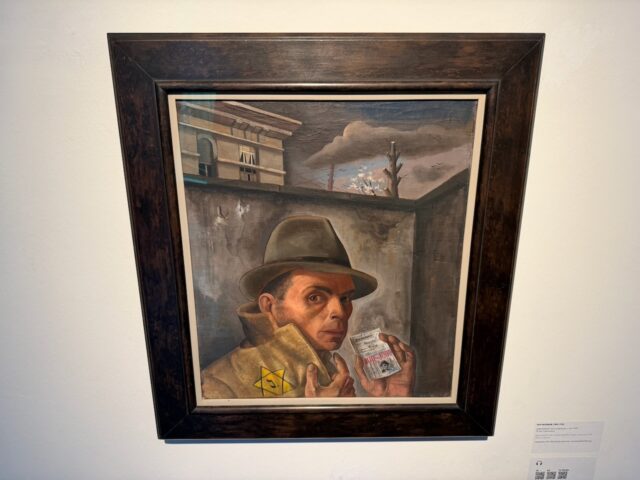 Self-Portrait with Jewish Identity Card – Felix Nussbaum
Other places to visit in Osnabrück
Should you have more time, there are other interesting places to visit, such as Schloss Osnabrück. From the medieval quarter, I recommend walking along Domhof and Grossestrasse, pedestrian shopping streets, in a southeasterly direction.
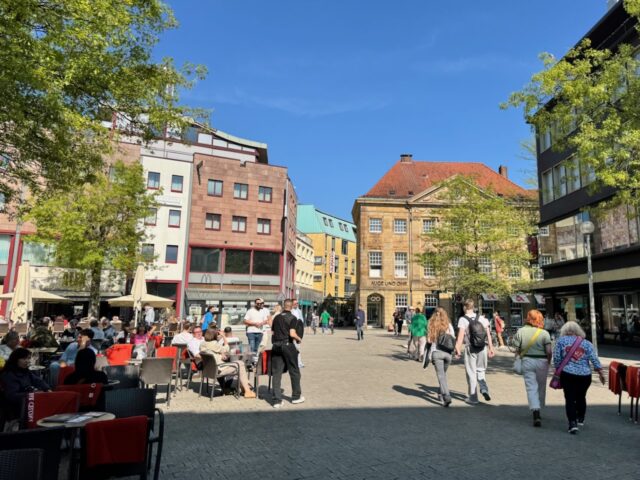 Nikolaiort at the intersection of Domhof and Grossestrasse.
From here, explore the Öwer de Hase area, a commercial area along the Hase River. In this southern part of Osnabrück, there are numerous historical sites that are well worth seeing:
Ledenhof
This striking 15th century palace was once the residence of the wealthy von Leden family. Formerly a large estate, Ledenhof now consists of a 7-storey stone building, a little palace and adjacent tower.
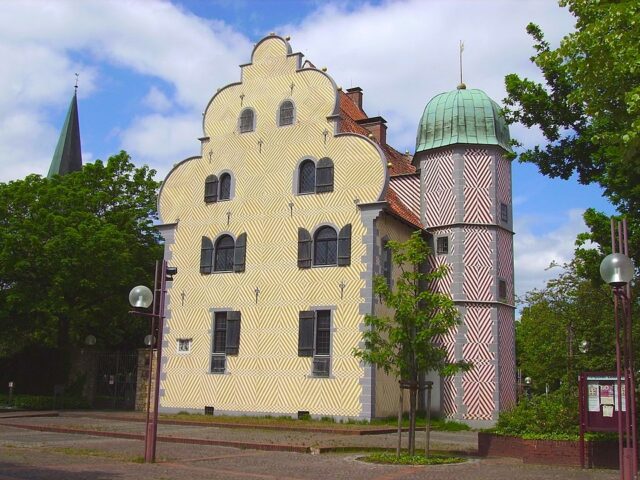 Ledenhof (image by Garitzko/Wikimedia Commons)
Schloss Osnabrück (Castle)
The Osnabrück castle, built in the 17th century in the Baroque style, was once the residence of the Osnabrück prince bishops. The castle now houses part of the university. Don’t miss the beautiful gardens in the back, a relaxing spot in the summer.
 Schloss Osnabrück
 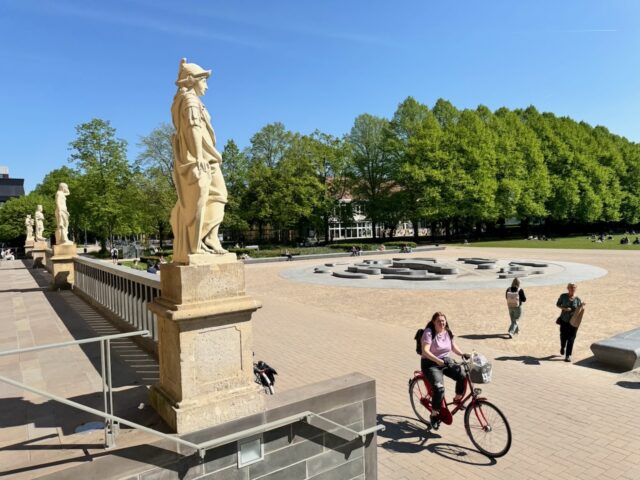 The gardens
St. Katharinenkirche (St. Catherine’s Church)
One of the four medieval churches in Osnabrück, the 14th century, late-Gothic St. Catherine’s Church features a 103m tall tower and beautiful stained glass windows.
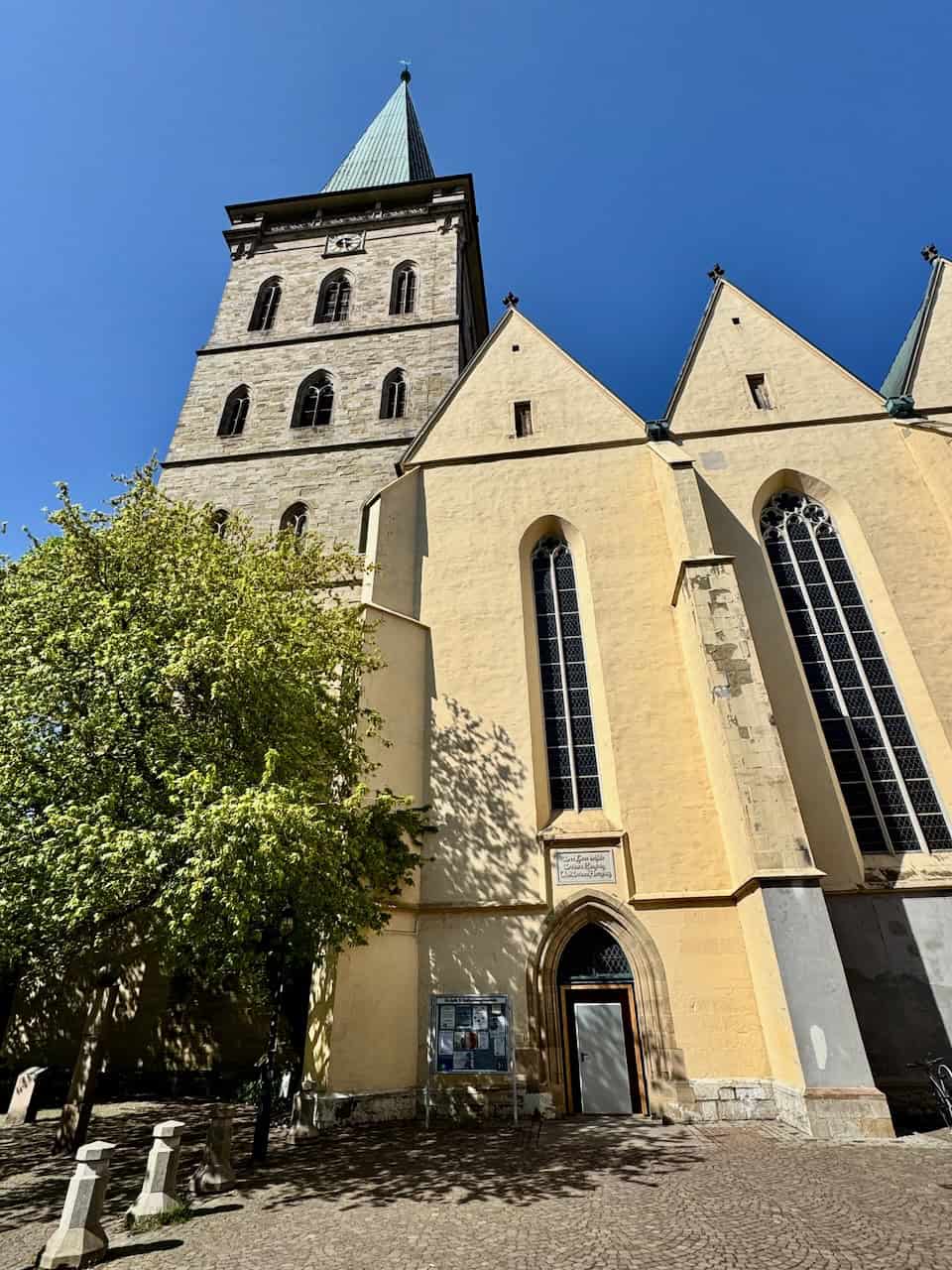 St. Catherine’s Church
From here, make your way back to the Marktplatz via the Redlingerstrasse and the Krahnstrasse.
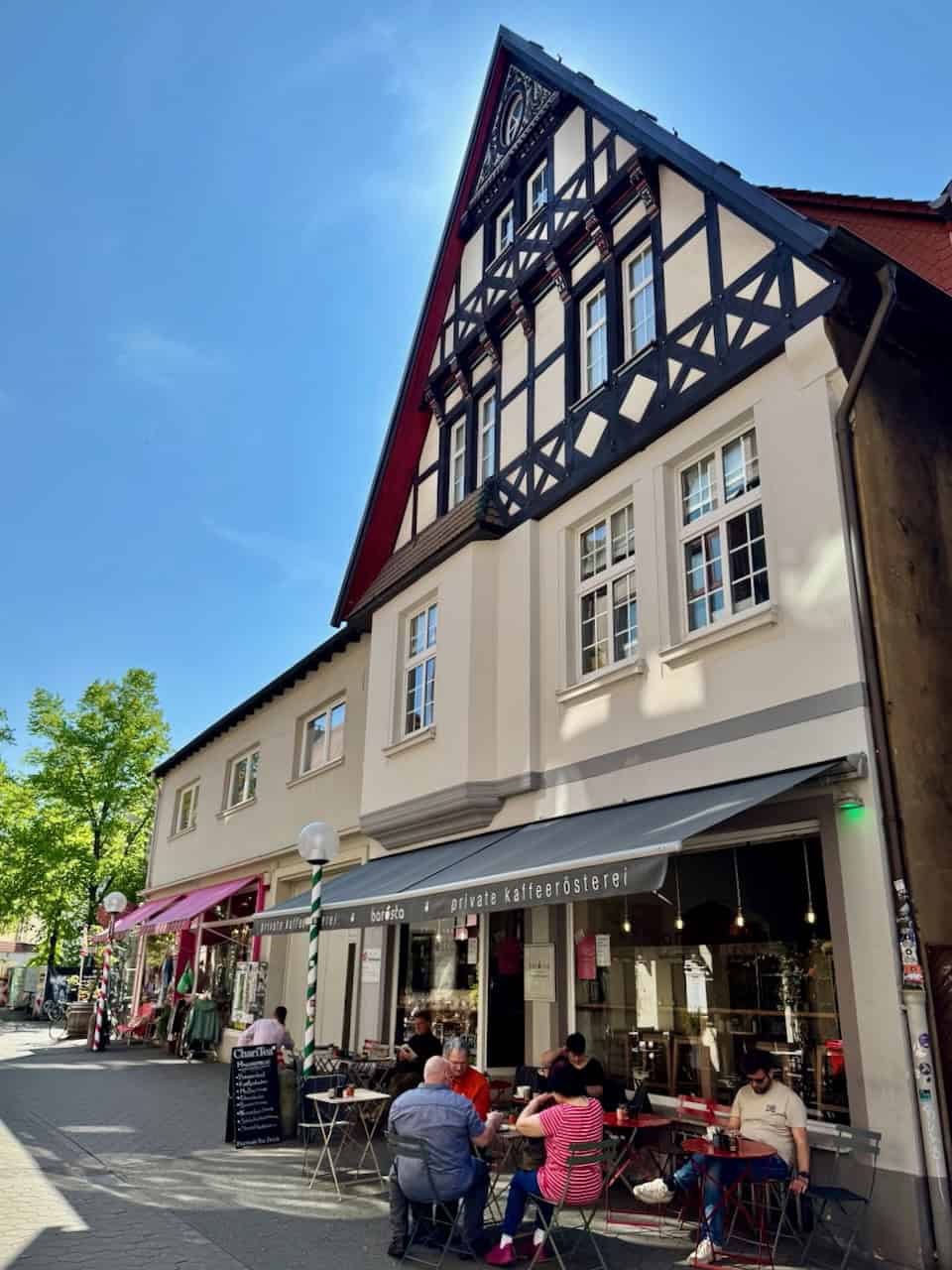 Redlingerstrasse
Osnabrück isn’t the biggest, flashiest or the most famous German city, but that’s part of its charm. For travellers interested in history, architecture, a bit of geopolitics and a dose of relaxed everyday German city life, it’s an underrated gem.
Where to eat in Osnabrück
For delicious cakes and coffee/tea, head for Café Sophies, located in a gorgeous half-timbered house in Krahnstrasse.
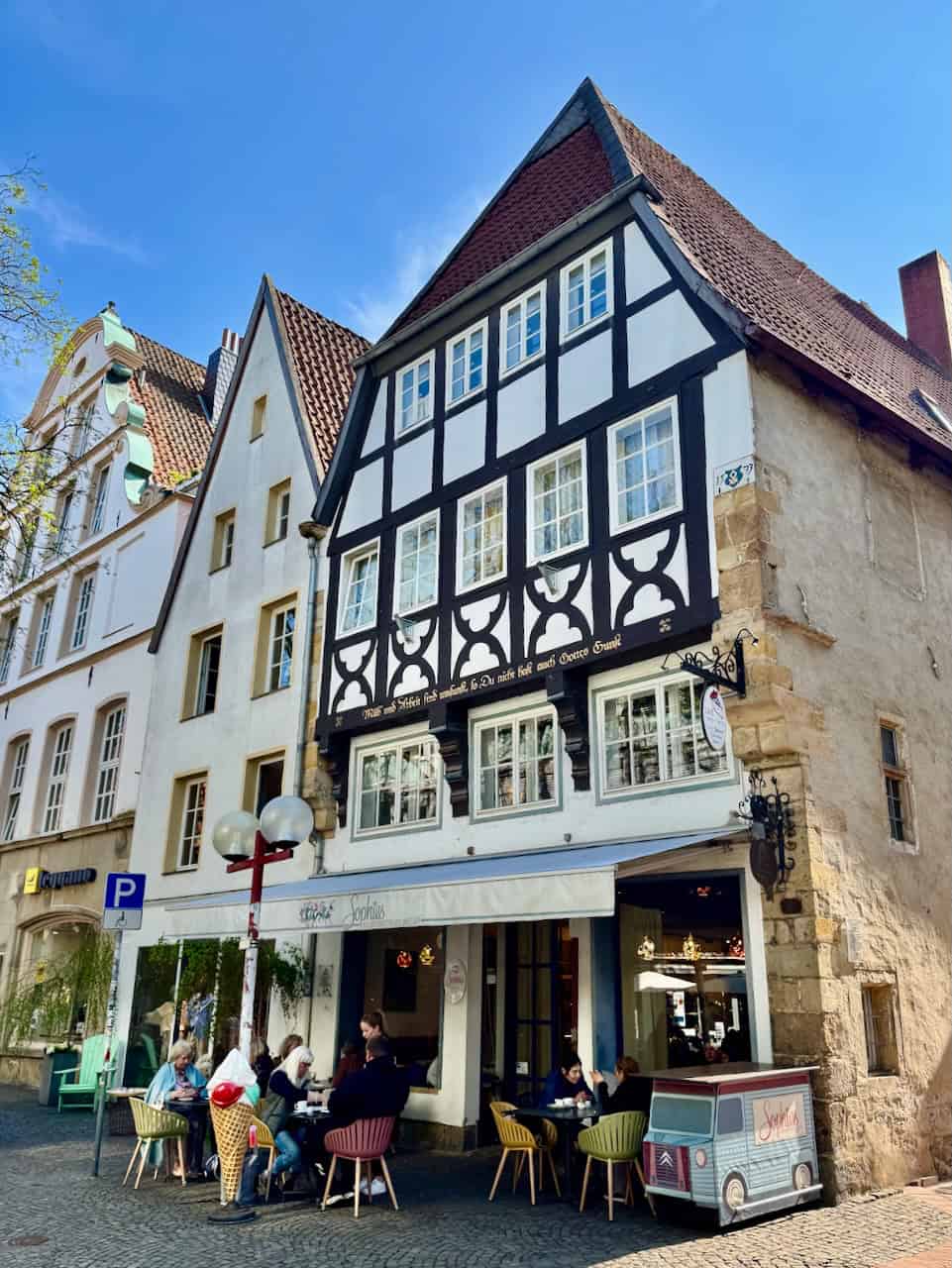 Café Sophies
If you’d like to have authentic German food, I recommend Weinkrüger in Marienstrasse. Olle Use in Hegerstrasse serves food and wines in a more contemporary setting. Another place I can recommend is Rampendahl Brewery, a rustic restaurant/brewery that serves hearty German fare and local beer. The Romantik Hotel Walhalla also has a terrific restaurant that serves German cuisine in a refined ambiance.
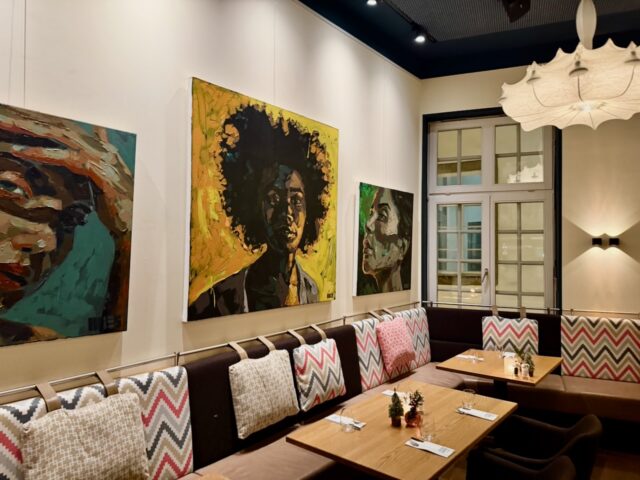 Olle Use
Where to stay in Osnabrück
I stayed at the lovely Romantik Hotel Walhalla, located opposite the Old Town Hall. The rooms are spacious and comfortable, and there’s a top-notch restaurant and a lively bar. The hotel also has a small parking garage, handy if you’re visiting by car.
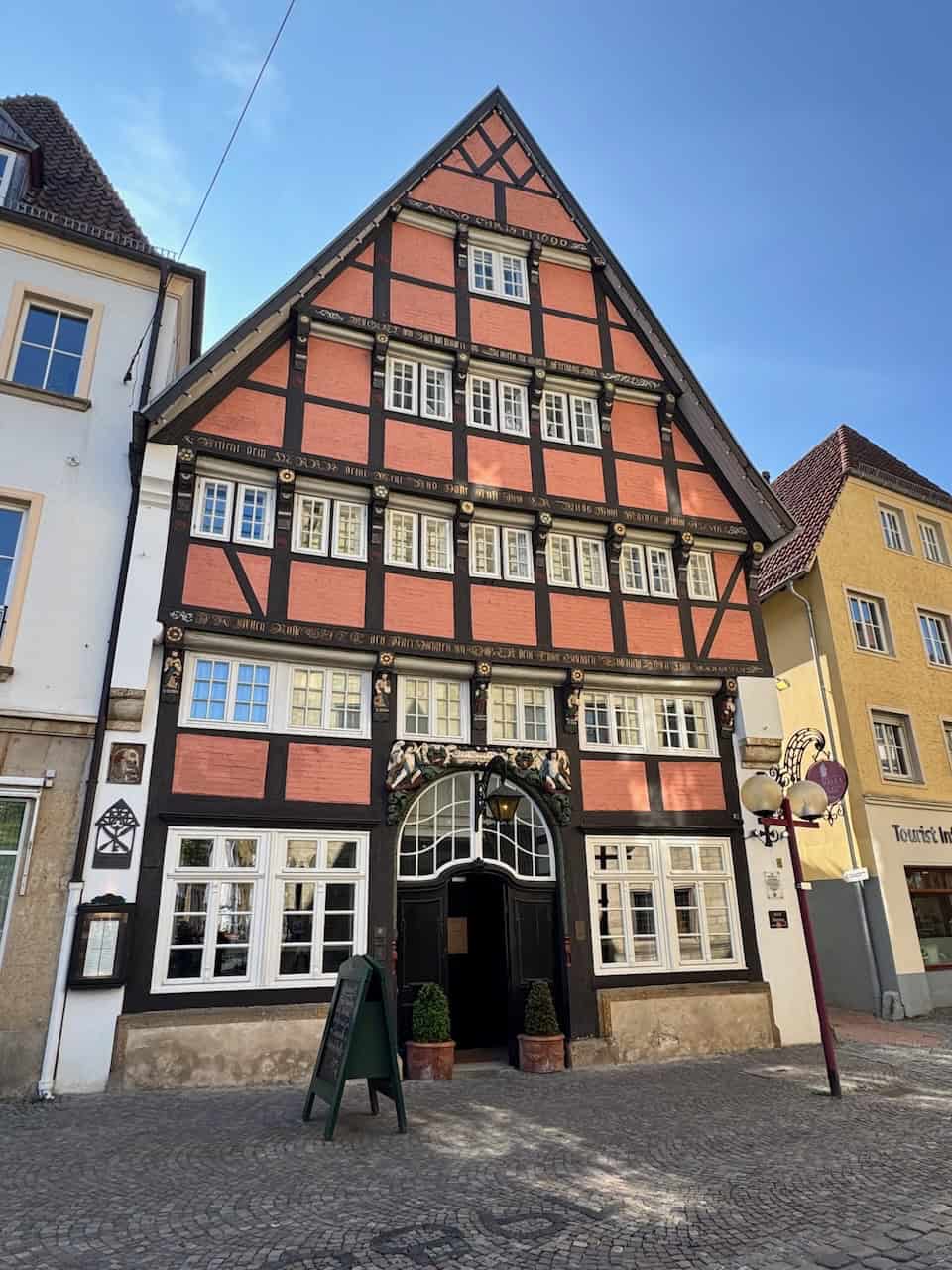 Romantik Hotel Walhalla
 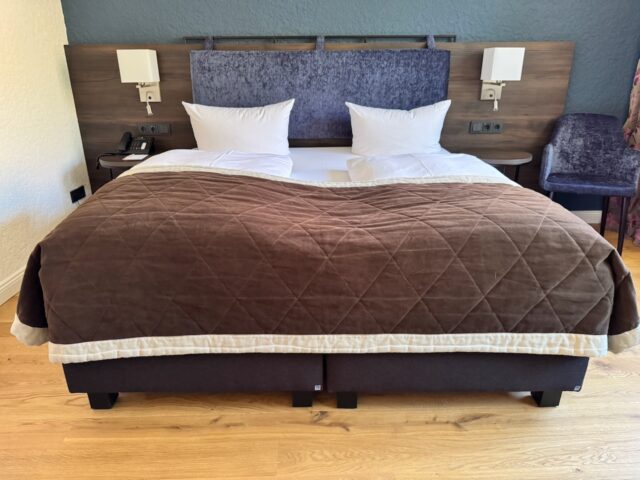 My room at Romantik Hotel Walhalla
How to get to Osnabrück
Osnabrück is about a 2.5 hour drive from Cologne, or a bit more than 2 hours by train. There are direct rail services from cities such as Amsterdam, Berlin, Cologne and Düsseldorf. If you’re in the area, I recommend combining a visit to Osnabrück with nearby Münster. Further north, you’ll find other cities absolutely worth visiting such as Bremen and Hamburg.
Read more about other Historic Cities of Germany
Note: my visit to Osnabrück was made possible in partnership with Historic Highlights of Germany. As always, all views expressed above are mine, and mine only.
Please visit:
Our Sponsor