
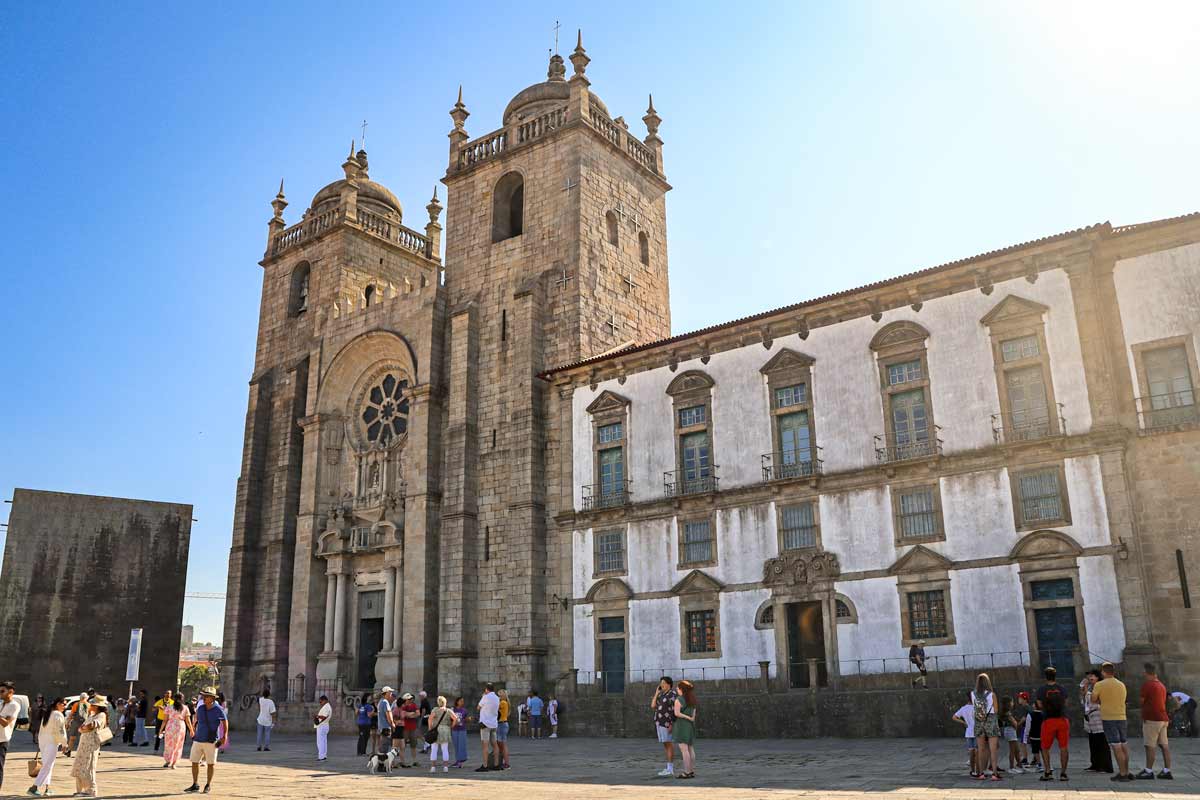
The Portuguese Camino has 3 “official” starting points: Lisbon, Porto, and Tui. Lisbon is the official starting point of the Portuguese Camino. Porto is the most popular starting point of the route. And Tui is the place from where people who want to walk the last 100 km/62 mi to Santiago start.
Each starting point has its pros and cons, which one to choose depends on you. In this post I’m comparing advantages and disadvantage of starting in each of the three places.
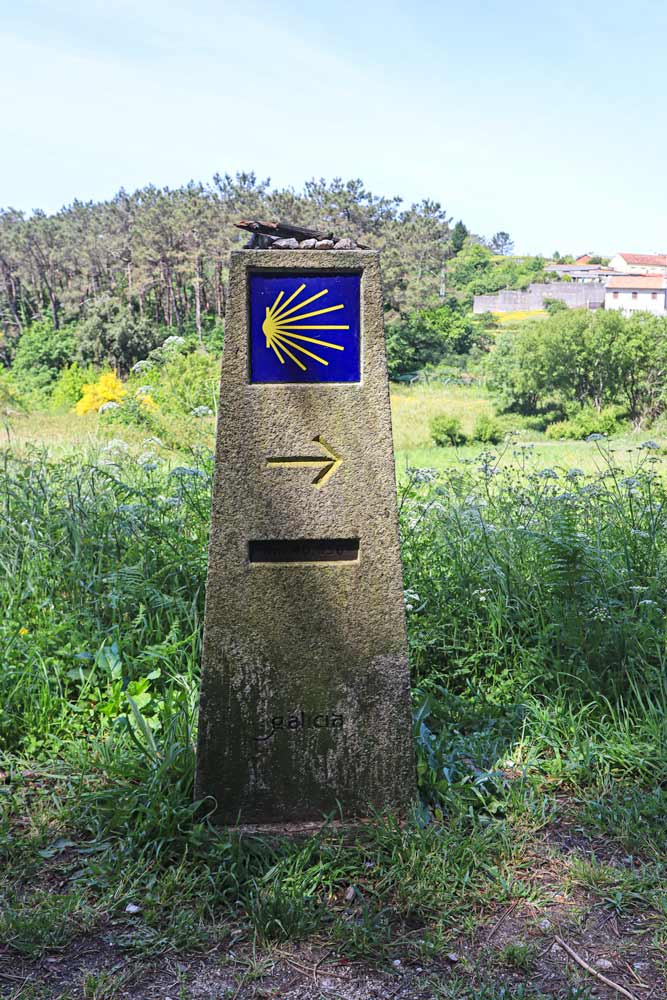
 A traditional Camino sign on the Portuguese route in Spain
Distances and difficulty levels
- Portuguese Camino from Lisbon – between 613 km/380 mi and 650 km/403 mi (depending on the route from Porto), it takes around one month to complete, challenging*.
- Portuguese Camino from Porto – between 243 km/150 mi and 280 km/173 mi (depending on the route), 12-15 days to complete, moderate.
- Portuguese Camino from Tui – 119 km/74 mi, 5-7 days to complete, easy**.
*The high difficulty level of the route from Lisbon is not only because of the distance but due to the lack of infrastructure for pilgrims on the stretch between Lisbon and Porto and longer stages.
**It’s still physically challenging for an unprepared person to walk more than 10-15 km every day for a week. Even for the shortest route it’s recommended to train for the Camino beforehand.
Number of pilgrims walking from each starting point
According to the official data from the Pilgrim’s Reception Office in Santiago for 2025.
- From Lisbon – 4 044 pilgrims
- From Porto – 26 347 pilgrims
- From Tui – 41 525 pilgrims
As you can see very few people start in Lisbon which means the first half of the Portuguese Camino from Lisbon to Porto will be very quiet. Once you’re in Porto you will see significantly more pilgrims but because there are three routes the part between Porto and Tui is still not extremely crowded. From Tui the number of pilgrims doubles. The busiest part of the route is the part from Redondela, because the two coastal routes (Coastal and Litoral) merge with the Central route there.
If you want to skip the busiest part of the Camino you can do the optional route called the Spiritual Variant which splits from the main route after Pontevedra and merges with it near Padron (for the last stage).
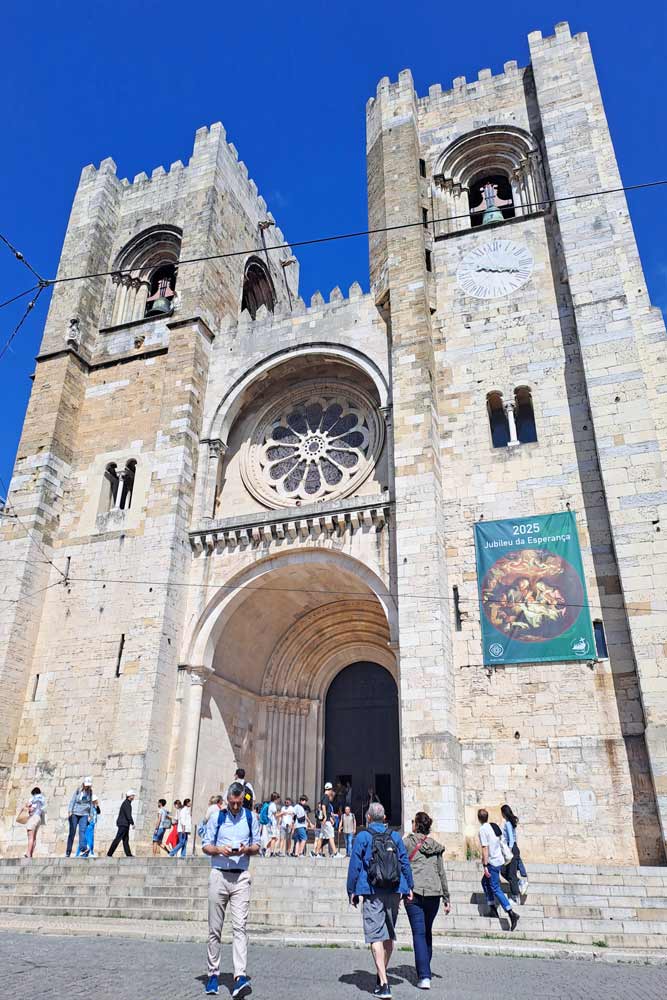
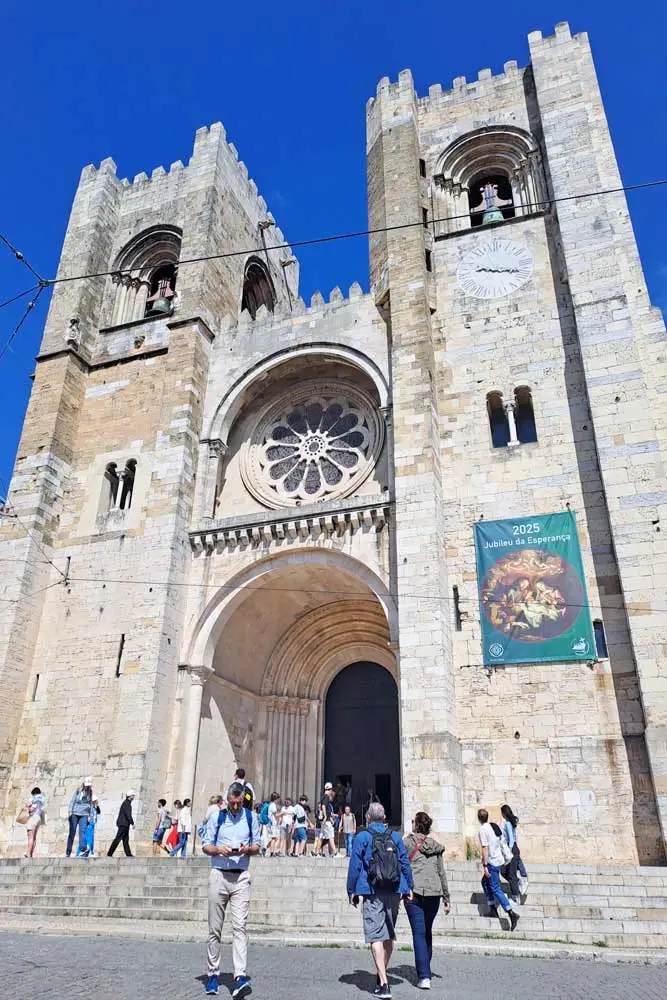 Se Cathedral in Lisbon, Portugal
Starting the Portuguese Camino in Lisbon
Pros
It’s the actual starting point of the route so if you want to walk the entire Portuguese Camino from beginning to end it’s the place to start.
The route from Lisbon has very few pilgrims. I know some people don’t like walking with hundreds of other pilgrims.
You get to see a non-touristy part of Portugal and experience more of a local culture and hospitality.
You get to see very interesting Portuguese towns including Tomar and Coimbra.
You can combine the Portuguese Camino with the Camino de Fatima, another pilgrimage route from Lisbon to the Sanctuary of Our Lady of Fatima. This way you complete two pilgrimages in one walk.
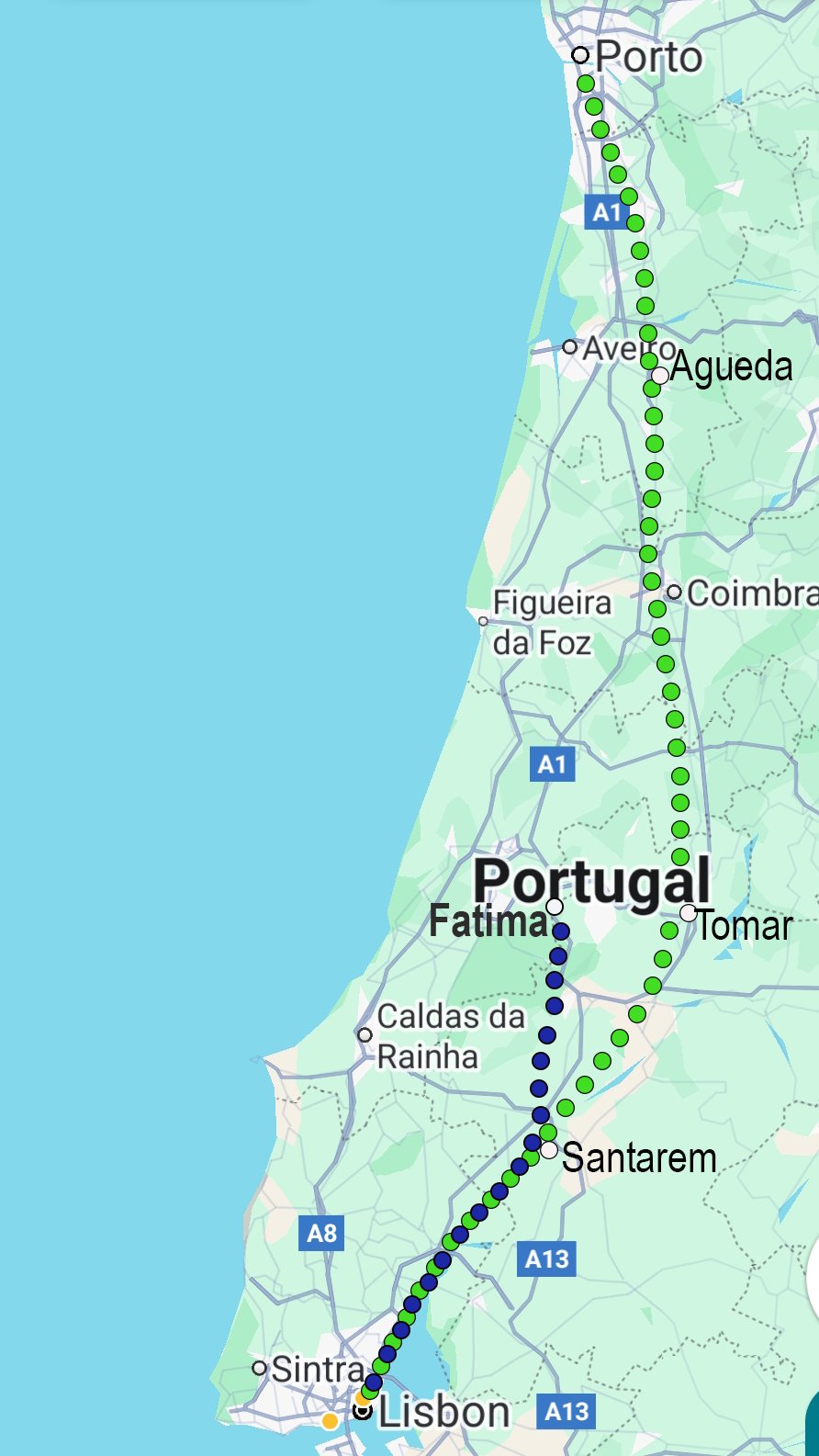
 A map of the Portuguese Camino from Lisbon to Porto and the Camino de Fatima
Cons
The main con is the lack of infrastructure for pilgrims on the stretch between Lisbon and Porto. I refer mostly to the lack of public and private albergues.
Another drawback of the route is long distances between the towns which means it’s difficult to make walking stages shorter. Some days you have no choice but to walk over 30 km/18.6 mi.
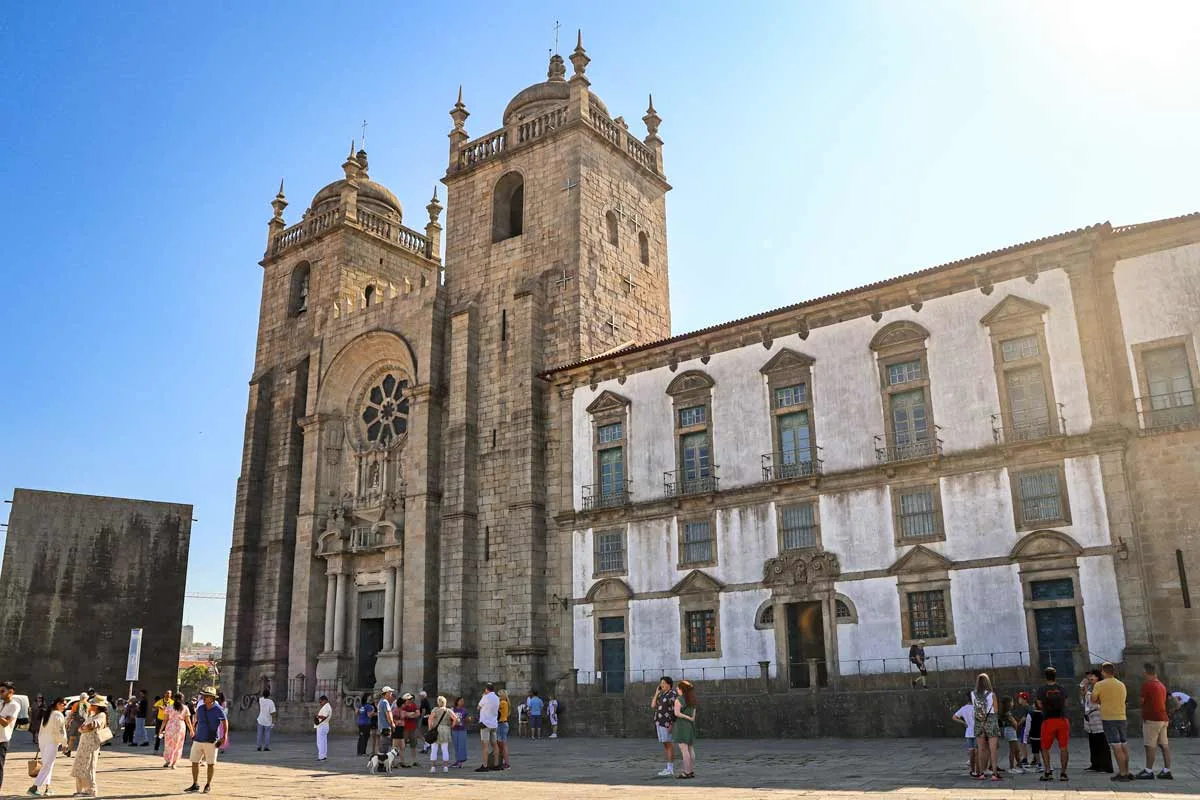 Se Cathedral in Porto is one of the most popular starting points of the Portuguese Camino
Starting the Portuguese Camino in Porto
It’s the most popular starting point for the route. The Camino from Porto is a unique route because it has not one but three trails: Central, Coastal, and Litoral. Each route offers a different scenery and a special experience. You can find more information on the routes in our dedicated post.
Pros
It’s a middle distance route, a good option if you want to walk a longer route (not just a 100 km/62 mi) but don’t have one month to complete a longer route. The Camino from Porto can be done in less than two weeks.
The route has good infrastructure for pilgrims; many albergues, plenty of restaurants, cafes, etc.
The towns are not far apart; you can adjust the itinerary and choose how far you want to walk per day. For your convenience we have created a planning tool that you can use to get a customized itinerary for the route from Porto.
You can combine several routes in one walk and get to see different landscapes; coast, forest, historical towns, and countryside.

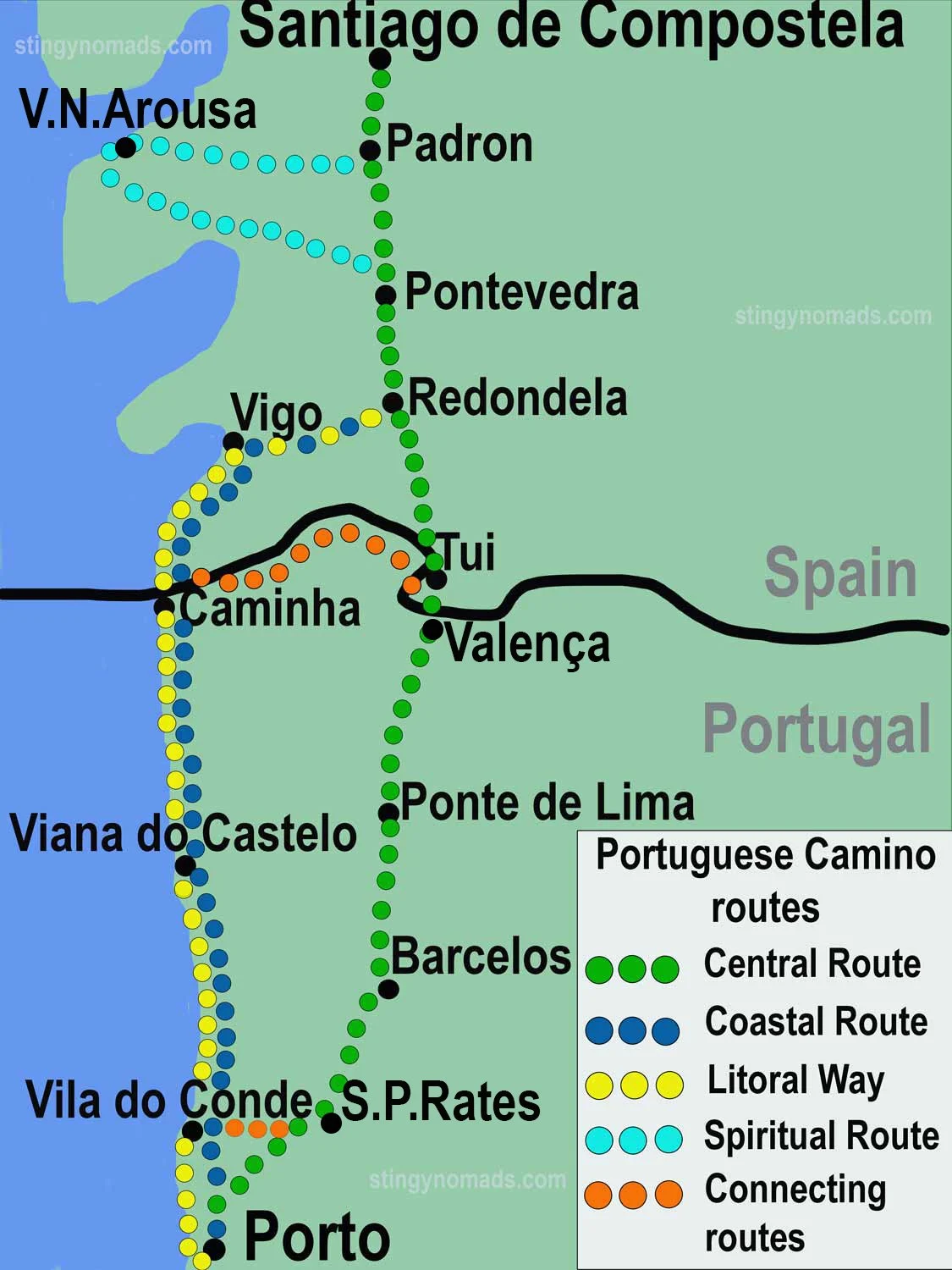 A map of the route of the Portuguese Camino from Porto
Cons
The Camino from Porto is a busy route especially during the peak months (May, June, September, and the first part of October). The Litoral Way is the quietest route out of the three routes from Porto – a good option if you want to skip the crowds.
During the summer holiday season (July and August) the coastal towns and beaches are very busy which leads to higher accommodation prices. If you decide to walk the Coastal or Litoral route and want to stay in private rooms (not shared dormitories in albergues) it’s better to book accommodation in advance.
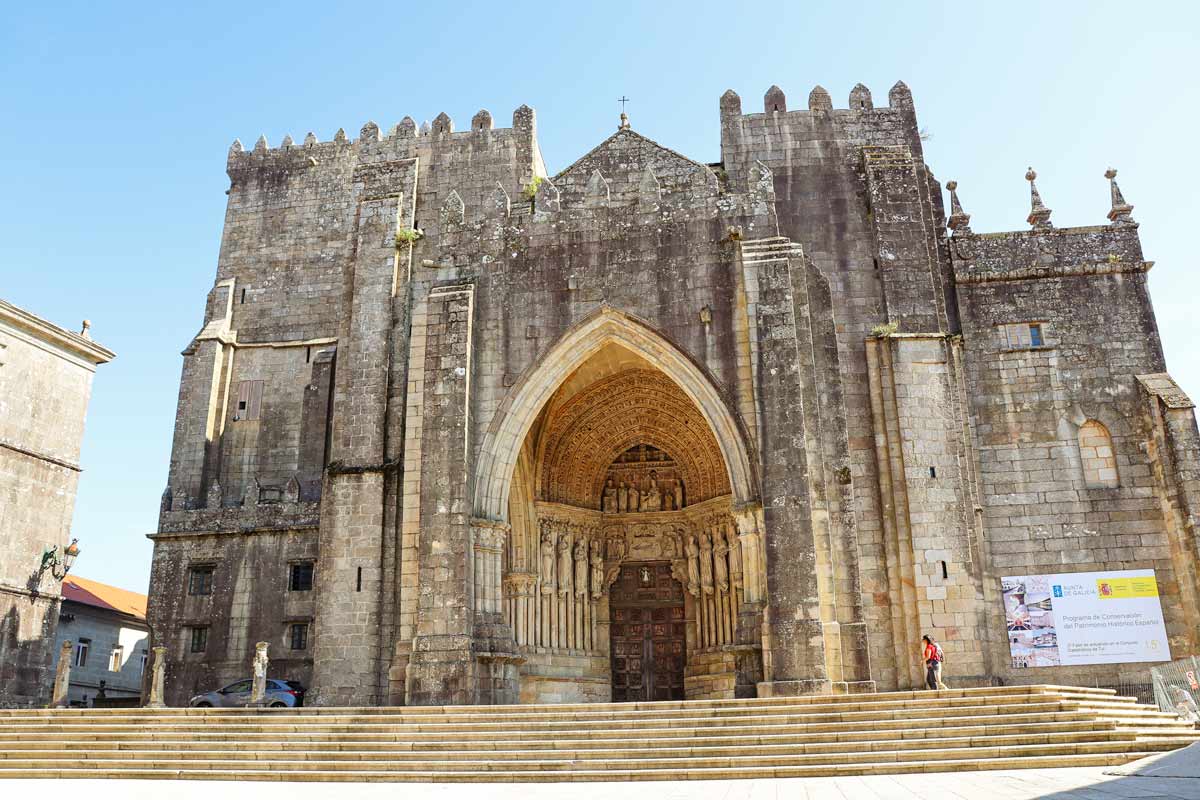 Cathedral of Santa Maria in Tui, the most popular starting point of the Portuguese Camino
Starting the Portuguese Camino in Tui
Tui is a traditional starting point of the last 100 km to Santiago de Compostela. Walking the last 100 km to Santiago used to be the required minimum for getting the Compostela certificate. The requirements changed in 2025 but for the Portuguese Camino it still makes the most sense to start in Tui and here is why.
According to the new rules a pilgrim has to
Have a Credential (pilgrim’s passport) with stamps collected along the route (from albergues, hotels, cafes, churches, etc.);
Walk at least 100 km/62 mi on any officially recognized Camino route (Portuguese Camino is one of them);
Walk at least 70 km/43 mi through Spain. This requirement is crucial for the Portuguese Camino as a half of it is through Portugal. For any other Camino you can choose any 100 km/62 mi of the route to walk because the entire route is through Spain. Of course you could walk 30 km/18 mi in Portugal and 70 km/43mi in Spain but logistically it’s just easier to start in Tui and walk the last 100 km/62 mi to Santiago (especially considering the last requirement);
Walk the last stage of the chosen route to Santiago de Compostela. For the Portuguese Camino it’s traditionally the stage from Padron to Santiago.
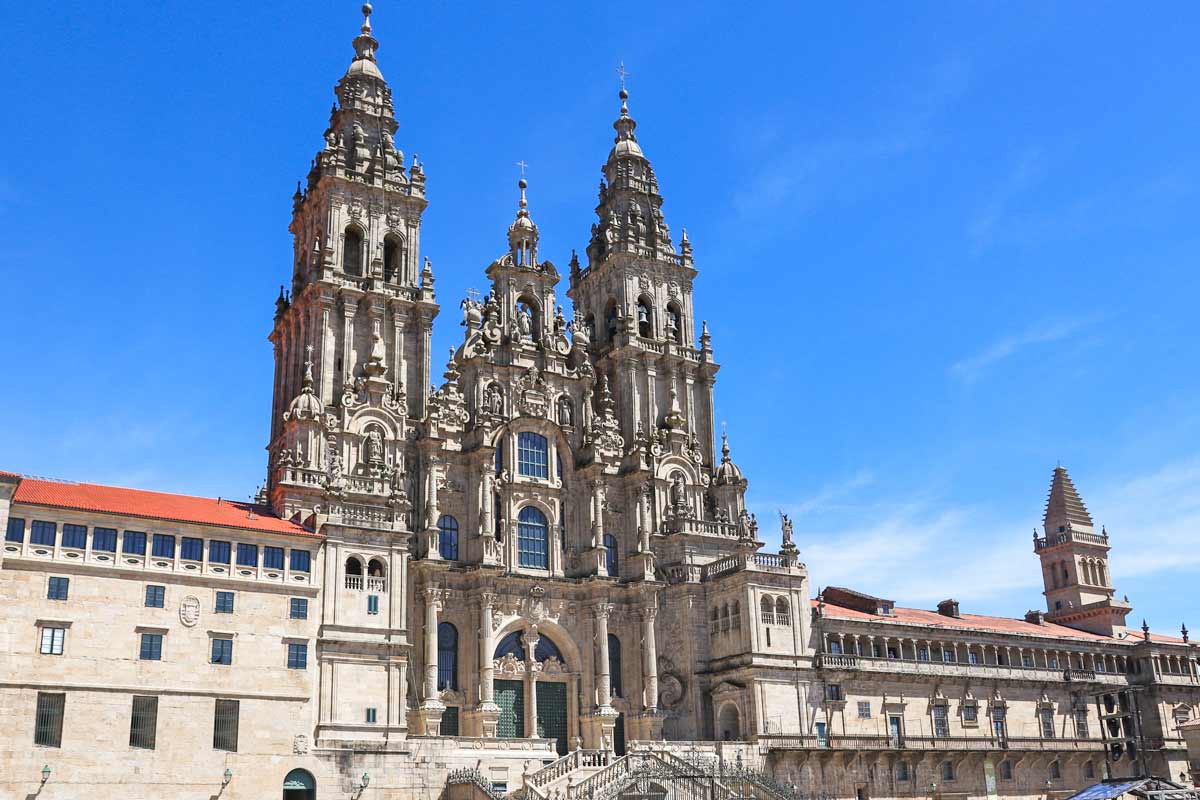 Cathedral of Santiago de Compostela, the end of the Camino de Santiago
Pros
It’s a short route that can be walked in under a week. If you don’t have enough time for a longer route or not physically prepared to walk for weeks this route is a great alternative.
The route has very good infrastructure for pilgrims (many albergues, hotels, route signs, etc.) and is well-marked.
It can be walked year round as many accommodation places stay open in winter.
It’s easy to arrange luggage transfer for this part of the Portuguese Camino even during the offseason. There are many companies that offer the service and some (e.g. Correos) operate during winter months.
Cons
It’s the busiest part of the route. During the peak months (May, June, September, October) there will be hundreds of pilgrims walking it. But to be honest it’s the case of the last 100 km on pretty much any major Camino de Santiago route. Even if you start in Lisbon or Porto you will still walk that busy part from Tui.
You don’t get to walk across two countries. Tui is the first Spanish town on the route so you completely skip the Portuguese part of the Camino. It’s not a big problem; you can spend some time in Portugal before or after the walk.


The pretty half of Stingy Nomads, responsible for all our land adventures (hiking, climbing, walking the Camino) and following them write-ups. Alya loves walking since she was a child, she prefers to walk 1000 km with a backpack rather than to do a 10 000 km road trip (actually any road trip). Alya is a big fan of Latin America, the Spanish language, and dancing. Every time we go away she desperately misses our dog Chile.
Please visit:
Our Sponsor