
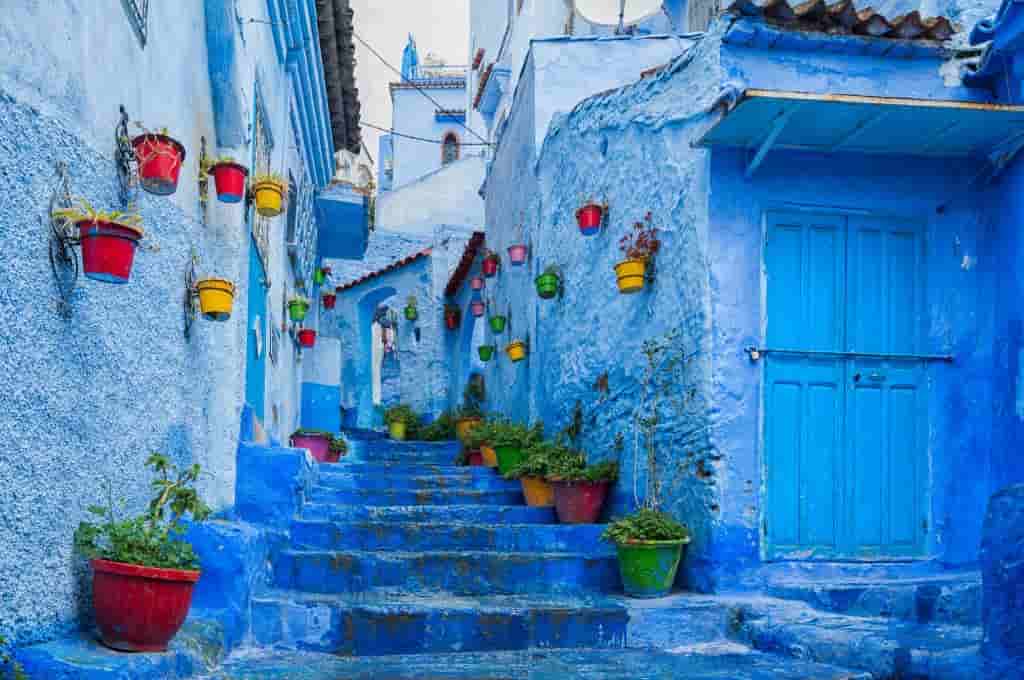

Located on the northwestern tip of Africa, Morocco is just a strait away from Spain. Thanks to its colourful cultural experiences, iconic landscapes, stunning architecture, compelling history, and traditional local hospitality, Morocco has long intrigued travellers from around the world. The country is now emerging as one of the most sought-after travel destinations, and I’m sure your Instagram feed is abuzz with images of picturesque riads, vibrant souks, blue-washed corners, and towering sand dunes.
Ten days is not enough time to fully experience the mysterious country, but it is sufficient to sample what Morocco has to offer. Historical medinas, expansive desert dunes, cinematic landscapes, and photogenic towns all come together to create Morocco’s rich cultural and scenic tapestry. This 10-day road trip starts and ends in Casablanca and travels through the blue-washed alleyways of Chefchaouen, the spiritual depth of Fes, and the exciting expanse of the Sahara Desert before plunging you into the timeless magic of exotic Marrakech. It is carefully planned and packed with amazing experiences, providing the perfect balance of adventure, culture, and Moroccan warmth.
 Dades, Morocco
Why have we chosen a road trip for our itinerary?
The best way to travel in Morocco depends on how far you’re going, your comfort level, and how much flexibility you want. Most travellers, especially on a 10-day trip that includes the Sahara, prefer a mix of personal transport and trains. Trains are clean, dependable, and affordable. However, some locations on this route aren’t accessible by train. When trains aren’t available, your choices are a bus or a private car. Buses are reasonably priced and comfortable, but follow fixed schedules and offer less flexibility. If you want to explore Morocco in ten days, it’s better to use your own vehicle rather than wait for public transportation.
Self-driving offers you the freedom and flexibility to travel at your own pace, especially if you’re interested in visiting off-the-beaten-path locations. Generally, the roads connecting major cities are in good condition. However, city traffic can be chaotic, and parking is limited in the medinas. Self-driving is also not recommended in the Sahara or in mountainous areas.
 Jemaa el-Fnaa, Maraakech
Having a car with a private driver is the most popular alternative. It provides door-to-door comfort and flexibility. You can stop for photos, meals, and scenic viewpoints. It delivers local insights without the stress of driving. Private drivers are common for trips to the Atlas Mountains and the Sahara. The cost ranges from moderate to high, but it offers great value for time and comfort, especially for group travel. This itinerary is ideal for a road trip, whether you choose to self-drive or hire a private car. Choose the option that best fits your comfort level and budget.
Places covered in this Morocco Itinerary
Morocco has a lot to offer, but time and money are always limiting factors. Here are the ones that made my list, along with their highlights.
Casablanca
Casablanca, located on the Atlantic Ocean, is Morocco’s largest city and its commercial hub. Hassan II Mosque is the city’s landmark and the world’s second-largest operating mosque. The mosque’s minaret, standing at 210 meters, is also the second-tallest in the world. Inside, the carved cedar ceilings and stunning tile work are truly impressive. The large outdoor courtyards can hold thousands of worshippers during prayer times. The Hassan II Mosque is the only mosque in Morocco open to non-Muslims, and visits are permitted only through guided tours at scheduled times each day. If you have some free time, take a stroll along the waterfront at the Corniche.
 Hassan II Mosque, Casablanca
Chefchaouen
Located in the Rif Mountains, Chefchaouen is a charming mountain town with a mix of Berber and Spanish influences. The Blue City of Chefchaouen is one of Morocco’s most famous sights, and you may recognize it from the many photos on social media. This small town features entire streets painted in hundreds of shades of blue, offering endless photo opportunities. There isn’t much to do in Chefchaouen besides walking around and soaking in the blue scenery. You’ll discover new and beautiful spots with every turn. Many locals set up props and photo spots, charging visitors to pose with blue houses, whitewashed steps, and blooming flower pots. It is also one of Morocco’s top destinations for traditional crafts and clothing.
The main activity area is Outa el Hammam Square, which hosts the Grand Mosque with its distinctive octagonal minaret. The nearby Kasbah houses a small museum and a garden that offer a peaceful escape from the crowds. If you’re interested in hiking, climb up the hill to the Spanish Mosque (Bouzafer Mosque) for a fantastic sunset view.
Chefchaouen, Morocco
Volubilis
This UNESCO-listed historic Berber-Roman city is believed to be the capital of the Kingdom of Mauretania. The amazingly preserved ancient city, nestled among wheat fields and olive groves, is known for its sprawling ruins, stunning mosaics, and rich historical layers dating back to prehistory and the Islamic era. Its ruins include triumphal arches, temples, basilicas, and intricate mosaics depicting mythological events.
Fes or Fez
Founded around 880, Fes is regarded as Morocco’s cultural hub and has preserved its ancient grandeur. The centrepiece is Fes el Bali, the world’s largest and oldest car-free centre (Medina). With over 9,000 streets and alleyways, the historic city is a tangled maze of narrow lanes, centuries-old monuments, serene mosques, lively souqs, and bustling street vendors. It is a community where people live, work, eat, and shop. It’s great to explore, but it’s easy to get lost. Hiring a guide is strongly recommended. You can spend the entire day strolling around Medina.
 Chourara Tannery, Fes
Inania Madrasa and Al Attarine Madrasa are two 14th-century schools that have been fully restored. They are beautifully maintained depictions of Islamic architecture, with breathtaking architecture, elaborate tile work, and detailed carvings. With roots dating to the ninth century, the University of Al Quaraouiyine is recognized as the world’s oldest continuously operating degree-granting university.
Fes is widely known for its leather tanneries, which have been working in essentially the same way for generations. There are several tanneries in the Medina, the largest of which is Chourara. It is a massive leather manufacturing complex that continues to use traditional colouring and manufacturing methods. The smell is bothersome, but it is interesting to observe the process and to capture a few colourful photographs. Fes is a major centre for artists and traditional handicrafts, and it is the best place to buy genuine leather, mosaic tilework, ceramics, rugs, metal items, and textiles.
The other attractions include the Royal Palace and the Jewish Quarter. You can visit the Royal Palace, though you cannot go inside. It remains the official residence of the King when he visits Fes. The Jewish Quarter, just outside the royal palaces, is home to Fes’s remaining 250 Jews.
 Merzouga, Morocco
Merzouga
The Sahara Desert is the world’s largest non-polar desert, encompassing nine countries and covering more than three million square miles. Merzouga is a small Moroccan settlement and a popular entry point to the famed Erg Chebbi dunes in the Sahara Desert. Erg Chebbi is famous for its vast sand dunes, spectacular sunsets, and overnight stays in traditional Berber desert camps under a starlit sky. It’s a popular destination for tourists seeking authentic Sahara adventures, with options including sandboarding, 4×4 trips, dune bashing, camel trekking, and cultural immersion in the nearby Khamlia. You will also witness one of the most breathtaking sunsets you have ever seen, with the sky lighting up a range of gorgeous oranges and reds that appear to extend on forever.
After dinner, most camps hold cultural evenings under the stars with music and dance. They usually start a campfire and perform Berber songs and dances, with most of the group joining in. This is an interesting way to mingle with locals, learn about their culture, and meet other travellers. It’s also one of the best spots to see stars because there’s no light pollution. Merzouga has many tent sites, all far apart, and choosing one can be difficult because they all look the same.
 Ait Ben Haddou, Ouarzazate
Ouarzazate
Ouarzazate, often called the “Gateway to the Sahara,” is a logical stopping-off point between the Sahara Desert and Marrakesh. The town is known for its dramatic desert landscapes, intriguing kasbahs, palm-tree-lined oases, and rich cultural heritage. Ouarzazate is home to the UNESCO-listed Ait Ben Haddou, an impressive ksar of earthen clay structure that has been featured in various films and TV shows, including Game of Thrones, Prince of Persia, and Gladiator. Even if you aren’t interested in these films, it’s a must-see for its striking example of Moroccan earthen-clay architecture.
Marrakesh
No Moroccan itinerary is complete without a stop in Marrakesh. The vibrant city, with its gorgeous palaces, picturesque riads, idyllic gardens, quaint cafés, and the famed Koutoubia Mosque, is one of the best places to visit in Morocco. This is where most international travellers congregate. One must-do in Marrakesh is to see the souks and markets in the old city. The largest of these is Souk Semmarine Ben. The marketplaces are filled with exquisite products, and it’s enjoyable to meander through the alleys looking for mementos. You can buy condiments, leather, pottery, rugs, footwear, wood carvings, and other items.
Youssef Madrasa was founded in the sixteenth century and is now a UNESCO World Heritage Site. The elegant mosaics, stunning doorways, and other intriguing elements never fail to impress. Jemaa el-Fnaa is the heart of Marrakesh. The main square is the main entry point to Madina’s last network of winding pathways, and it’s a chaotic area packed with snake charmers, henna artists, food stands, and juice vendors. The square comes alive in the evenings with even more snake charmers and performers.
 Bahia Palace, Marrakech
Other Places To See In Marrakesh
- Bahia Palace — A 19th-century palace with a charming courtyard and room after room of breathtaking architecture. The intricate details, such as the carved wooden ceilings, shady patios, and incredible tile work, are exquisite.
- Saadian Tombs — The 16th-century royal necropolis features marble columns and beautiful mosaics. Almost 60 members of the Saadian dynasty have been buried here.
- Majorelle Gardens – The botanical park, designed by Jacques Majorelle in 1931, mixes elements of Islamic gardens with the richness of tropical plants. Famous for its exotic plants and cobalt blue walls.
- Bab Agnaou Gate – one of the 19 gates to the Marrakech Medina. This is the largest and best-known.
- Badi Palace – a ruined 16th-century palace. Explore the huge courtyards, underground dungeons, and sunken gardens.
- Koutoubia Mosque – Marrakesh’s largest mosque, erected in the 12th century. The mosque, like most of them, is closed to non-Muslims.
 Majorelle Gardens, Marrakech
6) Essaouira
Essaouira is a historic, fortified port city on Morocco’s Atlantic coast. The laid-back coastal town is famous for its windswept beaches, brilliant blue fishing harbour, whitewashed Medina, and artistic flair. Essaouira’s UNESCO-listed old town, historic ramparts, bohemian charm, relaxed café culture, and Atlantic breezes make it the perfect place to stop and soak in Morocco’s natural beauty. Madina in Essaouira has a more easy-going vibe than those in Marrakesh and Fes. The lively stores and boutiques sell everything from apparel and artisan jewellery to homewares and artwork. The 18th-century ramparts (Skala de la Ville), a vibrant fish market, artisan stores, beaches (Plage d’Essaouira, Sidi Kaouki), and its distinctive fusion of Portuguese, French, Berber, and Moroccan traditions are among its main draws. Plage d’Essaouira is a popular destination for surfing, windsurfing, and kitesurfing. Don’t miss Sqala du Port, which offers panoramic views of the Atlantic Ocean and the bustling waterfront.
 Essaouira, Morocco
Suggested 10-Day Morocco Itinerary
Day 1: Arrive in Casablanca
The city is home to Morocco’s largest airport, and if you are traveling internationally, you will likely fly through Casablanca. Depending on your flight’s arrival time, you can plan your day in Casablanca. Make sure you get time to visit the Hassan II Mosque. Stay overnight in Casablanca.
Day 2: Casablanca → Chefchaouen
After an early breakfast, travel to the charming “Blue City” of Chefchaouen in the Rif Mountains. Spend the afternoon strolling through the picturesque blue-washed streets and exploring the local Medina. Hike to the Spanish Mosque for an impressive sunset. Stay overnight in Chefchaouen.
Drive Distance: 340 km
Drive Time: 5 Hours
Day 3: Chefchaouen → Fes via Volubilis
Depart for Fes, stopping en route to visit the ancient Roman ruins of Volubilis. After arriving in Fes, check into your hotel and visit the Royal Palace and the Jewish Quarter. Stay the night in Fes.
Drive Distance from Chefchaouen to Volubilis: 165 km
Drive time from Chefchaouen to Volubilis: 3 hours.
Drive Distance from Volubilis to Fes: 94 km
Drive time from Volubilis to Fes: 1.5 hours.
 Volubilis, Morocco
Day 4: Fes (Full Day Exploration)
Spend the day with a local guide exploring the labyrinthine lanes of Fes el-Bali’s Medina. Visit the world’s oldest university (Al Quaraouiyine), a historic madrasa, and the famed tanneries. Pick up some local handicrafts from the friendly locals.
Day 5: Fes → Sahara Desert (Merzouga)
Take a long (7–8 hours) yet scenic drive across the Middle Atlas Mountains to reach Merzouga, which is the edge of the Sahara. You have your own vehicle so that you may make stops at various viewpoints. The terrain changes abruptly as you drive through cedar forests (home to Barbary macaques) and the dramatic Ziz Gorges, a beautiful palm oasis that cuts across barren mountains. Reach Merzouga – gateway to the towering orange dunes of Erg Chebbi. Arrive in time to witness an unforgettable sunset over the Erg Chebbi dunes. Most people take a camel ride into the dunes at sunset. If you are not comfortable riding a camel, you can take a jeep instead. Stay in a desert campsite. Spend the evening with music, dinner, and some of the most extraordinary stargazing in the world.
Drive Distance: 460 km
Drive Time: 7.30 Hours
Day 6: Merzouga → Ouarzazate
Wake up early and climb to the top of the dunes to witness a magnificent Saharan sunrise. Explore the desert area (optional activities include ATV and sandboarding) before driving to the majestic Todra Gorge. Carved by the Todra River over thousands of years, the gorge boasts imposing rock walls up to 300 meters high. The canyon is magnificent and a popular location for rock climbing. The road to Tinerhir is lined with palm groves and ancient kasbahs before winding into the Dades Valley. Drive through the scenic Dades Valley, renowned for its rock formations and historic kasbahs. Reach Ouarzazate. Stop by the remarkable fortified village of Ait Benhaddou and spend the night in Ouarzazate.
Drive Distance: 360 km
Drive Time: 5 Hours
 Medina, Fes
Day 7: Ouarzazate → Marrakech
On your way to Marrakech, cross the High Atlas Mountains via the high-altitude Tizi n’Tichka Pass (more than 2,260 meters high). This is North America’s highest mountain pass, known for its dramatic, winding roads, expansive vistas, and Berber villages. Arrive in Marrakech, check into your Riad, and spend the evening exploring the Medina. Overnight in Marrakech.
Drive Distance: 195 km
Drive Time: 3.5 Hours
Day 8: Marrakech (Full Day Exploration)
Spend the day touring Marrakech’s Imperial City. Visit popular attractions such as the Jardin Majorelle, Badi Palace, Bahia Palace, and Saadian Tombs. Don’t forget to visit the Medina’s cafés for some great food. In the evening, revel in the colourful mayhem of the Jemaa el-Fnaa square, which is packed with food vendors and street performers. Spend another night in Marrakech.
Day 9: Day Trip to Essaouira
Take an easy-paced trip to the delightful coastal city of Essaouira (about 2.5 hours each way). Experience the laid-back Medina, explore the medieval rampart of Skala de la Ville, relax on the sandy beaches, and indulge in some shopping at the city’s artisan stores.
Day 10: Marrakech → Casablanca
It’s time to go back. Leave for Casablanca in accordance with your flight schedule. Depart from Casablanca Mohammed V International Airport for your next destination.
Drive Distance: 240 km
Drive Time: 3 Hours
 Chefchaouen, Morocco
Things to Know Before Visiting Morocco:
- The best times to visit Morocco are spring (March to May) and autumn (September to November), when temperatures are comfortable and ideal for exploring cities, the Sahara Desert, and the mountains. During these months, you’ll experience warm days and cool evenings with few extremes. Summers can be very hot, especially in the desert and urban areas, while winters may be chilly, particularly in the mountains and desert.
- Morocco uses its own currency, the Moroccan Dirham. The Moroccan Dirham is a closed currency, meaning it’s only available within the country and cannot be purchased abroad. You can exchange money at banks or withdraw cash from currency ATMs. Larger vendors and most tourist spots accept Euros. Credit cards are sometimes accepted, but cash is King in Morocco. You’ll need cash to shop at the souks and tip drivers and hotel staff.
- The official religion of Morocco is Islam. As a result, options for purchasing alcohol or pork are limited.
- There is no Uber in Morocco. You’ll need to use a mix of taxis and private transfers.
- The most commonly spoken languages are Arabic and French. English is also widely spoken, though less so in rural areas.
- Be cautious of pickpockets and touts when walking around public spaces, especially in Marrakesh.
- Morocco is a Muslim country where most people, especially women, dress conservatively. While you don’t need to dress like the locals, showing deference to your hosts is always a good idea. Dressing modestly is respectful and may even be required to enter certain places. Make sure your knees, shoulders, and cleavage are covered. Carrying a scarf is always a wise choice.
Please visit:
Our Sponsor