
Share The Article
Ahhh, the Caribbean… no matter where you go in the world, nothing quite compares to the palm-lined white sands, impossibly turquoise seas, and warm temps you can rely on year-round.
Gorgeous as it may be, there’s no denying a Caribbean vacay comes with a fair bit of planning: not only picking out the right hotel and narrowing down your list of activities, but most importantly, making sure safety isn’t a huge concern on the ground.
Be it the volatile politics or subpar security levels, not everywhere in the region is exactly low-risk.
Look at Haiti, for instance: paradisaical nature and unruffled beaches aside, we wouldn’t be the first ones lining up to go there at the moment when violent crime is rampant.
Level 1: Normal Precautions
Barbados
Why It’s Safe: A stable government, low corruption, and a cohesive, family-centric society keep criminal networks at bay.
The Vibe: Relaxed and polished. Explore colonial Speightstown or lounge on the pristine sands of Carlisle Bay without worry.
Level 1: Normal Precautions
Grenada
Why It’s Safe: A tiny population (~117k) and strong community ties create a low-crime environment. It sits outside major trafficking routes.
The Vibe: The “Spice Isle.” Famous for nutmeg plantations, waterfalls, and an authentic, uncrowded atmosphere.
Level 1: Normal Precautions
Saint Kitts and Nevis
Why It’s Safe: A compact landmass makes surveillance easier. Tourist zones like Frigate Bay are well-patrolled oases of calm.
The Vibe: Laid-back and lush. South Friars Bay offers quiet beaches perfect for families seeking peace.
Level 1: Normal Precautions
Saint Lucia
Why It’s Safe: Strong police presence in hotel zones and close-knit communities. Violent crime rarely affects tourists.
The Vibe: Dramatic beauty. From the “drive-in” volcano in Soufrière to the bustling Rodney Bay strip.
Level 1: Normal Precautions
Aruba
Why It’s Safe: It is part of the Kingdom of the Netherlands. Expect well-trained, visible police and European-level institutional stability.
The Vibe: Trendy and breezy. A unique blend of Dutch and Caribbean culture with some of the region’s best infrastructure.
{ const container = document.getElementById(‘top-caribbean-safety’); if (!container) return; const btns = container.querySelectorAll(‘.island-btn’); const panels = container.querySelectorAll(‘.island-panel’); btns.forEach(btn => { btn.addEventListener(‘click’, () => { // Deactivate all btns.forEach(b => b.classList.remove(‘active’)); panels.forEach(p => p.classList.remove(‘active’)); // Activate clicked btn.classList.add(‘active’); const targetId = btn.getAttribute(‘data-target’); const targetPanel = container.querySelector(`#${targetId}`); if (targetPanel) { targetPanel.classList.add(‘active’); // On mobile, scroll the content into view since buttons are now stacked if (window.innerWidth
Lucky for risk-averse travelers, U.S. authorities have shortlisted the safest Caribbean islands to visit this winter, and five in particular stand out.
Think stabler governments, lower levels of corruption, higher-trust societies, and crime under acceptable levels:
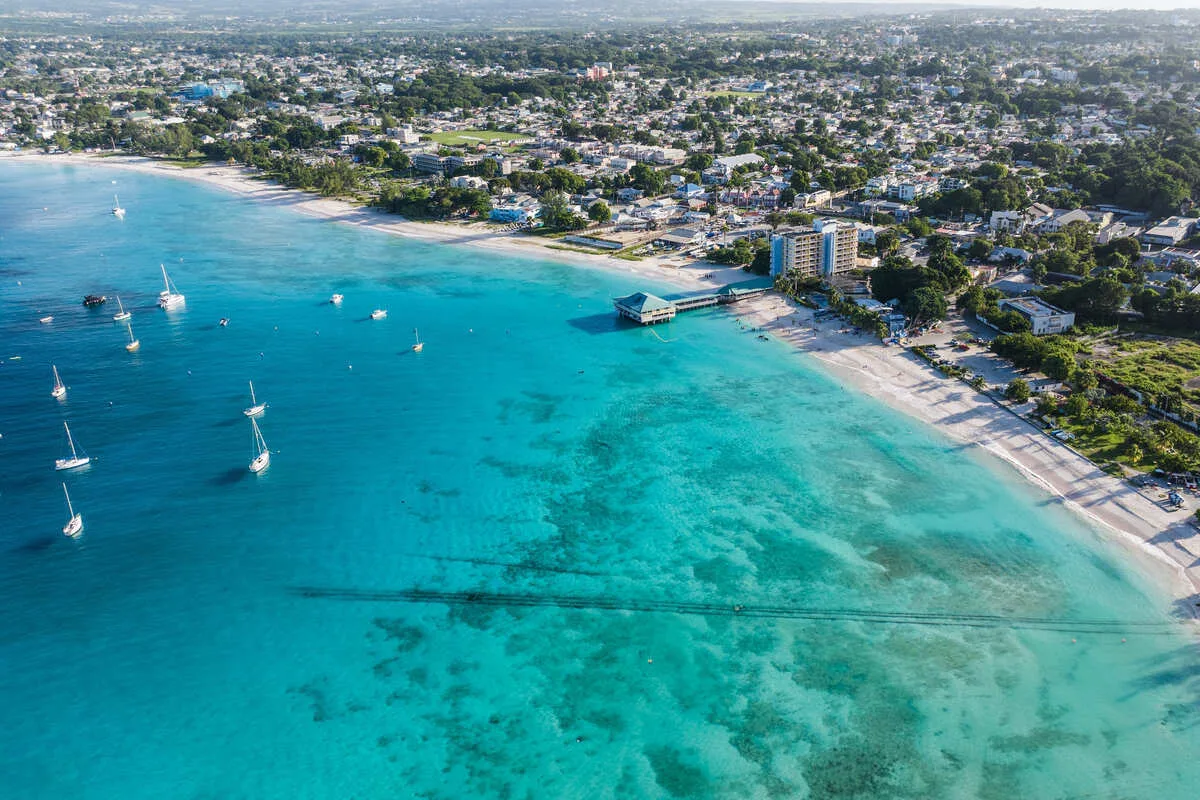
Barbados


Officially considered by U.S. authorities a Level 1 destination—meaning Americans can travel there without taking extra precautions—Barbados has all but solidified its status as one of the safest islands in the Caribbean.
That’s largely due to its long-standing stable government, effective public institutions that act as a barrier to state-level corruption, and lower gang and drug trafficking presence. It’s also a small island with a very cohesive, family-centric society, and this has ensured criminal networks are kept at bay.
Be it browsing the fruit stalls in a Bridgetown Sunday Market, relaxing on the unruffled sands of Carlisle Bay, or exploring the colonial-era Speightown, a colorful town with a rich maritime heritage, your risk of having unpleasant encounters with ill-intentioned locals is slim to none.
Grenada


Up next, we have Grenada, yet another Caribbean island that’s been crowned a Level 1 tropical haven by the U.S. Department of State. As seen in the official travel advisory, U.S. citizens can travel there while exercising ‘normal precautions’.
Grenada itself is a tiny island-nation home to only 117,207 residents (as per the latest count), best known for its numerous nutmeg plantations, hilly landscapes, and waterfall-dotted interior. You know the magic recipe at this point:
Small population, strong community ties, and limited urban sprawl all contribute to Grenada’s low violence rates and limited strategic value in international trafficking routes. Thus, your usual Caribbean bandits don’t typically venture into its shores.
Saint Kitts and Nevis


The same could be said of Saint Kitts and Nevis: it’s a compact landmass, making it easier to surveil, it has a small population (around 53,000), and it has a tourism-focused economy. Oh, and whenever violent incidents do occur, it’s outside the well-patrolled tourist zones.
For years now, Saint Kitts and Nevis has been popular with Americans looking for a laid-back, less-crowded Caribbean spot. South Friars Bay has quiet beaches and a family-friendly atmosphere, and even Frigate Bay, where most of the resorts are, feels like an oasis of calm.
The main issue plaguing tourists in Saint Kitts and Nevis is pickpocketing, and on occasion, scamming. This is more noticeable in Basseterre, the capital city and largest settlement, and even there, crime levels are still way lower compared to the Caribbean average.
Saint Lucia

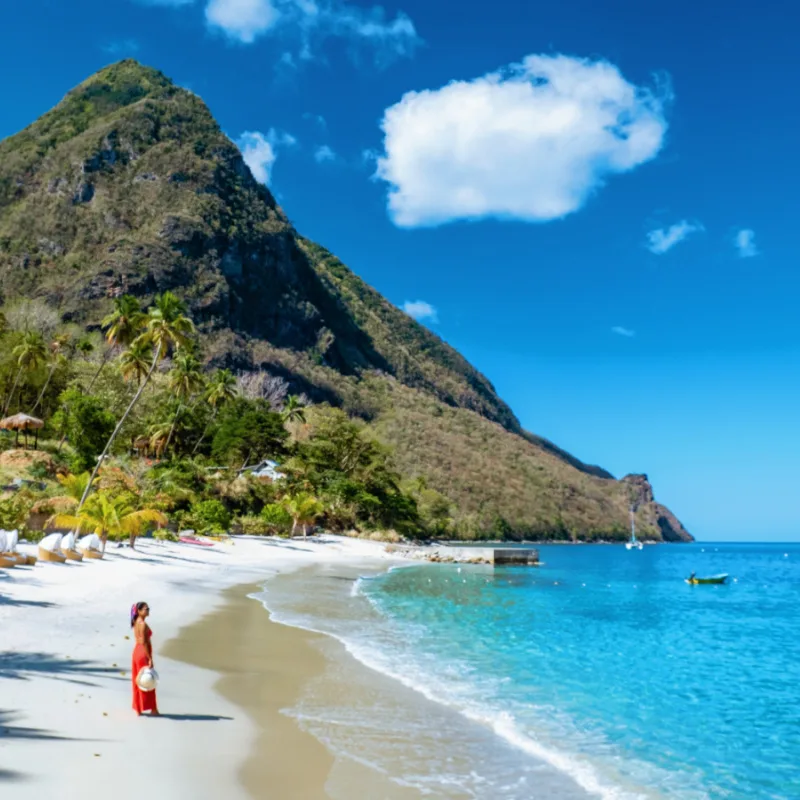
Not to sound repetitive at this point, but Saint Lucia passes with flying colors on Washington’s security tests for many of the reasons already listed above: small, close-knit communities, strong social cohesion, and hotel zones with a strong police presence.
With a population of only 184,000 people, spread across a volcanic island covered in lush jungle, and fringed by pristine beaches, it boasts limited violence, and most of the crime reported is petty theft. That would mainly be observed in major urban areas, such as the capital, Castries.
Definitely keep your wits about you, especially when visiting markets and crowded areas. Nevertheless, tourist hotspots like Soufrière, home to a unique ‘drive-in’ volcano, and Rodney Bay, a coastal strip packed full of hotels, bars, and traditional eateries, are generally safe and easy to explore.
Aruba


An increasingly-trendy alternative to the cliché Cancun-Punta Cana duo, Aruba prides itself on being a low-risk Caribbean destination where serious crime is rare, and most of the disturbances affecting visitors are minor theft (though that’s arguably uncommon, too).
If geography was never your strong suit, Aruba is not, in fact, an independent country. It’s a constituent nation within the Kingdom of the Netherlands: its citizens are Dutch, its culture blends Dutch and Caribbean influences, and its institutions are overseen by the Dutch.
In other words, it benefits from the full apparatus of a European state, and similarly to any other part of the Netherlands, the police here are well-trained, visible, and responsive. It’s no wonder U.S. officials are confident enough to award it a Level 1 badge.

Vinicius Costa
Vini, our senior lead writer at Travel Off Path, has over 60+ countries under his belt (and currently weaving tales from Paris!), and a knack for turning off-the-beaten-path experiences into informative stories that will have you packing your bags.
The Travel Off Path Advantage: Your Travel Toolkit
Subscribe To Our Latest Posts
Enter your email address to subscribe to Travel Off Path’s latest breaking travel news, straight to your inbox.
Please visit:
Our Sponsor